Best Constant Pressure Well Pump Systems: Variable Speed vs Conventional
Your shower goes from strong to weak and back again. Somebody flushes a toilet and the kitchen faucet slows to a dribble. Constant pressure well pump systems exist to fix exactly that, and there is more than one way to get there.
That rise and fall is not a fault. It is how a conventional well system is designed to work. The real question is whether steady pressure is worth the extra money for your home.
I have specified and installed both types for more than a decade. In this guide I compare variable speed and conventional setups in plain language, with the numbers that matter and my top picks for each kind of home.
This article may contain affiliate links, and we may earn a commission from purchases made through those links. For more information, please refer to our disclosure.
The short answer
For most homes that want city style pressure, the Grundfos SQE with the CU 301 controller is the best complete variable speed package. If your existing pump is healthy, a Pentair Pentek Intellidrive or Franklin Electric SubDrive can convert it without pulling the pump. On a tight budget, a Cycle Stop Valve gives steady pressure for a fraction of the price.
Variable Speed vs Conventional at a Glance
| Feature | Conventional (pressure switch) | Variable speed (constant pressure) |
|---|---|---|
| Pressure at the tap | Swings 20 psi, usually 40 to 60 | Holds one set point, such as 60 psi |
| Pump speed | Full speed or off | Speeds up and slows down with demand |
| Tank size | Large, often 44 to 86 gallons | Small, as little as 2 gallons |
| Starting | Hard start every cycle | Soft start, less water hammer |
| Built in protection | None unless you add it | Dry run, overload, and voltage protection |
| Upfront cost | Lowest | Higher, the drive alone is often $1,800 or more |
| Repair | Cheap parts in any hardware store | Electronic parts, often brand specific |
How a Conventional Well System Works
A conventional system has three main parts: a single speed pump, a pressure switch, and a pressure tank. The switch turns the pump on at a low pressure and off at a high one. The most common setting is 40/60, which means on at 40 psi and off at 60 psi.
That gap is why your shower changes. You are feeling a 20 psi swing every time the tank drains and refills. A bigger tank makes the swing slower, but it never removes it.
The tank also protects the pump from starting too often. My rule is simple: a 10 GPM pump needs at least 10 gallons of drawdown so it runs for a full minute each cycle. Our well pressure tank guide walks through that sizing math step by step.
Conventional 40/60 switch: 20 psi swing
Variable speed drive: only a few psi of movement around the set point
How a Variable Speed Constant Pressure System Works
A variable speed system replaces the pressure switch with an electronic sensor called a transducer. The sensor reports pressure to a variable frequency drive, often shortened to VFD. The drive then changes the speed of the pump motor to hold one steady pressure.
Open one faucet and the pump turns slowly. Open three showers and a sprinkler zone and it speeds up to keep pace. The result feels like city water.
The drive also starts the motor gently. That soft start reduces the bang in the pipes known as water hammer and eases stress on the motor windings. Most drives add dry run and overload protection too, which I cover in our guide to well pump protection devices.
The Numbers That Matter
43 millionAmericans rely on private wells (USGS)
20 psiPressure swing on a standard 40/60 switch
2 gallonsTank size a Grundfos SQE system can run on
300+ gallonsDaily water use of an average US family (EPA)
According to the Geological Survey, more than 43 million people, about 15 percent of the US population, get their drinking water from a private well. Every one of those homes depends on a pump and a pressure control of some kind.
Motor starts are the hidden cost. The Franklin Electric AIM manual advises no more than 100 starts per day for single phase motors of 1 hp and larger, and 300 per day for smaller ones. A small tank on a busy house can pass that limit in an afternoon of lawn watering.
Will a variable speed pump cut my power bill?
A little, but less than the ads suggest. The Department of Energy notes that slowing a pump by 20 percent can cut its power need by about half. The catch is that this rule applies to systems with no static lift.
A well is almost all lift. Your pump must raise water 100, 200, or 400 feet before it builds any pressure, so it cannot slow down very much. Real savings on a deep well are modest.
Here is a worked example. The EPA says the average family uses more than 300 gallons of water per day. A 1 hp pump delivering 10 GPM runs about 30 minutes to supply that, using around 0.75 kWh.
At about 17 cents per kWh, that is roughly $47 per year. Even a generous 30 percent saving is only $14 a year. Buy constant pressure for comfort and pump protection, not for the electric bill.
Best Constant Pressure Well Pump Systems: My Picks
Best overall
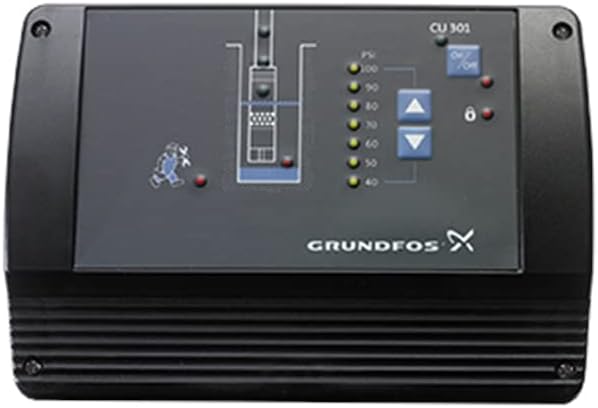
1. Grundfos SQE with CU 301 Controller
The SQE is a complete variable speed package: pump, motor, controller, and pressure sensor designed to work together. The motor electronics sit inside the pump itself, so there is no large drive box on your wall. You set the pressure with push buttons on the CU 301.
The pump is only 3 inches wide, which helps in narrow or older casings. Its permanent magnet motor runs from 3,600 up to 10,700 rpm, and in constant pressure mode it can work with a tank as small as 2 gallons. It also includes soft start and dry run protection, as shown in the Grundfos SQE brochure.
Best for: new installs and full pump replacements. Watch out for: the pump and controller only work with each other, so parts are brand specific.
Check Grundfos SQE price on Amazon
Best for deep wells
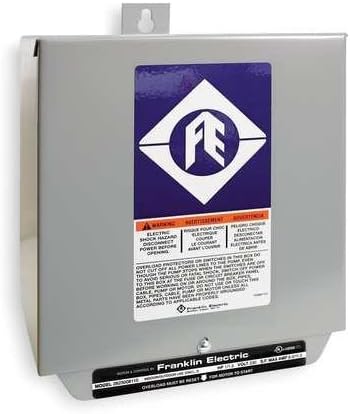
2. Franklin Electric SubDrive
Franklin Electric motors sit at the bottom of many wells, and the SubDrive family is the matching drive. It holds any set point from 25 to 80 psi and works with a small tank or the large one you already own. It runs a three phase motor from normal single phase house power, which gives smoother and stronger performance.
The related MonoDrive models convert a conventional 1/2 to 2 hp pump by replacing the control box and pressure switch. The newer SubDrive Utility covers pumps up to 2 hp and was listed at $1,865 at one US pump retailer in October 2026.
Best for: deep wells and homes already running Franklin motors. Watch out for: model selection is fussy, so match the drive to your exact motor.
Check Franklin SubDrive price on Amazon
Best retrofit drive
3. Pentair Pentek Intellidrive
The Intellidrive is the most flexible retrofit drive I know. One unit handles two wire, three wire, and three phase motors, according to the Pentair specification sheet. The PID10 model covers pumps from 1/2 to 1 hp, and larger models reach 5 hp.
That means you can often keep the pump that is already in the well. The PID10 sells for roughly $1,800 to $2,100 at US pump retailers. One warning from the retailer listings: it is not compatible with Franklin Electric two wire motors.
Best for: upgrading a healthy existing pump. Watch out for: confirm your motor brand and wiring before you order.
Check Pentek Intellidrive price on Amazon
Best budget option
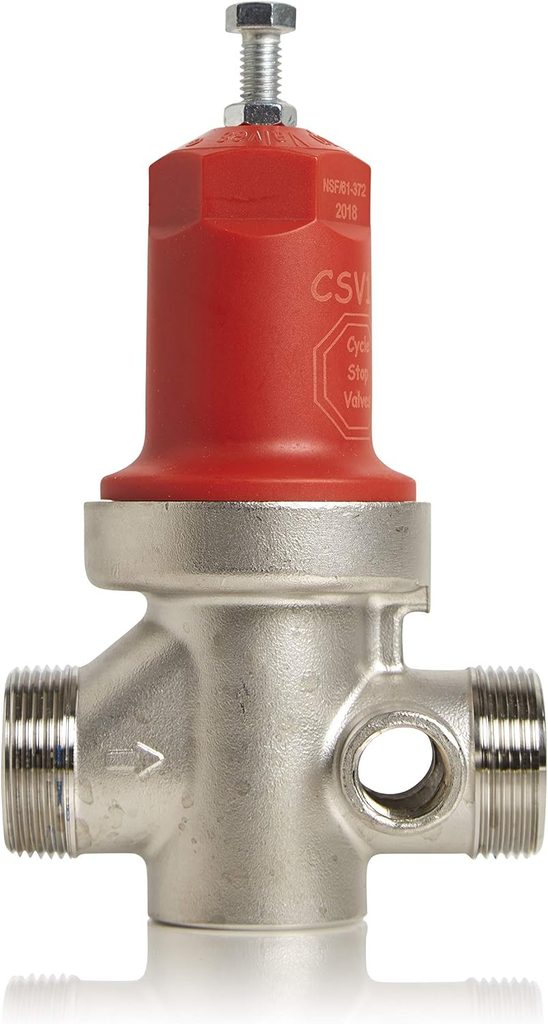
4. Cycle Stop Valve CSV1A
This is constant pressure with no electronics at all. The CSV1A is a mechanical valve fitted between a conventional pump and the tank. It holds steady pressure for any demand from 1 to 25 GPM and is adjustable from 15 to 150 psi.
The pump still runs at full speed, but it stays on for as long as you use water instead of cycling. The valve was listed at $224 in October 2026, and the maker pairs it with tanks as small as 4.4 gallons. There is no circuit board to fry in a lightning storm.
Best for: stopping short cycling on a budget. Watch out for: no soft start and no energy savings.
Check Cycle Stop Valve price on Amazon
Best for simplicity
5. Conventional Pump with a Large Tank
Do not write off the old way. A quality submersible pump, a 40/60 switch, and a correctly sized tank will run for many years with almost no attention. When something fails, the part is cheap and any plumber can fit it.
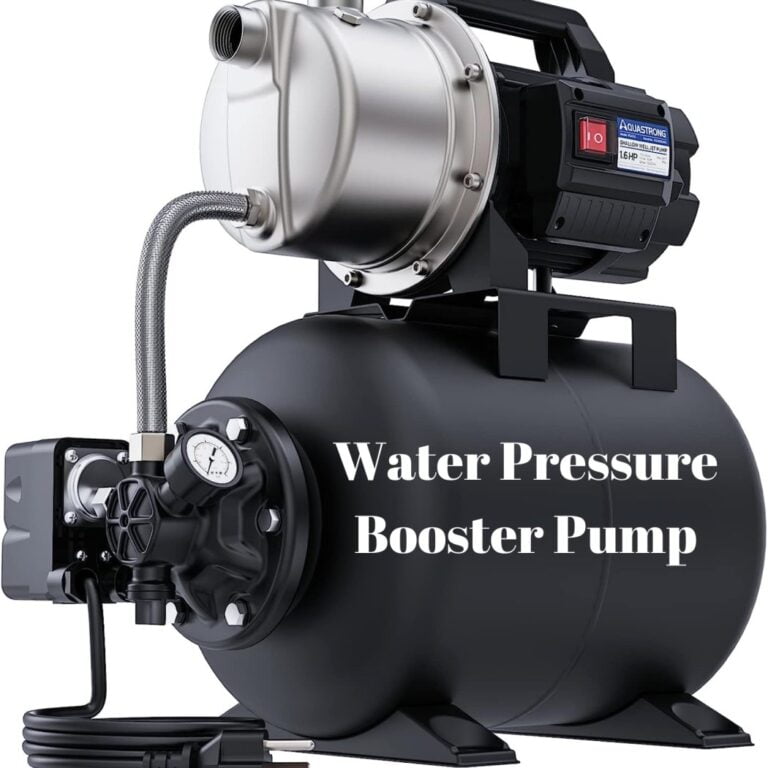
If you add pressure hungry fixtures later, a well water booster pump can lift pressure at the house without touching the well. Browse our pump reviews for conventional options.
Best for: small households, remote cabins, and tight budgets. Watch out for: you live with the 20 psi swing.
A Field Story: The Clicking Pressure Switch
A homeowner called me about a pump that was “clicking all day.” The family had a 280 foot well, a 1 hp pump, and a 20 gallon tank. They had recently added drip irrigation for a large garden.
I timed it. With the irrigation running at 3 GPM, the pump started about every three minutes. That is roughly 20 starts an hour, enough to reach the motor’s daily limit in about five hours.
The tank was not faulty. The system was simply never designed for long, low flow use. We fitted a variable speed drive with a small tank, set it to 55 psi, and the pump now runs slowly and steadily through the whole irrigation cycle.
The family noticed the showers first. I noticed the motor, which now starts a handful of times a day instead of hundreds.
Which System Should You Choose?
Choose variable speed if:
- You have three or more bathrooms or a busy household.
- You run irrigation, drip lines, or a ground source heat pump.
- Your utility room has no space for a large tank.
- You want built in protection against dry running and bad voltage.
Stay conventional if:
- One or two people live in the home and pressure rarely bothers you.
- Your area gets frequent lightning or power surges.
- The nearest pump technician is hours away.
- Your well yield is low and you already rely on storage.
Important: constant pressure does not create more water. If your well only yields 3 GPM, no drive can deliver 10 GPM for long. Measure your water level first with a well sounder, and consider a storage tank system for a weak well.
Installation Tips From the Field
- Size the pump for peak demand. Count fixtures and allow about 1 GPM for each. The drive handles everything below that peak.
- Keep a tank. Even a variable speed system needs a small tank to absorb tiny draws like an ice maker.
- Protect the electronics. Fit a surge protector at the panel. A drive is a computer, and lightning does not care about your warranty.
- Plan for outages. Some drives dislike rough generator power. Our guide to the best generator for a well pump explains what to look for.
- Hire a licensed installer for the wiring. Most drives run on 230 volts and need correct grounding to work safely.
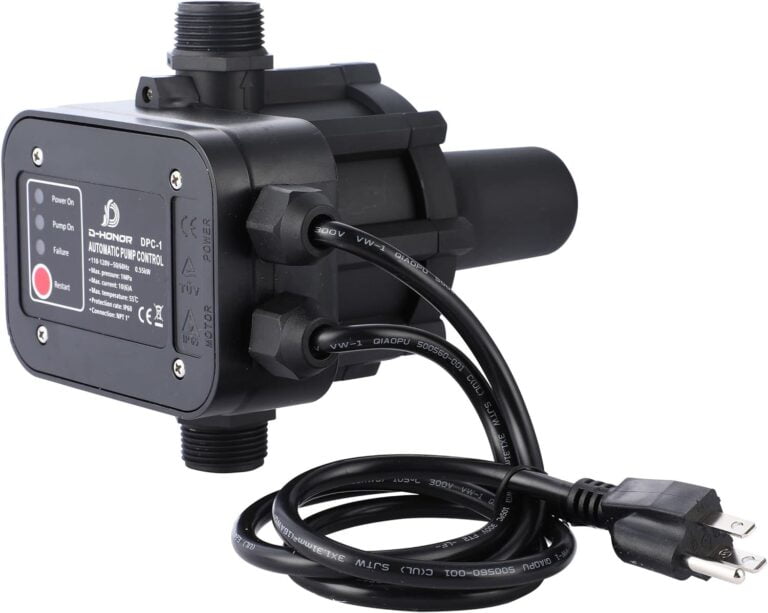
If you only need basic automatic control on a small surface pump, a simple automatic pump controller may be all you need.
Frequently Asked Questions
Is a constant pressure system worth the money?
Yes, if pressure drops annoy you daily or your pump short cycles. You are paying for comfort and longer motor life. For a small, quiet household, a conventional system is still the better value.
Can I convert my existing well pump to constant pressure?
Often, yes. Drives such as the Pentek Intellidrive and Franklin MonoDrive are made to run existing pumps. A Cycle Stop Valve works with almost any conventional pump.
Do I still need a pressure tank?
Yes, but a much smaller one. Many variable speed systems run on tanks of 2 to 5 gallons. You can also keep your existing large tank.
How long do variable speed well pumps last?
The pump and motor often last longer because soft starts reduce wear. The drive electronics are the weaker link and are most at risk from surges and heat. Mount the drive in a cool, dry, shaded spot.
The Bottom Line
Variable speed gives you steady pressure, a smaller tank, and a pump that starts gently. Conventional gives you low cost and repairs anyone can do. Neither is wrong.
If I were fitting a new family home today, I would choose the Grundfos SQE package. If the pump in the well were still healthy, I would add a drive or a Cycle Stop Valve and keep the money in my pocket.
Still chasing a pressure problem? Start with our troubleshooting guides before you buy anything.
Also Read On:
Best Hand Pumps for Wells: Emergency and Off Grid Backup Picks From a Driller
Best Convertible Jet Pumps for 25 to 90 Foot Wells
Solar Pump Payback Calculator: How Many Years to Break Even?