Well Pump Short Cycling: A Simple Diagnosis Tool for Tanks, Waterlogging and Switches
You turn on the kitchen tap and hear the pump click on. Ten seconds later it clicks off, then on again, then off. That rapid on and off pattern is called short cycling, and it is one of the fastest ways to kill a well pump.
The good news is that well pump short cycling almost always comes from one of three causes. Your tank has lost its air charge, your tank has become waterlogged, or your pressure switch is failing. This guide walks you through each one in plain language, and the diagnosis tool below will point you to the likely culprit in under two minutes.
This post contains affiliate links. If you buy through them we may earn a small commission at no extra cost to you. Read our disclosure.
What Is Well Pump Short Cycling?
Short cycling means your pump starts and stops far more often than it should. A healthy system lets the pump run for at least a minute or two, fill the pressure tank, and then rest while the tank feeds your faucets. A short cycling pump runs for a few seconds, shuts off, and starts again almost immediately.
Every time a motor starts, it pulls a surge of current several times higher than its running load. That surge creates heat inside the motor and stress on the start components. According to the Franklin Electric submersible motor data published by Nebraska DEE, motors should run a minimum of one minute to dissipate the heat from starting.
Roughly 43 million people, about 15 percent of the population, depend on private wells. That is a lot of pumps, and short cycling is one of the most common reasons they fail early.
Why Short Cycling Destroys Pumps
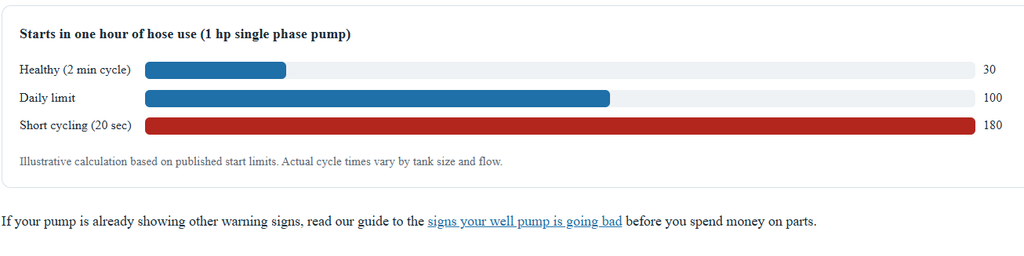
Submersible motor makers publish a maximum number of starts per day. Go past it regularly and you shorten the life of the motor, the capacitor, and the pressure switch contacts. Here are the published limits.

Now picture a 1 hp single phase pump that short cycles every 20 seconds. Water the garden with a hose for one hour and that pump starts 180 times. You have used nearly twice its full daily allowance before lunch.
If your pump is already showing other warning signs, read our guide to the signs your well pump is going bad before you spend money on parts.
The Short Cycling Diagnosis Tool
Answer each question honestly and the tool will narrow down the cause. You will need a cheap tire pressure gauge and about 15 minutes for the precharge check.
Well Pump Short Cycling Diagnosis
Cause 1: Low Tank Precharge
Your pressure tank holds a cushion of compressed air above a rubber bladder or diaphragm. That air pushes water out to your faucets so the pump does not have to start for every glass of water. When the air charge leaks down, the tank holds less water, and the pump starts far more often.
How to check precharge
- Switch off power to the pump at the breaker.
- Open the lowest faucet in the house and let it run until the water stops flowing.
- Remove the cap on the air valve on top of the tank and test it with a tire gauge.
- Compare the reading to your pressure switch cut in setting.
The standard rule is to set precharge 2 psi below cut in. A 30/50 switch needs 28 psi, and a 40/60 switch needs 38 psi. If you read low, top it up with a bike pump or small compressor while the system is still drained.
Quick rule: Check precharge once a year. If you have to add air more than twice a year, the bladder or air valve is leaking, and the tank is near the end of its life.
Cause 2: A Waterlogged Tank
A waterlogged tank has lost its air cushion completely. In bladder tanks this usually means the bladder has torn and water has filled the air side. In older plain steel tanks, the air simply dissolves into the water over time.
There are three easy tells. The tank sounds solid when you knock on the top half, the tank feels unusually heavy if you try to rock it, and water spits out of the air valve when you press the pin. Any one of those is strong evidence the tank is waterlogged.
The fix for bladder tanks
A ruptured bladder cannot be repaired in most sealed residential tanks. The answer is replacement, and it is worth choosing a tank big enough to give at least a one minute pump run. As a rough guide, drawdown is about a quarter to a third of a tank’s nominal size, so a 20 gallon tank stores only around 5 to 6 usable gallons at 40/60.
Our best well pressure tanks guide covers sizing in detail. If you are torn between the big three brands, see our head to head comparison of Well X Trol vs Flexcon vs Water Worker.
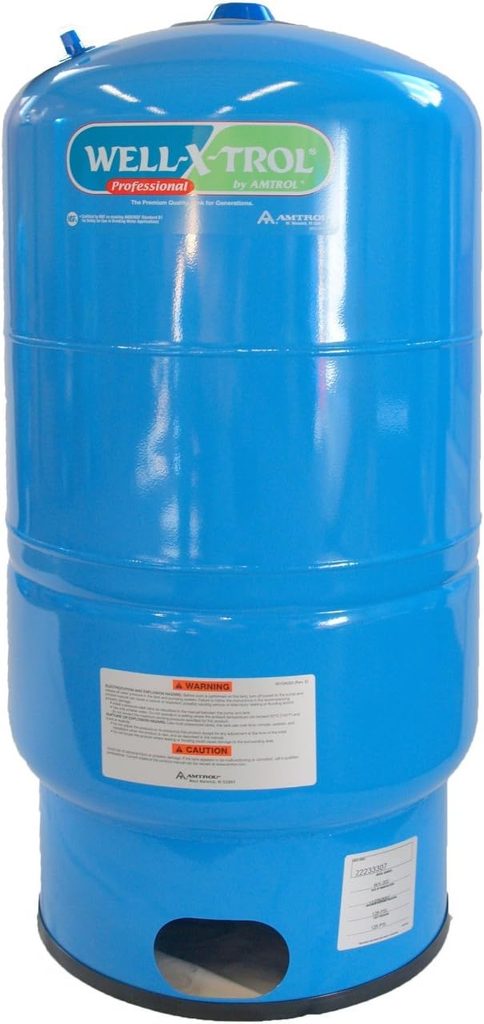
Amtrol Well X Trol WX 202
A 20 gallon class bladder tank with a strong track record. A good like for like swap for most small homes.
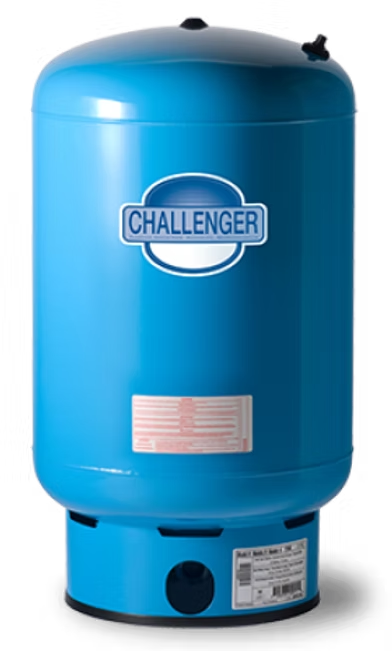
Flexcon Challenger PC244
A 44 gallon class tank that roughly doubles your drawdown and cuts starts dramatically for busy households.
The fix for plain steel tanks
Older galvanized tanks have no bladder, so they need an air volume control to keep adding air automatically. A worn or missing air volume control is the classic reason these tanks waterlog every few weeks. We tested one popular unit in our Flotec FP217 810 air volume control review.
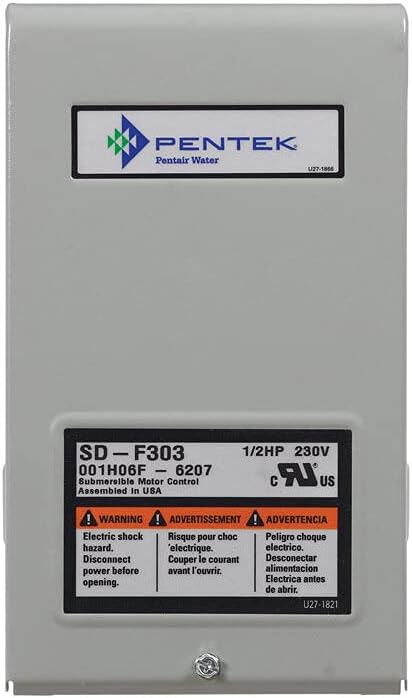
Flotec FP217 810 Air Volume Control
A universal kit for standard galvanized tanks. Fits most jet pump setups that use a snifter valve.
On one service call, a homeowner had replaced his pump twice in three years and was convinced he kept buying bad pumps. The pump was fine both times. His tank had a split bladder, the air valve spat water the moment we pressed it, and the pump was starting every eight seconds. A new tank set to the right precharge solved a problem two pumps could not.
Cause 3: A Failing Pressure Switch
The pressure switch is the small gray box that tells your pump when to start and stop. It senses pressure through a short pipe nipple, then opens or closes electrical contacts. When the switch fails, it can chatter on and off even when the tank is perfectly healthy.
Signs your switch is the problem
- Chattering: rapid clicking near the cut in point, sometimes with a buzz.
- Narrow pressure swing: the gauge moves only 5 to 10 psi between start and stop instead of the usual 20 psi.
- Pitted or burned contacts: blackened, uneven points when you remove the cover (power off first).
- Clogged sensing tube: sediment or iron scale in the nipple under the switch.
A clogged nipple is very common on wells with iron or sand. Clean it out with a small wire, and if scale keeps coming back, look at our best iron filters for well water to stop the root cause. If the contacts are burned, replace the whole switch rather than filing them.
Square D 9013FSG2J24 (40/60)
The industry standard well switch. Adjustable, durable, and familiar to every pump installer.
Square D 9013FSG2J21 (30/50)
Same build for systems running a lower pressure range. Match it to your existing setting.
Safety first: A pressure switch carries 240 volts on most well systems. Always shut off the breaker and confirm power is off before removing the cover. If you are not comfortable with live wiring, call a licensed pump installer.
Other Causes to Rule Out
If your tank and switch both check out, a few less common faults can still cause short cycling. A leaking check valve lets water drain back down the well, so the pump starts even when nobody is using water. A leaking toilet flapper or a dripping outdoor spigot can do the same thing quietly.
Low yield wells can also cause rapid cycling when the pump draws the water level down to the intake. A water level meter or well sounder will tell you how far the level drops while pumping. Low yield wells benefit from pump protection devices that shut the motor off before it runs dry.
How to Prevent Short Cycling for Good
- Size the tank correctly. Aim for at least one minute of pump run time at your pump’s flow rate.
- Check precharge yearly. It takes 15 minutes and costs nothing.
- Inspect the switch nipple. Especially on wells with iron, sand, or hard water.
- Consider constant pressure. A variable speed drive ramps the motor gently instead of slamming it on. Compare options in our best constant pressure well pump systems roundup.
Short cycling rarely fixes itself, and it gets worse with every week you ignore it. The pump is usually the most expensive part of the system, while the tank and switch that protect it are far cheaper. Catch the problem early and a quick fix today can save you a pump pull later.
Frequently Asked Questions
How often should a well pump cycle?
A healthy pump should run at least one to two minutes each time it starts. If it runs for under 30 seconds, or starts every few seconds while a tap is open, it is short cycling.
Can I fix a waterlogged pressure tank without replacing it?
On a plain steel tank, yes. Drain it fully, recharge the air, and install or replace the air volume control. On a bladder tank, water at the air valve means the bladder has failed and the tank needs replacing.
What should my pressure tank precharge be?
Set it 2 psi below your pressure switch cut in pressure, measured with the system drained and the pump off. That means 28 psi for a 30/50 switch and 38 psi for a 40/60 switch.
Will short cycling burn out my well pump?
Yes, over time. Each start creates heat and wear, and most single phase submersible motors between 1 and 5.5 hp are rated for only 100 starts per day.
Written by Ateya, Project Manager at Bonvic Drilling with over a decade of hands on borehole and water system experience. Learn more about us. Sources: US EPA Private Wells, USGS Domestic Well Use, Franklin Electric motor data via Nebraska DEE.
Also Read On:
>>>Well-X-Trol vs Flexcon vs Water Worker: Which Well Pressure Tank Brand Should You Buy?
>>>Flotec FP217-810 Universal Pressure Tank Air Volume Control Kit