Best Well Pump Protection Devices: Low Water Cutoffs, Cycle Stop Valves and Dry Run Protection (2026)
A submersible pump rarely dies of old age. In my experience it dies from running without water, from starting too many times a day, or from both at once. The good news is that a device costing a fraction of a new pump can stop all three failure patterns.
More than 43 million Americans, about 15 percent of the population, drink water from a private well, according to the U.S. Geological Survey. Every one of those households owns its equipment outright, and the pump sitting hundreds of feet down the casing is the most expensive part to pull and replace. This guide explains how low water cutoffs, dry run relays, and Cycle Stop Valves actually work, which problem each one solves, and which models I trust after more than a decade of installing them.
Boreholeflow earns a commission on qualifying Amazon purchases at no extra cost to you. Read our full disclosure.
Key takeaways
- Dry running and short cycling cause most premature submersible pump failures I see in the field.
- A Cycle Stop Valve fixes short cycling; a dry run relay fixes low water; a low pressure cutoff switch is the budget backstop.
- Low yield wells should have a current sensing dry run relay, not just a pressure switch.
Why well pumps fail early
Most pumps I pull are not worn out; they are burned out, usually by one of three conditions.
1. Dry running
A submersible motor depends on water flowing past it to carry away heat. Franklin Electric, the largest submersible motor maker, specifies a minimum cooling flow of 0.25 feet per second past 4 inch motors rated 3 hp and up, and 0.5 feet per second for 6 and 8 inch motors, in its Application, Installation and Maintenance manual. When the water level drops below the pump intake, that flow stops, the motor overheats, and the impellers and bearings run without lubrication.
This is the classic failure in low yield wells and during summer drawdown.
2. Short cycling
Every start pulls a surge of current several times higher than normal running current. Franklin’s manual says motors should run a minimum of one minute after each start to dissipate that heat, and that 6 inch and larger motors need at least 15 minutes between starts. A waterlogged pressure tank, a leaking check valve, or a pressure switch set too tight can push a pump well past those limits.
If your pump clicks on and off every few seconds while a shower runs, you are watching it wear out in real time. Start by checking your tank, and our well pressure tank buying guide walks through the pre charge math.
3. Voltage problems
Rural power sags under load and spikes during storms, and both stress the windings. Most relays below monitor voltage too.
Well equipment typically fails or needs replacement every 5 to 20 years, as we note on the Boreholeflow homepage. Protection devices are how you push your pump toward the long end of that range.
The three types of pump protection, explained
Low water cutoff pressure switches
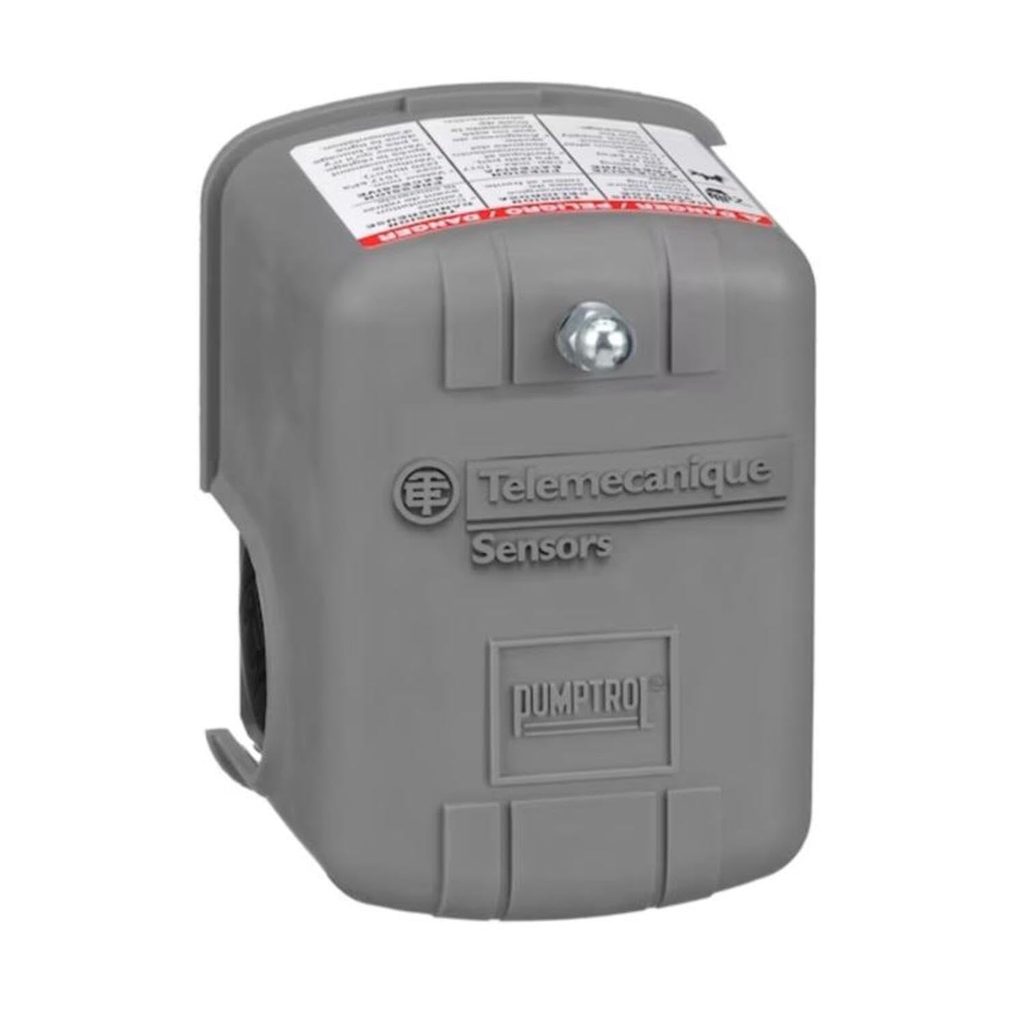
This is the simplest option: a standard pressure switch with an extra low pressure cutoff lever. On a Square D Pumptrol M4 model, the switch turns the pump off if system pressure falls about 10 psi below the cut in setting, per the Pumptrol product guide. On a 40/60 switch, that means shutdown below roughly 30 psi, and you reset it by hand with the side lever.
The limitation is that it only reacts once pressure collapses, so a pump sucking air can run hot for a while first.
Dry run protection relays (current sensing)
These devices watch the motor itself. When a pump loses water, it stops doing work, so its power draw drops sharply, and the relay cuts power within seconds. After a timed delay that gives the well time to recover, it restarts the pump automatically.
This is the protection I specify for any well with limited yield.
Cycle Stop Valves (constant pressure valves)
A Cycle Stop Valve sits between the pump and the pressure tank. It throttles the pump’s output to match whatever demand the house has, so the pump keeps running at a steady pressure instead of switching on and off. When all taps close, a small bypass of about 1 GPM slowly fills the tank until the pressure switch shuts the pump off.
The result is fewer starts per day and steadier pressure in the shower. A CSV does not protect against dry running, so it pairs naturally with a dry run relay.
What each device protects against
| Problem | Low pressure cutoff switch | Dry run relay | Cycle Stop Valve |
|---|---|---|---|
| Well runs dry | Partial | Yes | No |
| Short cycling | No | Rapid cycle trip only | Yes |
| Broken pipe or major leak | Yes | Sometimes | No |
| Over or under voltage | No | Most models | No |
| Automatic restart | No, manual reset | Yes, timed | Not applicable |
| Relative cost | $ | $$ to $$$ | $$$ |
The 6 best well pump protection devices in 2026
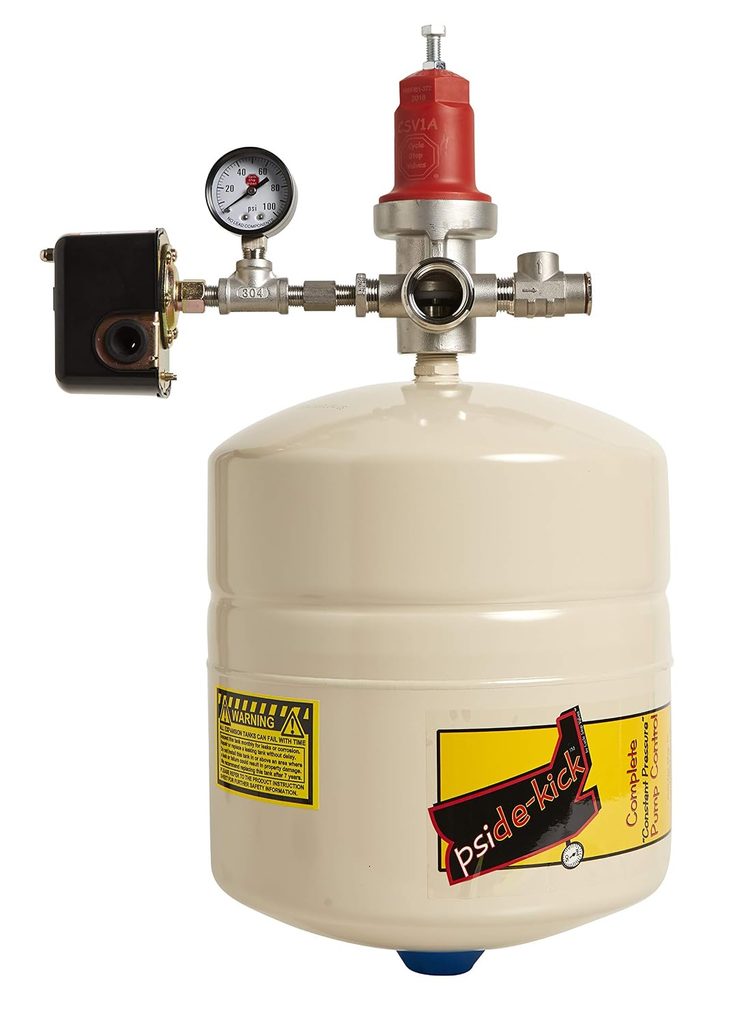
1. Cycle Stop Valve CSV1A
Best for stopping short cycling
The CSV1A is the valve I recommend most often for homes with irrigation zones, long showers, or livestock waterers that run at low flow for hours. It holds a steady downstream pressure anywhere from 1 to 25 GPM, which covers nearly every residential pump.
Flow range: 1 to 25 GPM
Adjustable pressure: 15 to 150 psi
Max differential: 125 psi
Connection: 1 inch threaded
One caution: the valve dislikes sand, so flush a new well thoroughly before installing it.
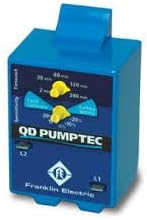
2. Franklin Electric Pumptec
Best dry run protection for Franklin motors up to 1.5 hp
If your pump runs on a Franklin motor, and most American residential submersibles do, the Pumptec is the natural match. It monitors motor load and line voltage, then cuts power when the load drops below its factory setting of 70 percent.
Motors: 2 and 3 wire, 1/3 to 1.5 hp
Voltage: 115 V or 230 V
Response time: about 3 seconds
Restart: timed or manual
Note that the Pumptec manual states it is not designed for PSC motors. Check your motor nameplate before buying.
3. SymCom PumpSaver 231 Insider P
Best retrofit that fits inside your control box
This is the cleanest install on the list for 3 wire systems. It drops inside a 1/3 to 1 hp, 230 V control box from Franklin, Pentek, or CentriPro, so there is no extra enclosure on the wall. It protects against dry well, dead head, jammed impeller, rapid cycling, and voltage faults.
Dry well trip: 4 seconds
Sensitivity: 70 to 90% of calibrated power
Restart delay: 2 to 225 minutes or manual
Rapid cycle limit: 4 restarts per minute
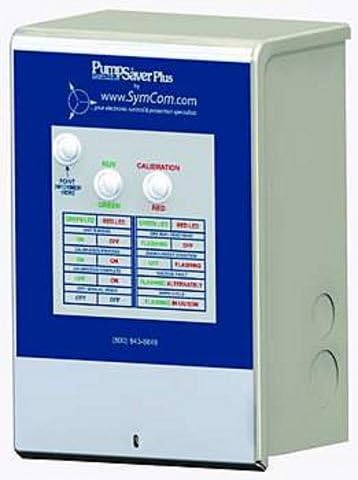
4. Franklin Electric Pumptec Plus
Best for larger single phase pumps up to 5 hp
Farms, large properties, and deep wells often run 2 to 5 hp single phase motors that exceed what the basic Pumptec covers. The Pumptec Plus handles these with a built in 5 hp contactor, snapshot calibration, and surge protection. It trips on underload or overload at 25 percent from the calibrated point.
Motors: 1/2 to 5 hp, 230 V
Trip response: 2.5 seconds
Restart timer: 1 minute to 4 hr 15 min
Rapid cycle trip: 4 starts per minute
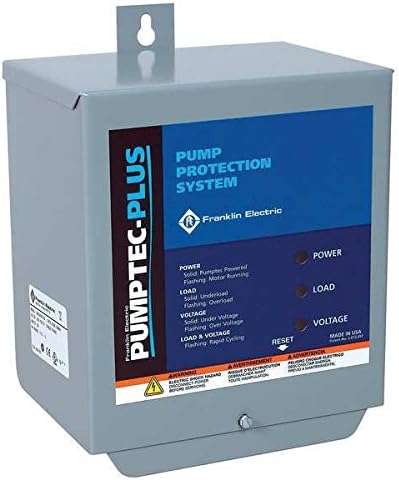
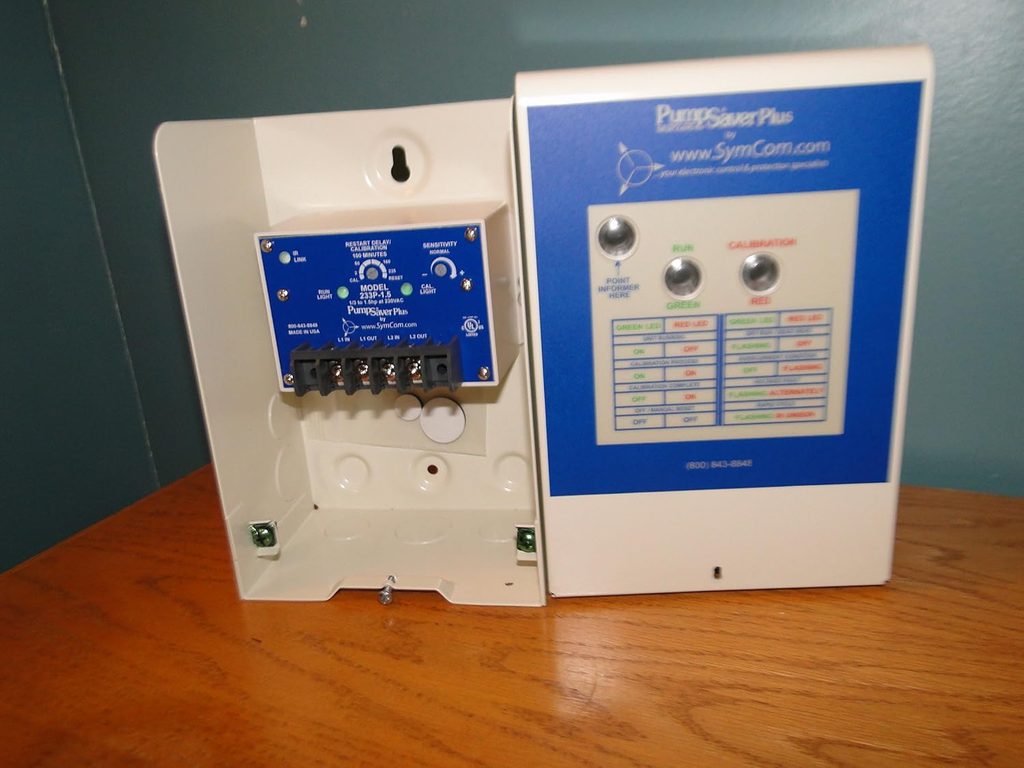
5. SymCom PumpSaver Plus 233P
Best standalone relay for mixed brand installs
When a pump has been replaced a few times and nobody knows exactly what motor is down the hole, I reach for the 233P. According to SymCom’s spec sheet, it protects 230 V, 2 or 3 wire pumps from 1/3 to 3 hp.
Motors: 1/3 to 3 hp, 230 V
Dry well trip: 4 seconds
Protects against: dry well, dead head, voltage
Mounting: own enclosure
6. Square D Pumptrol FSG2J24M4CP (40/60 with low pressure cutoff)
Best budget low water cutoff
If you only replace one part this year, make it this switch. It is a drop in replacement for a standard 40/60 pressure switch, and it adds a low pressure cutoff that shuts the pump off about 10 psi below cut in. It stops the worst case of a pump running all day against a broken pipe or empty well.
Setting: 40/60 psi (30/50 version available)
Pump size: 1.5 hp or less
Cutoff: about 10 psi below cut in
Reset: manual lever
How fast each relay reacts to a dry well
Pumptec Plus2.5 seconds
Pumptec3 seconds
SymCom PumpSaver4 seconds
Source: manufacturer specifications. All three react in seconds, while a pressure based cutoff waits for pressure to collapse.
From the field: the pump that ran dry twice
A composite case from our job files. A family on a small farm had a 280 foot well that tested at about 3 GPM. Their 1 hp submersible lasted just under four years before it burned out on a hot August afternoon while two irrigation zones and a stock tank float were all calling for water.
The like for like replacement failed in 18 months, with heat discolored windings and a scored impeller stack.
On the third install we added a PumpSaver set to a 60 minute restart delay and a Cycle Stop Valve to hold steady pressure for the irrigation. That pump is still running.
How to choose the right protection for your well
Your well has limited yield or drops in summer. Install a current sensing dry run relay such as the Pumptec or PumpSaver.
Your pump cycles during showers or irrigation. First confirm your tank pre charge and bladder are healthy. If the tank is fine and cycling continues, a Cycle Stop Valve is the fix, and it is often cheaper than upsizing the tank.
You want low cost insurance on a strong well. Swap in a Square D switch with low pressure cutoff.
You want the most complete protection. Combine a Cycle Stop Valve with a dry run relay. This is the setup I use on farm and multi home systems.
If you are planning a new system from scratch, our solar pump sizing calculator and automatic pump controller guide will help you size everything together.
Installation tips from the field
Set the tank pre charge correctly. With a standard switch, set the air charge 2 psi below cut in, so 38 psi on a 40/60 switch. With a Cycle Stop Valve, the manufacturer’s installation instructions call for a pre charge 2 to 5 psi below cut in and a switch cut out above the valve setting.
Calibrate dry run relays on a recovered well. Let the well rest before calibrating so the relay learns what normal full load looks like. Calibrating during drawdown sets the baseline too low and weakens protection.
Watch for nuisance trips when combining devices. A Cycle Stop Valve reduces flow, and the motor draws less power at low flow. If your relay trips while the valve throttles, reduce sensitivity one step at a time, and remember SymCom warns that lower sensitivity can weaken dry well detection.
Solar pumps are different. Most solar pump controllers include their own dry run sensing, so check the manual before adding a relay. Our solar submersible pump guide covers which models include it.
Frequently asked questions
What is the best dry run protection for a well pump?
A current sensing relay such as the Franklin Pumptec or SymCom PumpSaver is the most reliable option. It detects the drop in motor load within seconds and restarts the pump automatically after the well recovers.
Does a Cycle Stop Valve protect against dry running?
No. A Cycle Stop Valve prevents short cycling by matching pump output to demand, but it cannot tell when the well is empty. Pair it with a dry run relay for full protection.
How does a low pressure cutoff switch work?
It shuts the pump off when system pressure falls about 10 psi below the cut in setting, which usually means the pump cannot keep up. You reset it manually with a lever on the side of the switch.
How many times a day should a well pump start?
As few as practical. Franklin Electric advises that every start should be followed by at least one minute of run time, and larger 6 inch motors need 15 minutes between starts.
Final verdict
If you only buy one device, make it a dry run relay matched to your motor: the Pumptec for Franklin motors up to 1.5 hp, or the PumpSaver 231 Insider P for a clean in box install. Add a Cycle Stop Valve if your pump cycles during everyday use. On a budget, the Square D low pressure cutoff switch is the least you should have on any private well.
Pulling and replacing a submersible costs far more than any device on this list.
Written by Victor Ateya, Project Manager at Bonvic Drilling Co. Ltd, with more than a decade specifying, installing, and servicing well pumps.
Also Read On: >>>https://boreholeflow.com/best-solar-pump-controller-for-well/