Best Hand Pumps for Wells: Emergency and Off Grid Backup Picks From a Driller
You can have 200 feet of clean water under your yard and still run dry. The moment the grid goes down, your electric well pump stops. The best hand pumps for wells fix that problem with nothing but your own arm.
I have spent more than a decade drilling and equipping boreholes. A hand pump is the simplest backup I know, and it is the one most well owners forget. This guide covers the best options for emergencies, off grid living, and serious preparedness.
This article may contain affiliate links, and we may earn a commission from purchases made through those links. For more information, please refer to our disclosure.
Quick Picks: Best Hand Pumps for Wells at a Glance
| Pump | Depth to water | Best for | Price tier |
|---|---|---|---|
| Bison Standard Deep Well Pump | Up to 250 ft, 300 ft with heavy duty head | Best overall, built for life | $$$$ |
| Simple Pump | Up to about 350 ft | Deepest wells, shared casing | $$$$ |
| Flojak Plus | 100 to 200 ft models | Best value deep well pump | $$$ |
| EarthStraw 100 ft Kit | 10 to 100 ft | Store it, deploy it in an outage | $$$ |
| Cast Iron Pitcher Pump | Under 25 ft | Shallow wells and cisterns | $ |
| Well Bucket (Bailer) | Any depth with enough rope | Last resort backup | $ |
Price tiers run from $ for under $150 to $$$$ for a four figure system. Prices move with depth, because deeper wells need more pipe and rod.
Why Every Well Owner Needs a Hand Pump Backup
About 43 million Americans rely on private wells, according to the Geological Survey. Nearly all of those wells use an electric pump. No power means no water, no flushing, and no way to water livestock.
Outages are getting longer. The Energy Information Administration reports that the average customer lost power for 11 hours in 2024. That is nearly double the average of the previous decade.
Averages hide the worst cases. Hurricanes caused 80 percent of those lost hours, and South Carolina customers averaged nearly 53 hours without power.
A generator helps, but it needs fuel, and fuel runs out in a long emergency. A hand pump needs nothing. That is why preppers treat it as the final layer of water security.
How Much Water Will You Need to Pump?
FEMA advises storing at least 1 gallon per person per day for drinking and basic hygiene. For a family of four, that is only 4 gallons a day. Real life needs more.
A modern toilet uses about 1.6 gallons per flush. Add cooking, washing, and animals, and a careful household can easily use 30 to 50 gallons a day. Normal use is far higher, at roughly 82 gallons per person per day according to EPA WaterSense.
The good news is that a decent hand pump delivers several gallons a minute at moderate depth. Ten to fifteen minutes of pumping a day covers a careful family.
Shallow Well vs Deep Well Hand Pumps
The single most important number is your static water level. That is the depth from the ground to the water surface, not the total depth of the well.
The 25 foot rule. Suction pumps pull water up using air pressure. At sea level the theoretical limit is about 34 feet, and in practice it is around 25 feet. You also lose roughly 1 foot of lift for every 1,000 feet of elevation.
Shallow well pumps sit above ground and suck water up. Pitcher pumps are the classic example. They are cheap and simple, but they only work when water is less than 25 feet down.
Deep well pumps work differently. A cylinder sits below the water level, and a rod inside the drop pipe lifts water one stroke at a time. Because the pump pushes instead of sucks, depth is limited only by your strength.
That strength limit is real. At 200 feet, the water inside a 1 inch drop pipe weighs about 68 pounds. A long handle gives you leverage, but deep pumping is steady work.
Not sure of your water level? Measure it first with one of the tools in our guide to the best water level meters and well sounders.
The 6 Best Hand Pumps for Wells Reviewed
1. Bison Standard Deep Well Hand Pump
Best overall
Bison pumps are made in Maine from stainless steel. The pump head, lift rod, handle, and hardware are all stainless, so nothing rusts into your drinking water.
The standard system lifts water from a static level of 250 feet. An optional heavy duty pump head extends that to 300 feet. Each kit ships with enough 8 foot pipe and rod sections to set the cylinder about 20 feet below your water level.
It can share a casing with an electric submersible pump if the casing is 5 inches or wider and uses a pitless adapter. Check the sizing guide on the Bison Pumps website before ordering.
Good: all stainless, very durable, deep reach. Not so good: premium price, heavy to install alone.
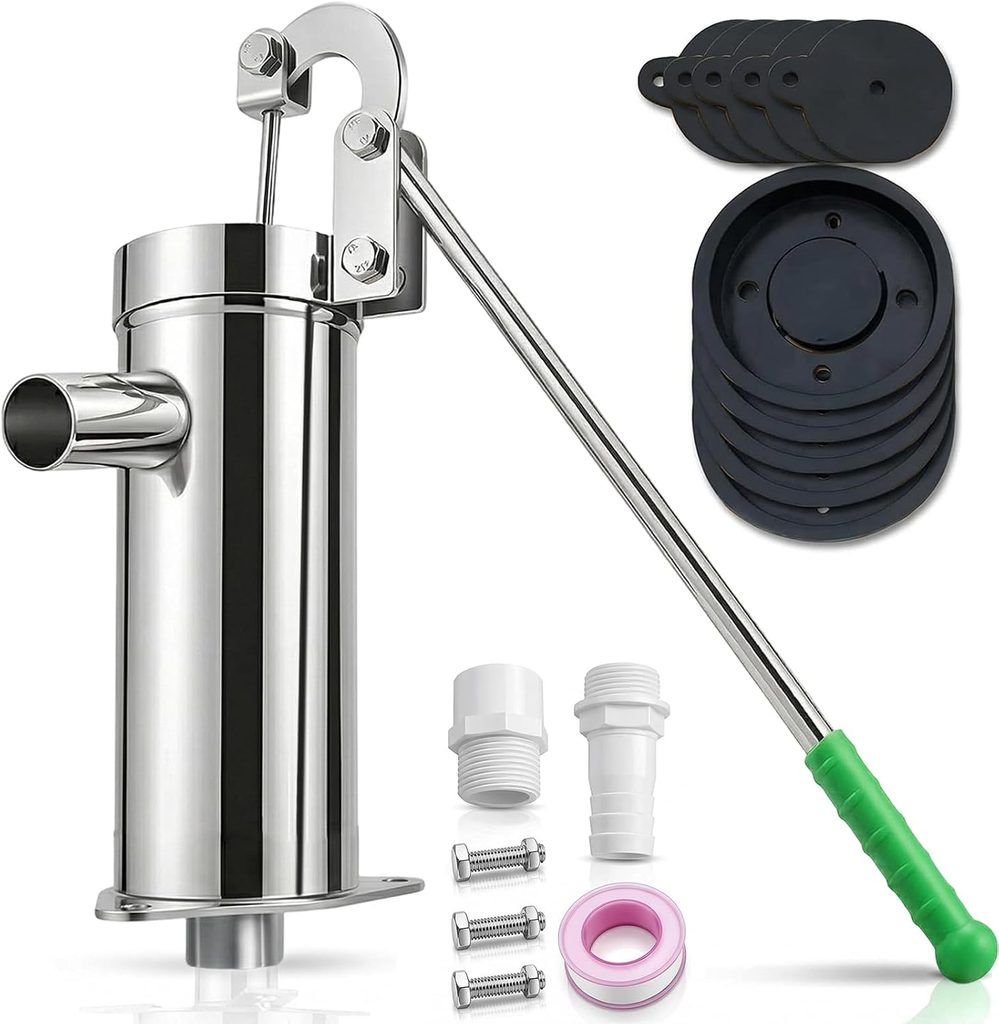
2. Simple Pump Deep Well Hand Pump
Best for the deepest wells
The Simple Pump is the main rival to Bison, and it reaches deeper. It is widely rated for static water levels down to about 350 feet.
Its slim design is the big selling point. It is built to slide into the same casing as your existing submersible pump in many wells.
You can also add a motor later and run it from solar panels. That makes it a strong choice for off grid homes that want one system with two power sources.
Good: deepest reach, fits beside a submersible, motor upgrade. Not so good: lighter build than Bison, similar high price.
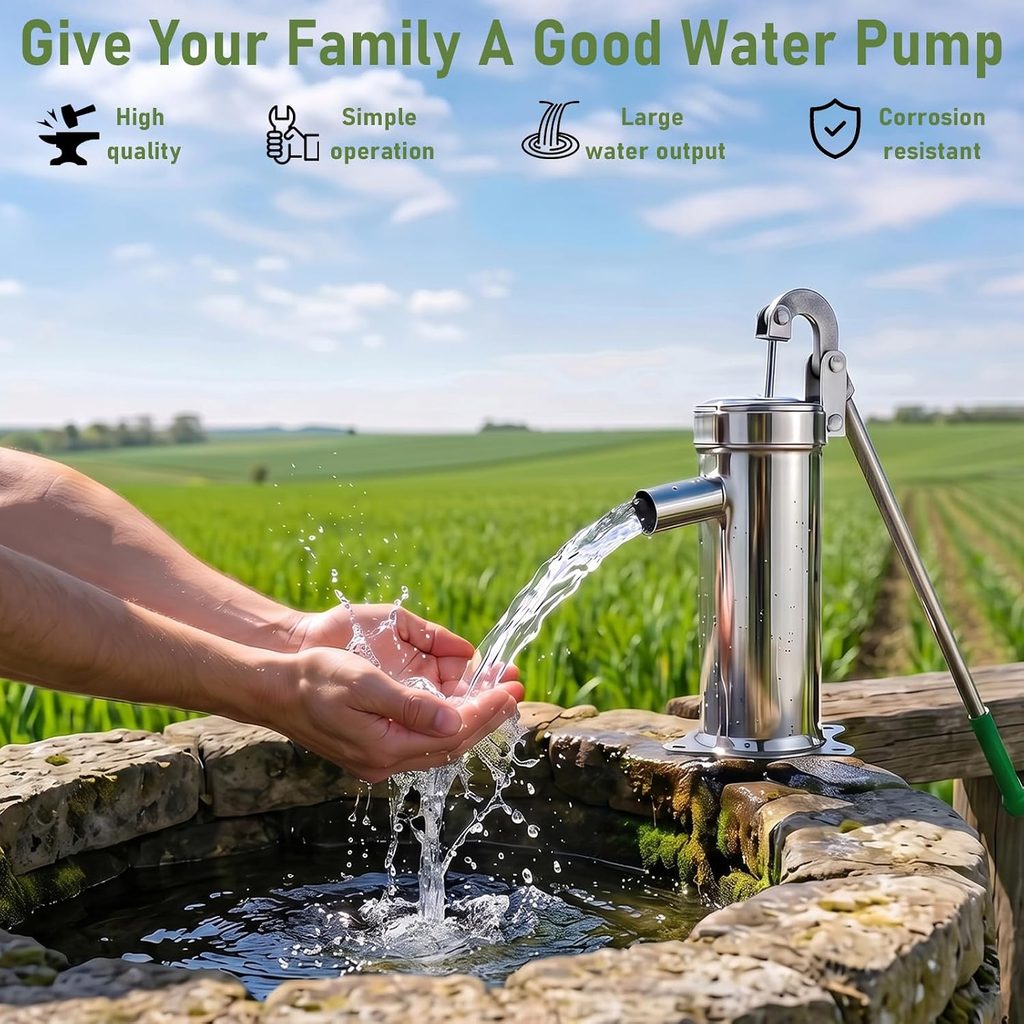
3. Flojak Plus Stainless Hand Pump
Best value
Flojak fills the gap between a pitcher pump and a premium system. Its kits come in set depths, including 100, 150, and 200 foot versions.
The lower sections use PVC, which keeps the weight and the cost down. PVC will not last as long as solid stainless steel. For a backup pump used a few weeks a year, that trade is reasonable.
Good: affordable deep well option, light, easy install. Not so good: PVC parts are less rugged for daily use.
4. EarthStraw 100 ft Emergency Kit
Best grab and go kit
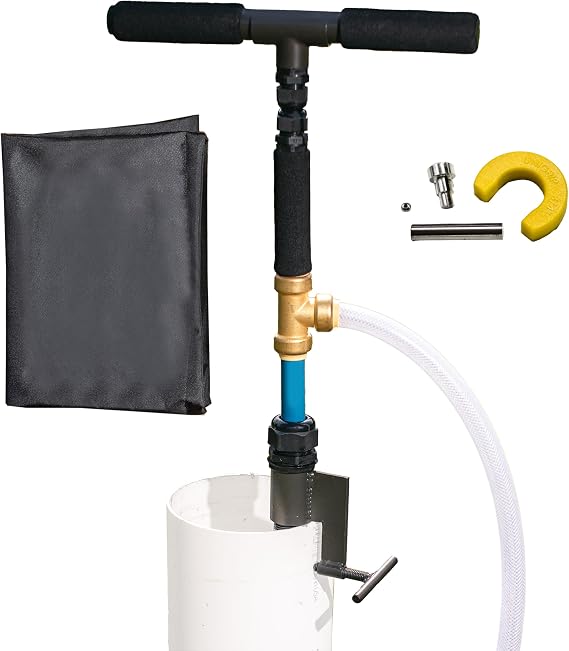
The EarthStraw takes a different approach. It is a coiled, flexible pump that you store in the garage until you need it. When the power fails, you feed it down the casing and start pumping.
The kit covers static levels from 10 to 100 feet with a depth adjustment kit. It includes a casing clamp and a protective cover to keep the well sealed.
Good: no permanent install, adjustable depth, stores small. Not so good: 100 foot limit, slower than rigid pumps.
5. Cast Iron Pitcher Pump
Best for shallow wells
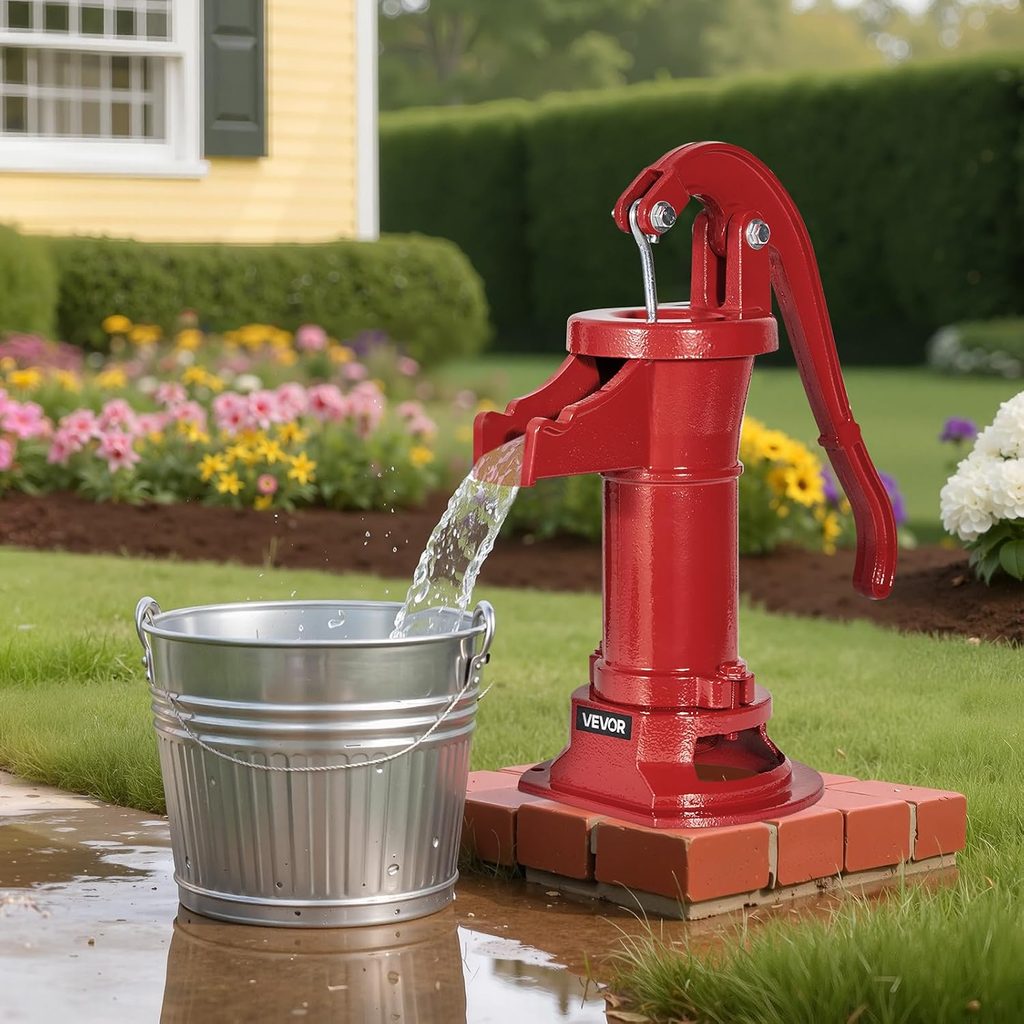
If your water stands less than 25 feet down, a pitcher pump is all you need. It bolts to a platform over a driven point, dug well, or cistern.
The leather or rubber cup inside dries out between uses. Keep a jug of clean water nearby to prime it, and keep a spare cup in a drawer.
Good: very cheap, simple, easy to repair. Not so good: useless below 25 feet, needs priming.
6. Well Bucket (Bailer)
Budget last resort
A well bucket is a long, narrow tube with a valve in the bottom. You lower it on a rope, it fills, and you pull it up. Most hold around 2 gallons and fit casings of 4 inches or more.
It only works if the casing is clear, so you must pull the submersible pump first in most wells. I see it as cheap insurance, not a real plan.
Good: lowest cost, works at any depth. Not so good: slow, needs open casing, raises contamination risk.
How to Choose the Right Hand Pump
Know your static water level. Find it on your well log or measure it. Then add a safety margin of at least 20 feet, because water levels fall in dry seasons.
Measure your casing. A hand pump needs room beside the existing drop pipe and wiring. A 6 inch casing usually has space, while a 4 inch casing with a 4 inch submersible often does not.
Think about frost. In cold states, water left in the pipe will freeze and split it. Good deep well pumps use a small weep hole below the frost line so the pipe drains after each use.
Decide where the water should go. Some pumps can only fill a bucket at the wellhead. Others can push water into your house plumbing and well pressure tank, so your taps still work.
Match materials to use. For daily off grid pumping, pay for stainless steel. For a backup used a few days a year, a lighter kit is fine.
Installation Tips From the Field
Most deep well kits go in with two people and basic tools in an afternoon. Never let go of the string, because a dropped pump can jam a well for good.
Switch off the breaker before you open the well cap. Disinfect every part with a mild chlorine solution as it goes in. Afterward, shock chlorinate the well and flush it before drinking.
If your well has a pitless adapter or a crowded casing, call a licensed well contractor. An hour or two of professional labor is cheaper than fishing a lost pump out of a borehole.
From the Field: Six Days Without Power
An ice storm took down the lines to a rural family of five one January. Their well was 180 feet deep with water standing at 60 feet. Their generator ran the pump for two days until the fuel was gone.
The roads were closed and the nearest fuel was 30 miles away. For the next four days they melted snow on a wood stove for drinking water.
That spring we fitted a deep well hand pump beside their submersible, set at 100 feet. The next winter the power failed again for three days. This time ten minutes at the handle each morning filled every container in the kitchen.
Keeping Your Hand Pump Ready
A backup you never test is not a backup. Pump at least 5 gallons through it once a month.
Check bolts and the handle pivot twice a year. Keep a spare seal kit on the shelf, since parts are hard to get in a crisis. Test the water yearly, as the EPA recommends for all private wells.
Other Backup Options to Consider
A hand pump is one layer. Many off grid owners pair it with a solar pump for daily use and keep the handle for cloudy weeks. Compare the best solar submersible water pumps, then size one with our solar pump sizing calculator.
Frequently Asked Questions
Can I install a hand pump on a well with an electric pump?
Yes, in most wells. Deep well hand pumps are designed to sit beside the submersible pump in the same casing. You need enough space, which usually means a casing of 5 inches or more.
How deep can a hand pump draw water?
Suction pumps work to about 25 feet. Deep well hand pumps commonly reach 200 to 300 feet, and some reach about 350 feet. The depth that matters is your static water level, not total well depth.
Will a hand pump freeze in winter?
A properly installed deep well pump will not. A weep hole below the frost line lets water drain back after each use. Pitcher pumps should be drained by lifting the handle fully after pumping.
Final Verdict
For most well owners, the Bison Standard Deep Well Pump is the best hand pump for wells. It is all stainless and built to outlast the well itself. Choose the Simple Pump if your water is deeper than 300 feet or your casing is tight.
On a budget, the Flojak Plus gives you real deep well backup for far less. If your water is shallow, a cast iron pitcher pump does the job. Whichever you pick, install it before the next storm, then explore more driller reviewed gear on the Boreholeflow homepage.
Also Read On:
>>>https://boreholeflow.com/best-convertible-jet-pumps/
>>>https://boreholeflow.com/well-pump-protection-devices/
>>>https://boreholeflow.com/best-water-level-meters-well-sounders/