Best Cistern and Water Storage Tanks for Well Systems (2026 Buyer’s Guide)
A weak well does not always need a deeper hole. In more than a decade of drilling, I have seen many slow wells turned into dependable water supplies with one simple addition: a storage tank. The right water storage tanks for well systems let a slow well fill quietly around the clock, so your family always has a full reserve at the tap.
This guide reviews six of the best cisterns and water storage tanks for well systems in 2026. You will also find simple sizing math and the installation mistakes I see most often in the field.
This article may contain affiliate links, and we may earn a commission from purchases made through those links. For more information, please refer to our disclosure.
Quick answers
- Best overall: Norwesco 1,550 Gallon Vertical Tank
- Best for large homes and fire reserve: Norwesco 2,500 Gallon Vertical Tank
- Best buried cistern: Norwesco 1,200 Gallon Below Ground Cistern
- Best for basements: Sure Water 260 Gallon Tank
Why So Many Well Owners Add a Storage Tank
You are not alone if your well struggles to keep up. The Geological Survey reports that more than 43 million people, about 15 percent of the population, rely on private wells for drinking water. Every one of those owners is fully responsible for their own supply.
Demand is higher than most people think. According to EPA WaterSense, the average American family uses more than 300 gallons of water per day at home, or roughly 82 gallons per person. About 70 percent of that use happens indoors.
Here is the surprise. A well that yields only 1 gallon per minute still produces 1,440 gallons in 24 hours, which is far more than most families use. The problem is timing, because a morning rush of showers, laundry, and a dishwasher can demand 6 gallons per minute or more.
A storage tank fixes that mismatch. The well pump fills the tank slowly all day, and a second pump delivers stored water to the house at full pressure.
Cistern, Storage Tank, or Pressure Tank: What Is the Difference?
- Storage tank: A large unpressurized tank, usually polyethylene, that sits above ground. Sizes run from about 100 gallons to 5,000 gallons or more.
- Cistern: A storage tank built to be buried or partly buried. It keeps water cool, hidden, and protected from frost.
- Pressure tank: A small sealed tank with an air charge that keeps your plumbing pressurized. It holds only a few gallons of usable water.
Most storage setups need both types. Water flows from the well to the storage tank, then through a booster pump and a pressure tank before it reaches the house. Our guide to the best well pressure tanks covers that last step in detail.
How to Size Water Storage Tanks for Well Systems
Sizing is easier than it looks. Start with your daily use, then decide how many days of reserve you want.
- Estimate daily use. Multiply the people in your home by 82 gallons. A family of four uses about 328 gallons per day.
- Pick your reserve. Two days covers a slow well. Four or more days covers power outages and pump repairs.
- Include garden irrigation, livestock, and any fire reserve your county requires.
For that family of four, a two day reserve is about 650 gallons. A four day reserve is about 1,300 gallons, which is why tanks near 1,500 gallons are so popular with low yield wells.
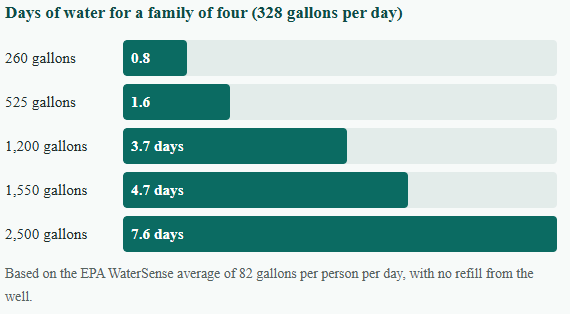
Based on the EPA WaterSense average of 82 gallons per person per day, with no refill from the well.
Emergency storage follows a different rule. Ready.gov recommends storing at least one gallon per person per day for several days. At that rate, a 160 gallon tank gives a family of four over a month of drinking water.
One more number matters: weight. Water weighs 8.34 pounds per gallon, so a full 1,550 gallon tank weighs about 12,900 pounds. Your pad must be built for that load.
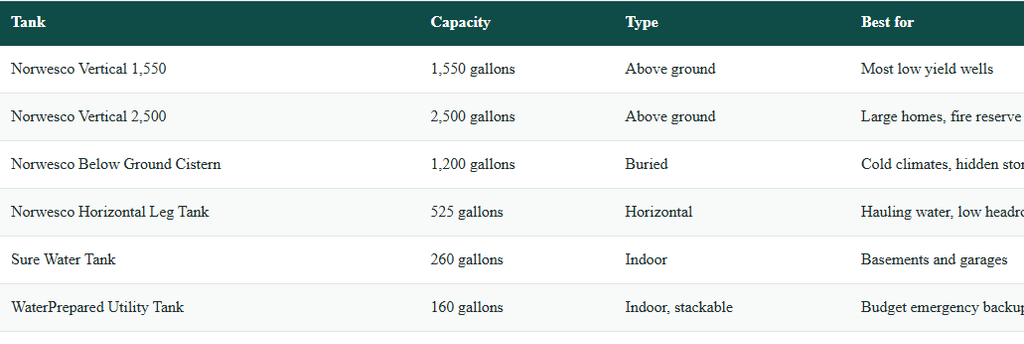
Quick Comparison: The 6 Best Tanks
The Best Cistern and Water Storage Tanks Reviewed
Best overall
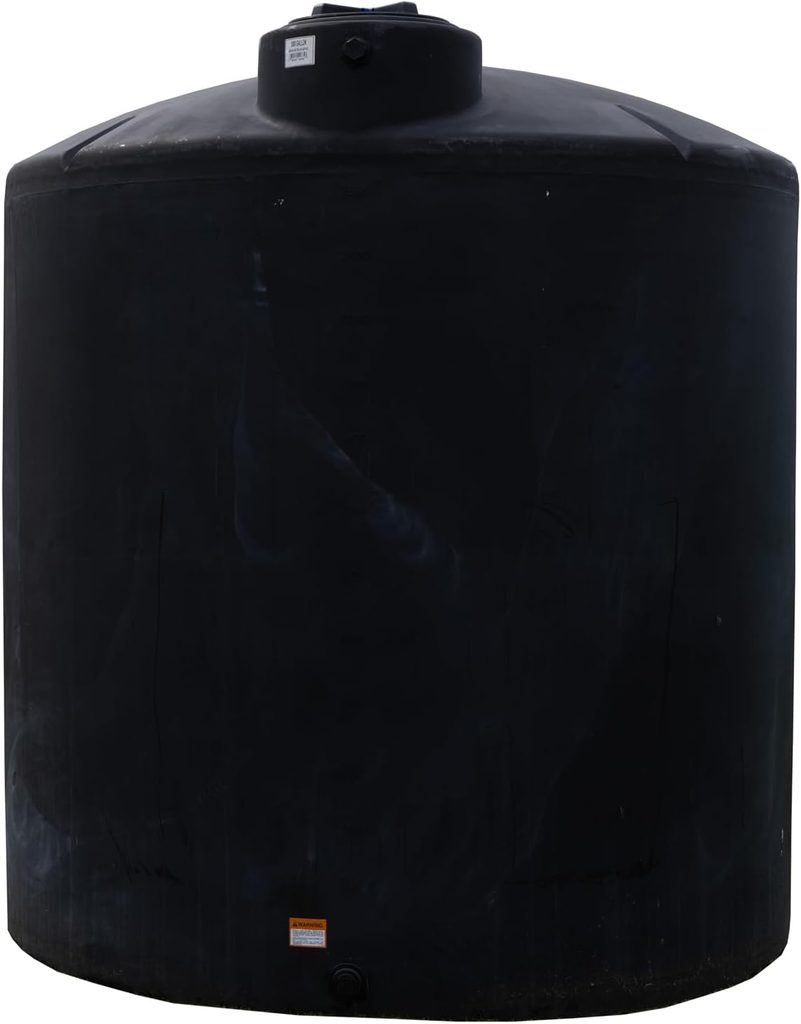
1. Norwesco 1,550 Gallon Vertical Water Storage Tank
- Capacity: 1,550 gallons
- Material: UV stabilized polyethylene, rated for potable water
- Reserve for a family of four: about 4.7 days
This is the size I recommend most often for wells that yield under 3 gallons per minute. It holds enough water to ride through a pump failure, yet it still fits on a modest gravel pad beside the well house.
Norwesco molds its vertical tanks in one seamless piece. The dark green and black colors block sunlight, which stops algae from growing inside.
Watch out for: Tanks this size ship by freight. Compare the delivered price with your local farm supply store before you order.
Best for large homes
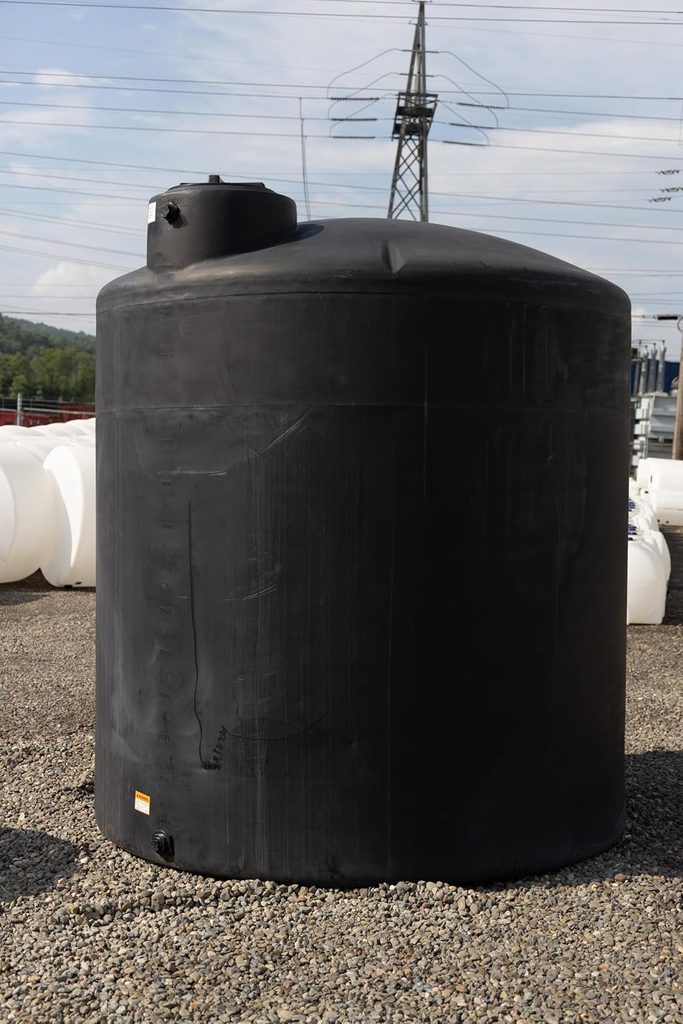
2. Norwesco 2,500 Gallon Vertical Water Storage Tank
- Capacity: 2,500 gallons
- Full weight: about 20,850 pounds
- Reserve for a family of four: about 7.6 days
Choose this tank if you irrigate a garden, water livestock, or live in wildfire country. Many rural counties ask for a dedicated fire reserve, and 2,500 gallons is a common minimum. Always confirm the exact figure with your local fire authority.
Watch out for: At more than ten tons full, this tank needs a properly engineered pad. Do not set it on bare soil.
Best buried cistern
3. Norwesco 1,200 Gallon Below Ground Cistern
- Capacity: 1,200 gallons
- Design: Ribbed low profile shell made for burial
- Reserve for a family of four: about 3.7 days
A buried cistern is the right answer where winters are hard or yard space is tight. Soil keeps the water cool in summer and above freezing in winter. Nothing shows above ground except a small access lid.
The ribbed walls are built to resist soil pressure, which a standard above ground tank cannot do. Never bury a vertical storage tank, because it will collapse.
Watch out for: The manufacturer advises keeping ribbed cisterns at least one quarter full at all times. An empty buried tank can shift or deform, especially in wet ground.
Best for hauling
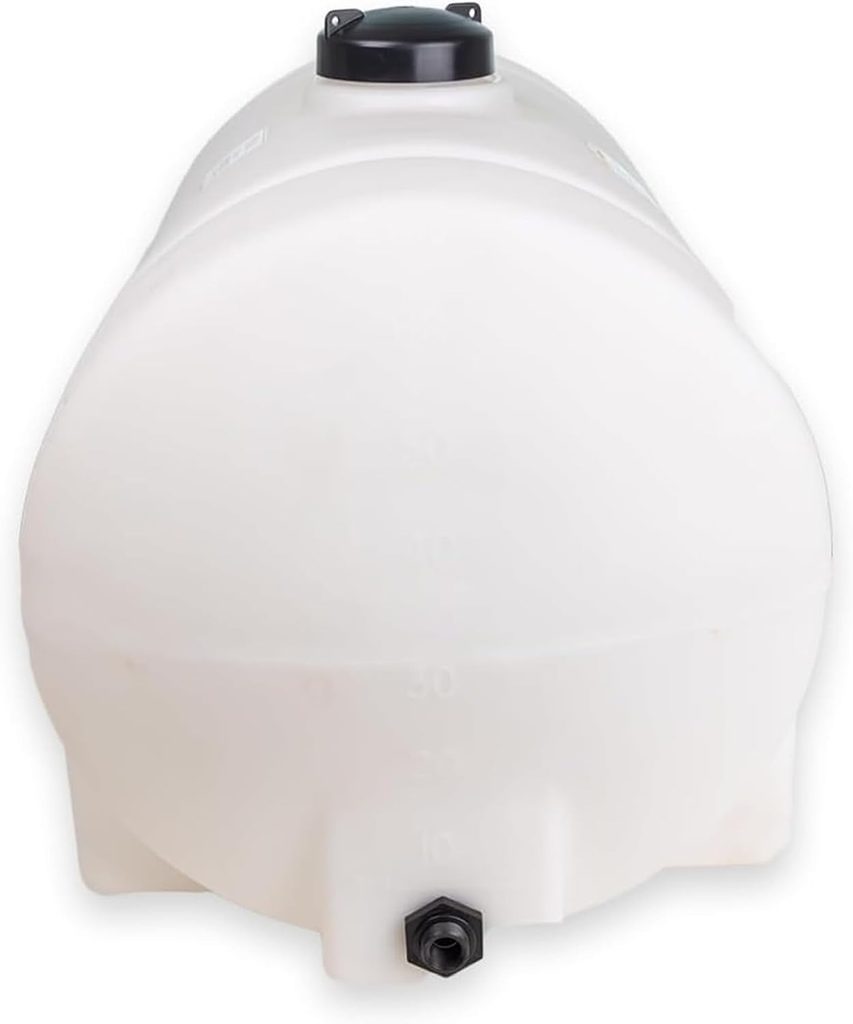
4. Norwesco 525 Gallon Horizontal Leg Tank
- Capacity: 525 gallons
- Design: Horizontal tank with molded legs
- Reserve for a family of four: about 1.6 days
Horizontal leg tanks sit low and wide, so they fit under decks, in crawl spaces, and on trailers. That makes this a strong pick if you haul water during dry months or need storage where headroom is limited.
Watch out for: A full 525 gallon tank weighs about 4,400 pounds. Check your trailer rating and use steel hold down bands for transport.
Best for basements
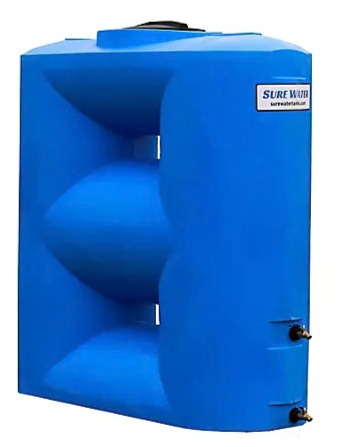
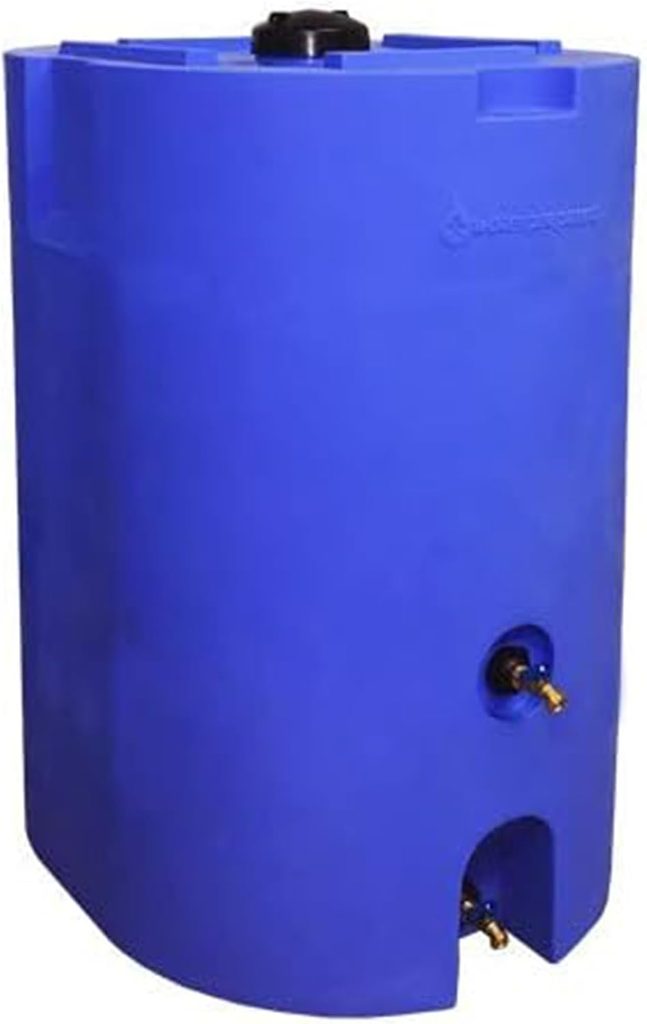
5. Sure Water 260 Gallon Water Storage Tank
- Capacity: 260 gallons
- Material: BPA free food grade polyethylene
- Design: Slim upright shape made to pass through a standard doorway
Not every home has room outside for a big tank. The Sure Water tank is built to walk through an interior door and stand in a basement or garage corner. It comes with two spigots, one high for filling containers and one low for full drainage.
Watch out for: A full tank weighs about 2,170 pounds. Place it on a concrete slab, never on a framed wood floor.
Best budget backup
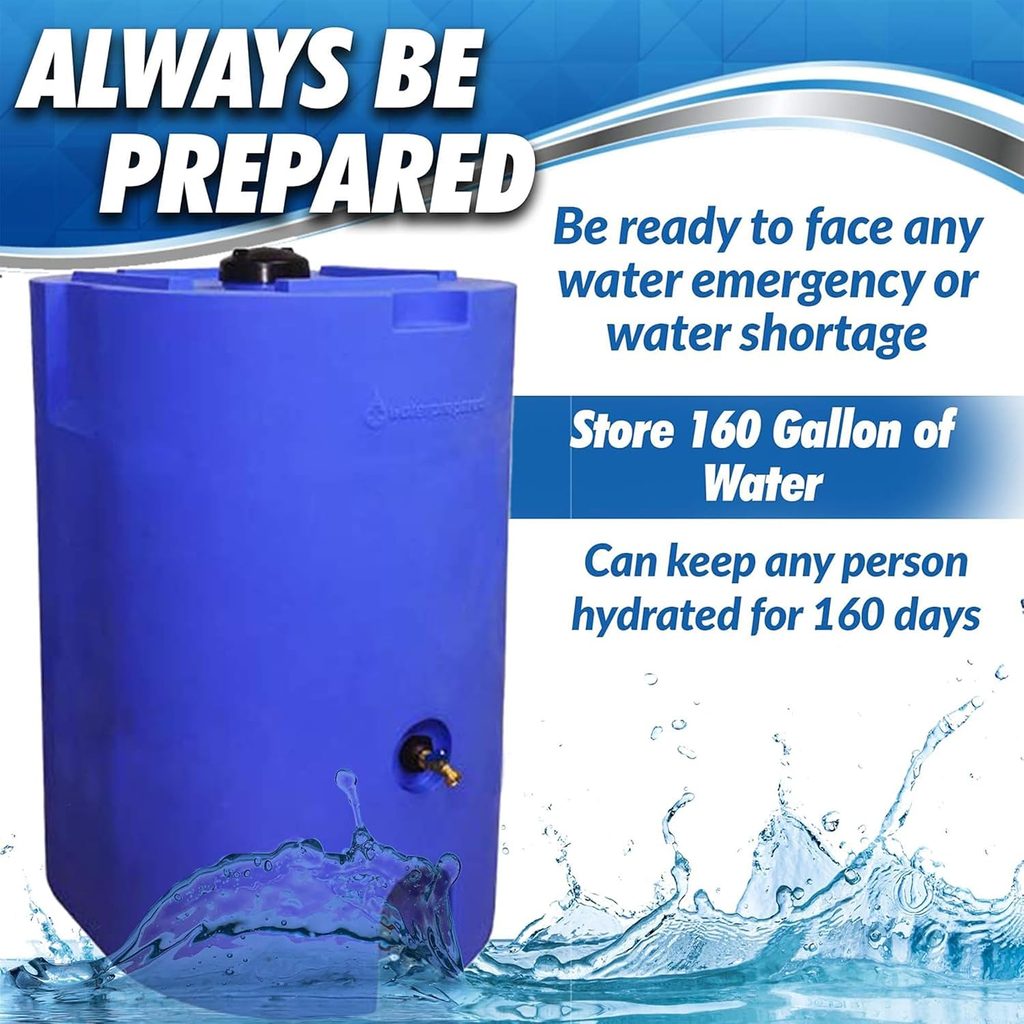
6. WaterPrepared 160 Gallon Utility Water Tank
- Capacity: 160 gallons
- Material: BPA free food grade polyethylene
- Design: Stackable, with two spigots
This is the easiest way to start. The tank ships by regular parcel carrier, needs no pad, and two units can stack to give you 320 gallons in the same floor space.
It will not fix a low yield well on its own, but it is cheap insurance against outages and pump failures.
Watch out for: Rotate stored water at least once a year, and keep the tank out of direct sunlight.
From the Field: The Well That Kept Killing Pumps
A family in the Texas Hill Country had replaced two submersible pumps in four years. Their well tested at just under 1 gallon per minute, and every evening the pump drew the water level down to the intake and ran dry.
Drilling deeper was quoted at many thousands of dollars with no guarantee of more water. Instead, they installed a 1,550 gallon storage tank, a float switch, and a small booster pump. The well pump now runs slow and steady, and the house has had full pressure ever since.
That well was never short of water over 24 hours. It was only short of water at 7 in the morning.
How to Set Up a Storage Tank the Right Way
A good tank on a bad install will still fail. These steps matter most.
- Build a solid pad. Use a level concrete slab or at least 4 inches of compacted gravel. Make the pad wider than the tank on every side.
- Control the well pump with a float switch. The float turns the pump on when the tank drops and off when it is full. Pair it with a reliable pump controller for dry run protection.
- Screen every opening. Fit fine mesh on the vent and overflow so insects and rodents stay out.
- Add a booster pump and pressure tank. Storage tanks are not pressurized. The booster creates the 40 to 60 psi your fixtures expect.
- Protect against frost. Bury supply lines below your local frost line. In very cold regions, choose a buried cistern or an insulated tank shed.
Storage also pairs beautifully with solar. A solar pump can fill the tank whenever the sun shines, so the tank does the job of an expensive battery bank. See our guide to solar submersible water pumps, then run your numbers through the solar pump sizing calculator.
The same idea works with a wind powered water pump. For moving water between tanks, see our electric water pump guide.
Keeping Stored Water Safe
Good water storage tanks for well systems still need a little care. The EPA does not regulate private wells, so testing and maintenance fall on you. A USGS study of about 2,100 private wells found that more than 20 percent had at least one contaminant at a level of potential health concern.
- Choose tanks made from food grade resin, and look for NSF/ANSI 61 certification on tanks and fittings that touch drinking water.
- Pick dark or opaque tanks. Light that reaches the water feeds algae.
- Inspect the lid, vent screen, and overflow twice a year.
- Drain, clean, and disinfect the tank about once a year, following your state health department guidance.
- Test your water every year for bacteria and nitrates.
With that basic care, a quality poly tank commonly lasts 15 to 20 years or longer.
Frequently Asked Questions
What size water storage tank do I need for a well?
Multiply the people in your home by 82 gallons, then multiply by the days of reserve you want. A family of four with a slow well usually does best with 1,200 to 1,550 gallons. Add more for irrigation, livestock, or fire reserve.
Do I still need a pressure tank with a storage tank?
Yes. A storage tank holds water but does not pressurize it. You need a booster pump and a pressure tank between the storage tank and the house.
Can I bury a regular water storage tank?
No. Standard vertical tanks are not built to resist soil pressure and can collapse. Only bury a tank that is sold as a below ground cistern.
Is a cistern better than drilling a deeper well?
Often it is. A storage tank has a known cost and a predictable result, while deeper drilling carries no guarantee of more water. Have a licensed driller run a yield test before you decide.
The Bottom Line
For most homes with a slow well, the Norwesco 1,550 gallon vertical tank is the best balance of reserve, footprint, and cost. Step up to 2,500 gallons for irrigation or fire reserve, and choose the buried cistern for hard winters.
Whichever tank you choose, size it with real numbers, set it on a solid pad, and protect your pump with a float switch. Do that, and the right water storage tanks for well systems will give your family steady pressure for many years.4
Also Read On:
>>>Flotec FP217-810 Universal Pressure Tank Air Volume Control Kit