About Boreholeflow
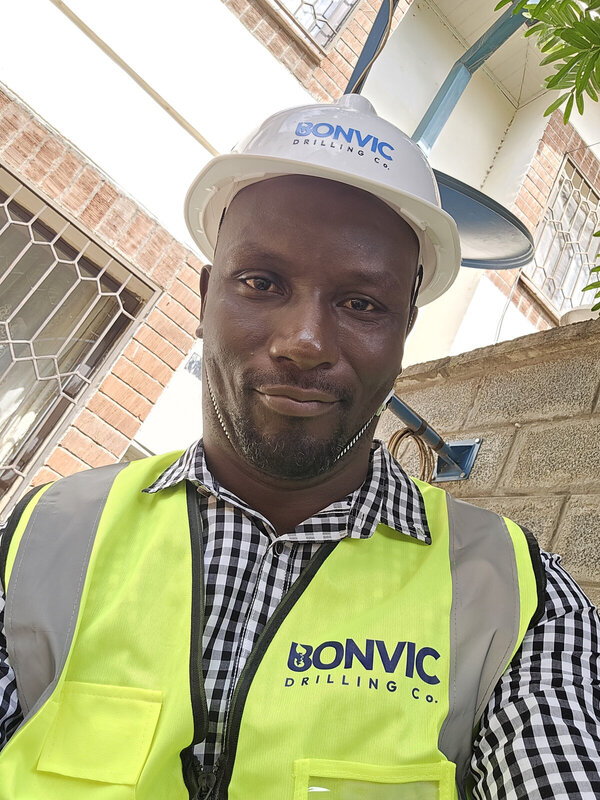
I’m Ateya. I run project management at Bonvic Drilling Co. Ltd, a borehole drilling and water infrastructure company. I’ve spent more than a decade specifying pumps, sizing pressure tanks, drilling and equipping wells, running test-pumping, analyzing water quality reports, and getting paged at odd hours to figure out why a customer’s system stopped delivering water.
Boreholeflow is my notebook. It’s where I write down what I’ve learned about pumps, tanks, filters, and well systems in a format that’s useful to American homeowners trying to figure out what to buy or why their system isn’t working.
Why this site exists
About 13 million American homes get their water from a private well, and most of the information online about choosing pumps and pressure tanks is written by people who have never installed one. You can usually tell within two paragraphs — the writing dances around the actual sizing math, gives you “consult a professional” instead of a real recommendation, and never mentions the pre-charge pressure that’s the single biggest reason tanks fail prematurely.
I started Boreholeflow because the gap between “what an affiliate blogger writes” and “what a well driller knows” is enormous, and the cost of that gap falls on homeowners who buy the wrong equipment, install it wrong, or replace it five years too soon.
Every guide on this site is written from field experience first, spec sheets second.
What I cover
The site is organized around the parts of a private well water system you might actually need to buy or replace:
- Pumps — submersible, jet, solar, booster, plus the controllers and pressure switches that run them
- Pressure tanks — diaphragm, bladder, fiberglass, sizing, and pre-charge
- Water treatment — sediment filters, iron filters, water softeners, UV systems, and testing
- Well components — caps, pitless adapters, drop pipe, foot valves, torque arrestors
- Solar and off-grid — DC pumps, panel-direct systems, controllers, battery banks
- Troubleshooting — short cycling, pressure problems, no water, odor, discoloration
If it’s part of a private well water system, you’ll find it covered here or planned for coverage.
What I don’t pretend
A few honest things you should know:
I’m based in Kenya, not the US. Bonvic Drilling is a Kenyan company. When I write about American brands like Goulds, Amtrol, Franklin Electric, or Wellmate, I’m drawing on my experience installing equivalent equipment from Grundfos, DAB, Pedrollo, and Lorentz.
The brand names are different; the engineering is identical. A 10 GPM pump still needs 10 gallons of drawdown whether it’s in Texas or Trans Nzoia. I’m transparent about this because it’s the honest framing. I bring international field experience to American buying decisions, and that’s a different value than someone reviewing tools from their suburban garage.
I haven’t physically held every American product I review. I’m comparing on engineering specifications, failure-mode patterns I’ve seen across hundreds of installations, manufacturer track records, and verified owner feedback. If I haven’t installed a specific model myself, I say so. If I have direct experience with the equivalent in another brand, I’ll tell you that too.
This site earns affiliate commissions. When you click an Amazon link on Boreholeflow and buy something, I earn a small commission at no extra cost to you. This funds the site. It does not influence which products I recommend.
There’s no version of this site where “the product with the higher commission gets the higher rating,” because the long-term reputation cost of doing that is greater than any commission earned. The full disclosure is here.
How I write reviews
A buying guide on this site goes through roughly this process:
- Identify the buyer question (what are people actually trying to solve when they search for “best well pressure tank”?)
- Survey the products currently sold on Amazon and at plumbing supply houses
- Compare specifications against what matters in the field — drawdown, pre-charge, warranty, max PSI, connection size, build materials
- Cross-reference against failure modes I’ve seen with equivalent equipment over the years
- Filter to the 5–7 worth recommending
- Write the sizing math and pre-charge guidance so the reader can actually use what they buy
I don’t run “6-month testing periods in Arizona heat.” That was the old site’s fictional methodology. The real one is: a decade of field experience, applied to the products available in the US market, with the math and engineering principles that apply regardless of brand.
Get in touch
Questions, corrections, story ideas, or photos of a strange pressure tank installation you can’t figure out? I read everything that comes through the contact page.
You can also follow Bonvic Drilling on YouTube, where I post video walkthroughs of borehole drilling, pump installations, and water system commissioning from real job sites. Useful if you want to see how this work actually happens.
Boreholeflow is owned and operated by Ateya. The site is independent and not affiliated with any pump, tank, filter, or equipment manufacturer.