Best Water Level Meters and Well Sounders: A Driller’s Picks for Home Wells
Most well owners know their pump brand and their tank size. Very few know the one number that tells them if the well itself is healthy. That number is the depth to water, and the best water level meters make it easy to track.
The stakes are real. The Geological Survey reports that about roughly 15 percent of the population, drink from private wells.
I have run test pumping on boreholes for more than a decade. In this guide I will show you which water level meters and well sounders are worth the money, how each type works, and how to take a reading you can trust.
1/100 ftReading precision of a pro tape
1.47 galWater stored per foot of 6 inch casing
This article may contain affiliate links, and we may earn a commission from purchases made through those links. For more information, please refer to our disclosure.
Quick Picks: Best Water Level Meters at a Glance
| Meter | Type | Best for | Typical price |
|---|---|---|---|
| Solinst 101 P7 | Electric tape | Best overall accuracy | From about $680 |
| Eno Scientific Well Sounder 2010 PRO | Sonic | No contact readings and data logging | About $1,675 |
| Solinst 101B | Electric tape | Best value from a pro brand | From about $440 |
| Heron Skinny Dipper | Electric tape | Crowded or narrow casings | From about $635 |
| Solinst Sonic Water Level Meter | Sonic | Fast checks on many wells | About $1,840 |
| Generic steel tape dip meter | Electric tape | Tight budgets and shallow wells | Under $150 |
Prices are US supplier list prices checked in October 2026. They change with tape length and seller, so confirm before you order.
Why Every Well Owner Should Measure Water Level
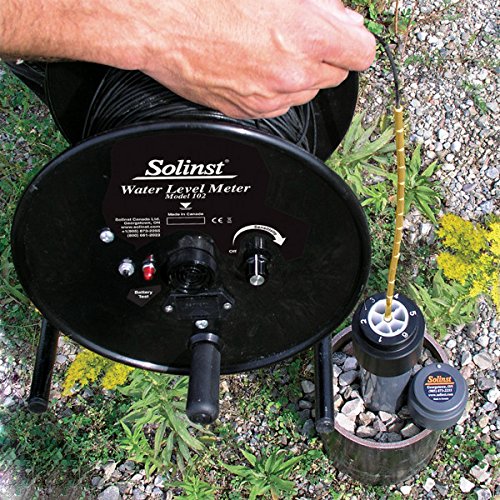
Your pump only works if it stays under water. When the water level drops close to the pump intake, the pump sucks air, overheats, and fails early. A water level meter warns you long before that happens.
Water level also tells you how much water you have in reserve. A 6 inch well casing stores about 1.47 gallons per foot of water. If your water column shrinks by 50 feet, you just lost roughly 73 gallons of storage.
Three terms to know. Static water level is the depth to water when the pump has been off for a while. Pumping water level is the depth while the pump runs. Drawdown is the difference between the two.
These numbers matter when you size equipment too. You need them to choose a pump, and you can plug them straight into our solar pump sizing calculator. They also explain many low pressure complaints that people wrongly blame on their well pressure tank.
Electric Tape or Sonic Well Sounder: Which Type Is Right?
Electric tape water level meters
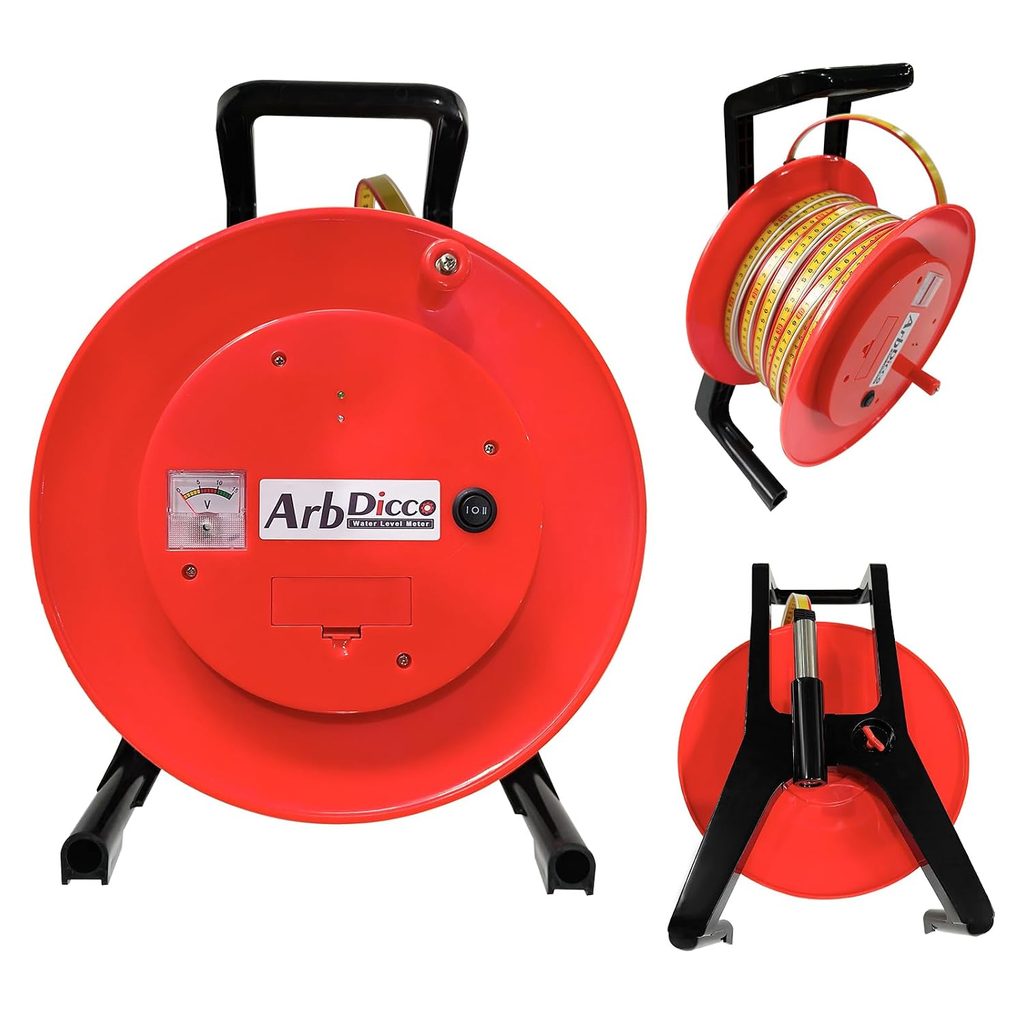
An electric tape is a marked flat tape on a reel with a metal probe on the end. When the probe touches water, it completes a circuit and the reel beeps and lights up. You read the depth off the tape at the top of the casing.
Tapes are simple and very precise. Good ones are marked every 1/100 of a foot. The downside is that you lower something into the well, so the tape can snag on wires and must be cleaned between wells.
Sonic well sounders
A sonic well sounder sends a sound pulse down the casing and times the echo off the water surface. Sound travels at roughly 1,100 feet per second in air, so a reading takes only a second or two. Nothing touches your water.
Sounders shine in wells crowded with pipe and cable where a tape would tangle. They cost more, and they are a little less precise.
The 6 Best Water Level Meters and Well Sounders Reviewed
1. Solinst 101 P7 Water Level Meter
Best overall
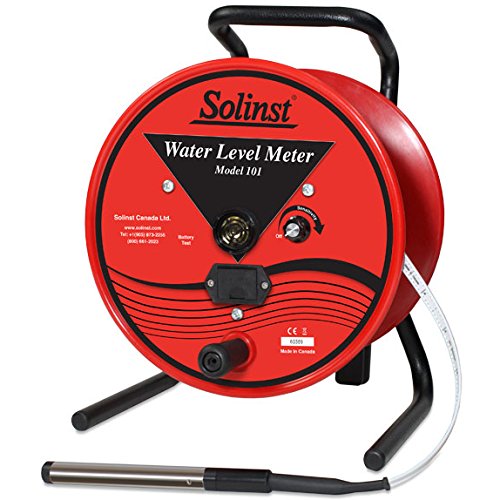
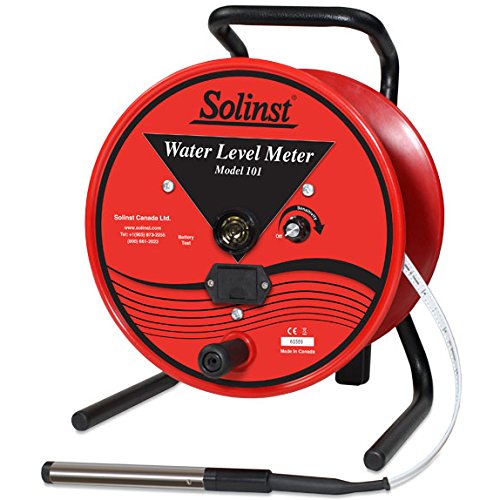
The Solinst 101 is the meter you will find in most drilling trucks, and for good reason. Its flat PVDF tape is laser marked every 1/100 of a foot and is traceable to NIST standards.
The P7 probe is pressure proof to 500 psi and can be submerged up to 1,000 feet. That means you can measure total well depth as well as water level.
It runs on a single 9 volt battery and has a sensitivity dial to stop false beeps from water dripping down the casing. Solinst also sells spare probes and tapes, so this is a tool you repair, not replace.
Good: top tier accuracy, tough tape, repairable. Not so good: price climbs quickly with tape length.
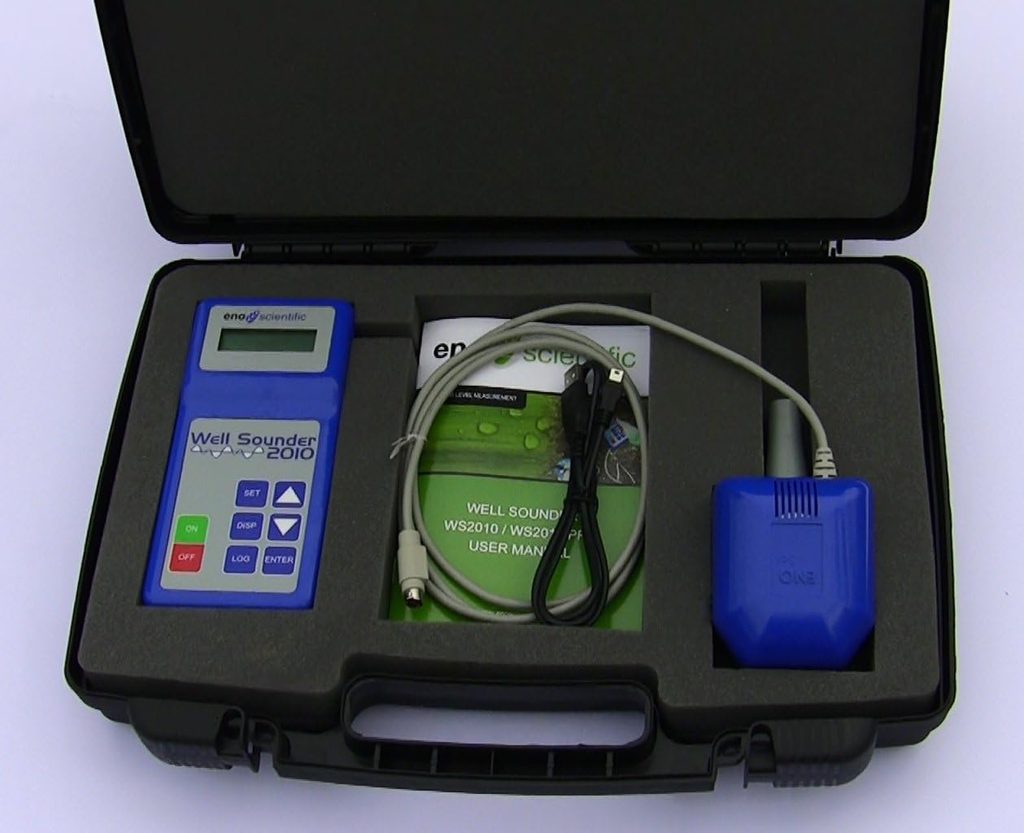
2. Eno Scientific Well Sounder 2010 PRO
Best sonic well sounder
The Well Sounder 2010 PRO is the best known sonic meter for home and professional wells. You place the probe in the well cap vent opening and switch it on. The static water level shows on the screen within seconds.
Published specs list a resolution of 0.05 feet and accuracy of 0.1 feet. The Amazon listing rates it for wells down to 2,000 feet, including crooked ones.
The feature I value most is the built in data logger. You can set it to record a reading every 1 to 60 minutes, which is perfect for a drawdown and recovery test. See the full details on the Eno Scientific product page.
Good: nothing enters the well, logs data, fast. Not so good: costly, resists rain but is not submersible.
3. Solinst 101B Water Level Meter
Best value
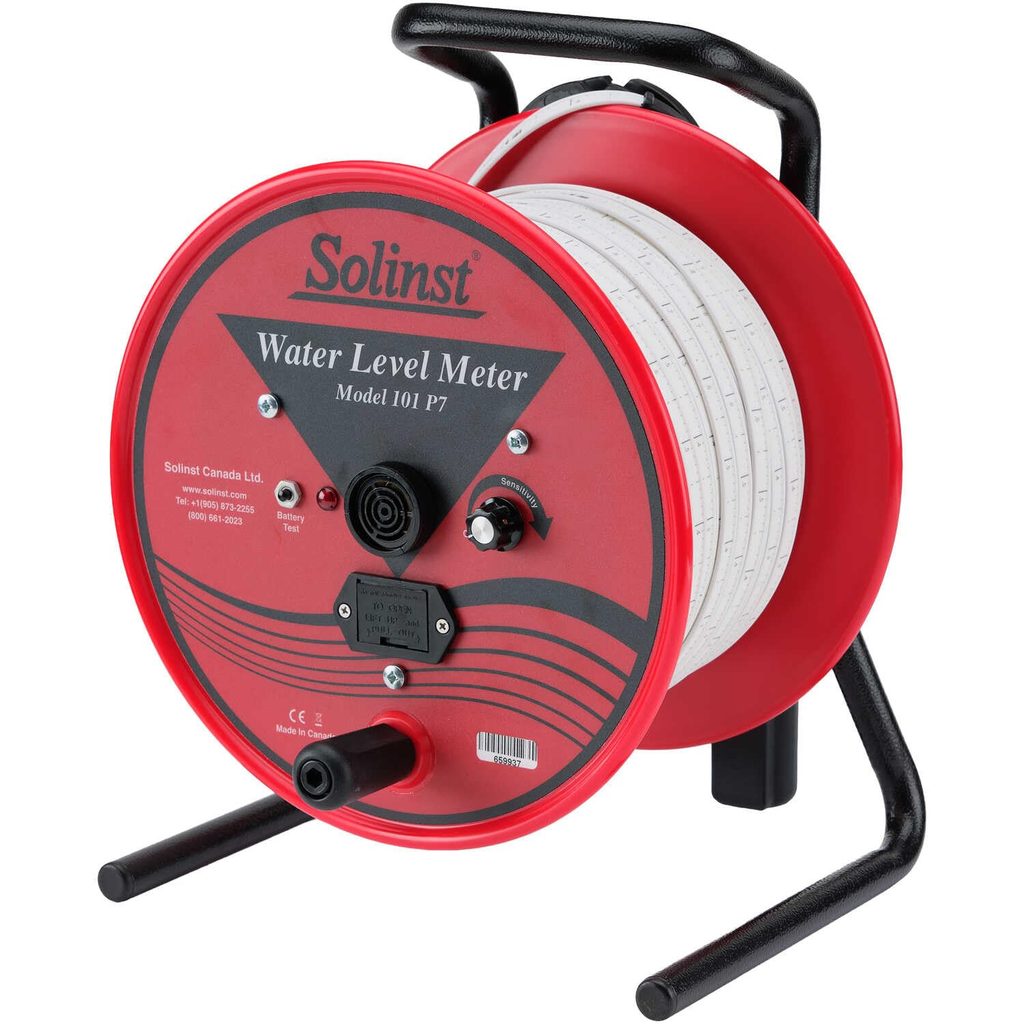
The 101B is the basic version of the Solinst 101. You get the same brand, the same beep and light system, and a properly marked flat tape. You give up the pressure proof probe and the longest tape options.
For a homeowner who checks one well a few times a year, that trade makes sense. It starts around $440, which is roughly 35 percent less than the P7. Buy a tape at least 50 feet longer than your pump setting depth.
Good: pro brand quality for less. Not so good: not built for measuring total depth in deep wells.
4. Heron Skinny Dipper
Best for tight wells
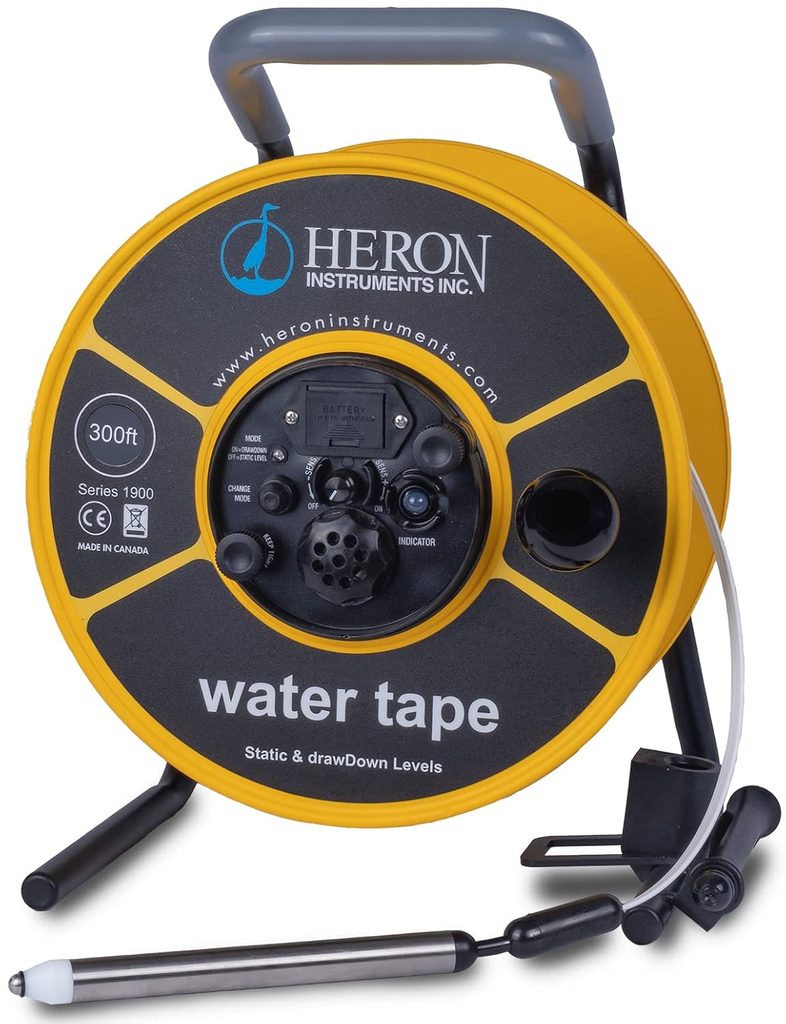
Home wells are crowded. The drop pipe, pump cable, and safety rope all share a 4 or 6 inch casing. The Heron Skinny Dipper uses a slim probe designed to slip past that clutter.
Heron is the main rival to Solinst, and build quality is in the same class. Expect to pay from about $635.
Good: slim probe, solid reel. Not so good: a lighter probe can drift in deep wells, so lower it slowly.
5. Solinst Sonic Water Level Meter
Best for many wells
This is the Solinst answer to the Eno sounder. It is a handheld unit that reads depth to water with sound, so there is no tape to clean.
At around $1,840 it is the most expensive pick here. Choose it if you want quick spot checks across many wells. If you need logging for pump tests, compare it closely with the Eno first.
Good: very fast, no contamination risk. Not so good: highest price, less precise than tape.
6. Generic Steel Tape Dip Meter
Budget pick
Amazon carries many unbranded dip meters with 100 to 500 foot steel tapes, often for under $150. They work the same way as the big names.
They are fine for a shallow well and occasional checks. Tape markings are coarser and can wear, and spare parts are rare. Check the tape against a good measuring tape before you trust it.
Good: low cost entry point. Not so good: weaker accuracy and durability, limited support.
How to Choose the Right Water Level Meter
Start with depth. Find your well log and note the total depth and pump setting. Your tape should reach at least 50 feet past the pump setting, and a sonic unit should be rated well beyond it.
Look at well access. A tape needs a clear path down the casing, ideally a dedicated sounding tube. If your well cap has only a small vent hole, a sonic sounder is the easier choice.
Decide how precise you need to be. For trend tracking, a tenth of a foot is plenty. For formal pump tests or disputes with a neighbor or a driller, a tape marked to 1/100 of a foot is the standard.
Protect your water. Anything lowered into a well can carry bacteria. The EPA notes that more than 23 million households rely on private wells, and none are covered by federal drinking water rules. Keeping your well clean is your job.
How to Measure Static Water Level in 6 Steps
- Rest the well. Switch off the pump and avoid using water for at least two hours. Overnight is better.
- Clean the probe. Wipe the probe and the first few feet of tape with a mild chlorine solution, then rinse.
- Pick a measuring point. Use the same spot on the top of the casing every time and mark it with paint.
- Lower slowly. Feed the tape down until the buzzer sounds.
- Read and repeat. Read the tape at your mark. Take a second reading and make sure the two agree within 0.02 feet.
- Record it. Write down the date, time, depth, and how long the pump was off.
For a sonic sounder, the steps are shorter. Enter the well temperature, seat the probe on the vent opening, and press the button.
From the Field: The Well That Was Not Going Dry
A homeowner with a 240 foot well called us one August, sure the well was failing. The pump was cycling off on its low water cutoff every afternoon.
We ran a tape down before touching anything else. The static water level sat at 95 feet, right where the original well log said it should be. The well was healthy.
Then we ran the pump and watched the level. It fell to 190 feet in 40 minutes, only 10 feet above the pump. The family had added lawn irrigation and was simply pumping faster than the well could refill.
The fix was a smaller flow rate and a storage tank, not a new well. A reading that took five minutes saved them many thousands of dollars. That is what a water level meter is for.
How Often Should You Check Your Well?
Measure at least four times a year, once each season. Add a reading at the end of every dry spell, since that is when levels are lowest.
Keep your readings in one notebook or spreadsheet. A single number means little, but a steady decline of a few feet each year is a clear warning.
Planning an off grid upgrade? Your seasonal low water level is the figure to use when comparing solar submersible water pumps. If your level is fine but pressure is weak at the house, a water pressure booster pump may be the better fix.
Frequently Asked Questions
What is the difference between a water level meter and a well sounder?
People use both names for the same job, which is measuring depth to water. A water level meter usually means an electric tape with a probe. A well sounder often means a sonic unit that uses sound and never touches the water.
How accurate are sonic well sounders?
Good sonic units are accurate to about 0.1 feet, a little over an inch. A quality tape reads to 1/100 of a foot. For home well monitoring, both are more than accurate enough.
Can I measure my well water level without a meter?
You can lower a weighted string and listen for the splash, but results are rough. A string can also tangle around the pump wiring and get stuck. A basic dip meter is safer and far more repeatable.
Will a water level meter contaminate my well?
It will not if you clean it first. Wipe the probe and tape with a mild chlorine solution before each use. A sonic sounder avoids the issue because nothing enters the water.
Final Verdict
For most well owners, the Solinst 101 P7 is the best water level meter you can buy. It is precise, durable, and repairable. If budget matters more, the Solinst 101B gives you most of that quality for less.
If your casing is crowded or you want logged pump test data, choose the Eno Scientific Well Sounder 2010 PRO. Whichever you pick, start recording your water level this season. Explore more driller reviewed gear on the Boreholeflow homepage.
Also Read On:
>>>https://boreholeflow.com/best-well-inspection-cameras/