Best Under Sink Reverse Osmosis Systems for Well Water: A Driller’s 2026 Buying Guide
Most reverse osmosis reviews are written for city water. City water arrives treated, pressurized at a steady level, and free of the iron, sediment, and bacteria that private wells routinely carry.
Well water is a different animal. After more than a decade of drilling boreholes and commissioning water systems, I can tell you that the RO unit under your sink is only as good as the water and pressure you feed it.
This guide ranks the best under sink reverse osmosis systems for well water based on what actually matters on a private well. That means iron tolerance, bacteria protection, low pressure performance, and how much water each system sends down the drain.
This post contains affiliate links. If you buy through them, boreholeflow.com may earn a small commission at no extra cost to you. Read our full disclosure.
Why Well Owners Need Reverse Osmosis More Than Anyone
Public water systems are tested and regulated under the Safe Drinking Water Act. Private wells are not, which means the testing and treatment are entirely on you.
The numbers explain why that matters. A national USGS study of about 2,100 private wells across 48 states found that more than 20 percent contained at least one contaminant at a level of potential health concern. Those samples were taken before any home treatment.
Here are the key figures every well owner should know:
- 43 million Americans, roughly 15 percent of the population, drink from private wells.
- More than 1 in 5 private wells tested had at least one contaminant at a level of health concern.
- About 4 percent of sampled wells exceeded the federal nitrate standard of 10 mg/L, mostly in heavily farmed areas.
- Radon and arsenic were the contaminants most often found at levels of concern, and both come from natural geology.
- 60 percent of wells showed traces of organic contaminants such as pesticides or solvents at lower levels.

Reverse osmosis is one of the few point of use technologies that tackles many of these problems at once. A good RO membrane reduces arsenic, nitrate, fluoride, lead, total dissolved solids, and a long list of other dissolved contaminants that ordinary carbon filters let straight through.
What Makes Well Water Hard on RO Systems
An RO membrane is a fine sheet that rejects dissolved solids at the molecular level. That precision is exactly why it is so sensitive to what reaches it.
1. Iron and manganese foul the membrane
Dissolved iron oxidizes when it meets air or chlorine and turns into rusty particles. Those particles coat the membrane surface, choke production, and can shorten membrane life from three years to under one.
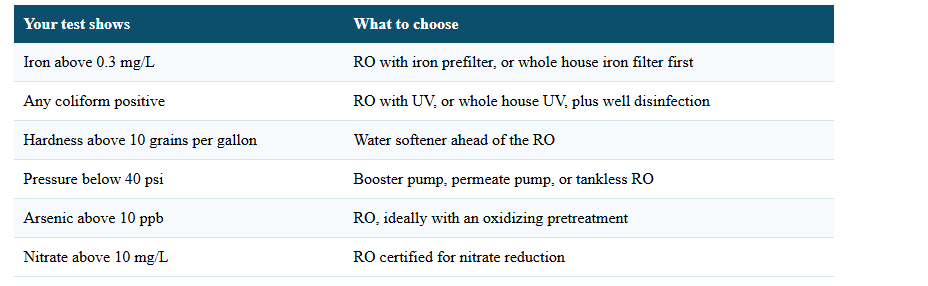
The EPA secondary standard for iron is 0.3 mg/L. If your test shows more than that, you need either an RO system with a built in iron prefilter or a dedicated whole house unit from our guide to the best iron filters for well water.
2. Bacteria can colonize the system
RO membranes physically block most bacteria. The problem is everything before and after the membrane, especially the storage tank, which is a dark, room temperature vessel holding water for hours.
If your well has ever tested positive for coliform, pair your RO with UV disinfection. Our UV water purifiers for coliform bacteria guide covers whole house options, and two systems below include UV right at the sink.
3. Well pressure swings
This is the problem nobody talks about. Most RO membranes are rated at around 50 to 60 psi, and production drops sharply as pressure falls.
A typical well runs on a 30/50 or 40/60 pressure switch. That means your kitchen tap spends much of its time near the bottom of the range, especially while the pump is cycling or your pressure tank is waterlogged.
Below about 40 psi, a standard RO unit makes water slowly, wastes more of it, and lets more dissolved solids slip through. The fix is a system with a booster pump or a permeate pump, or a well water booster pump on the line.
4. Every wasted gallon comes from your well
On city water, RO drain water is a small line on the utility bill. On a well, each wasted gallon means extra pump starts, extra wear, and extra load on your septic system.
That is why drain ratio carries more weight in this guide than it would in a city water review.
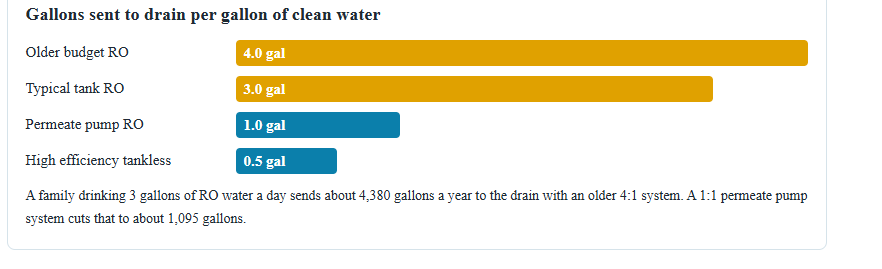
Gallons sent to drain per gallon of clean water
Best Under Sink Reverse Osmosis Systems for Well Water: Comparison
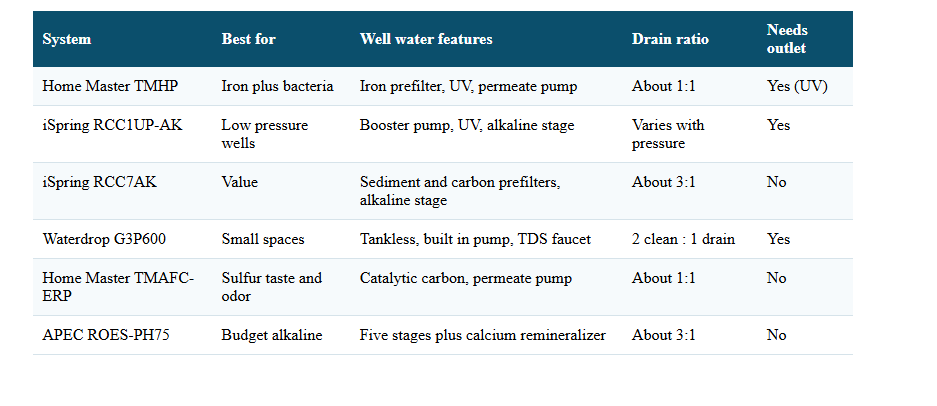
The 6 Best Under Sink RO Systems for Well Water, Reviewed
1. Home Master TMHP HydroPerfection: Best Overall for Well Water
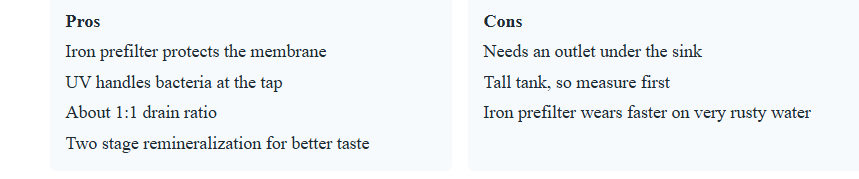
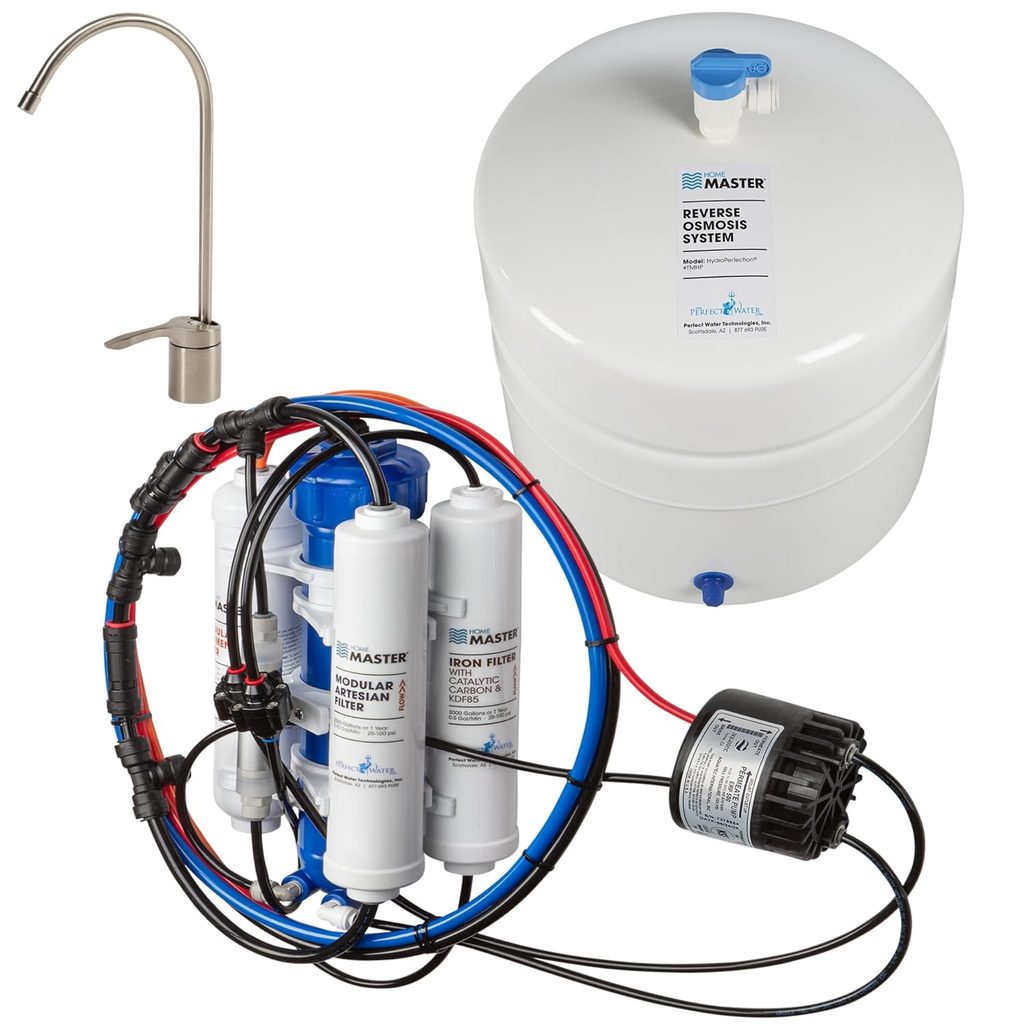
The TMHP is the system I recommend first to well owners because it was built with untreated water in mind. It combines a dedicated iron prefilter, an EPA registered UV sterilizer, and a non electric permeate pump in one under sink package.
The permeate pump uses the energy of the drain water to push clean water into the tank. That brings waste down to about 1:1 and keeps production steady even when your pressure switch is near its cut in point.
Its modular filter design also means you replace the whole cartridge, housing included. That matters on a well because old housings are where slime and iron residue build up.
2. iSpring RCC1UP-AK: Best for Low Pressure Wells
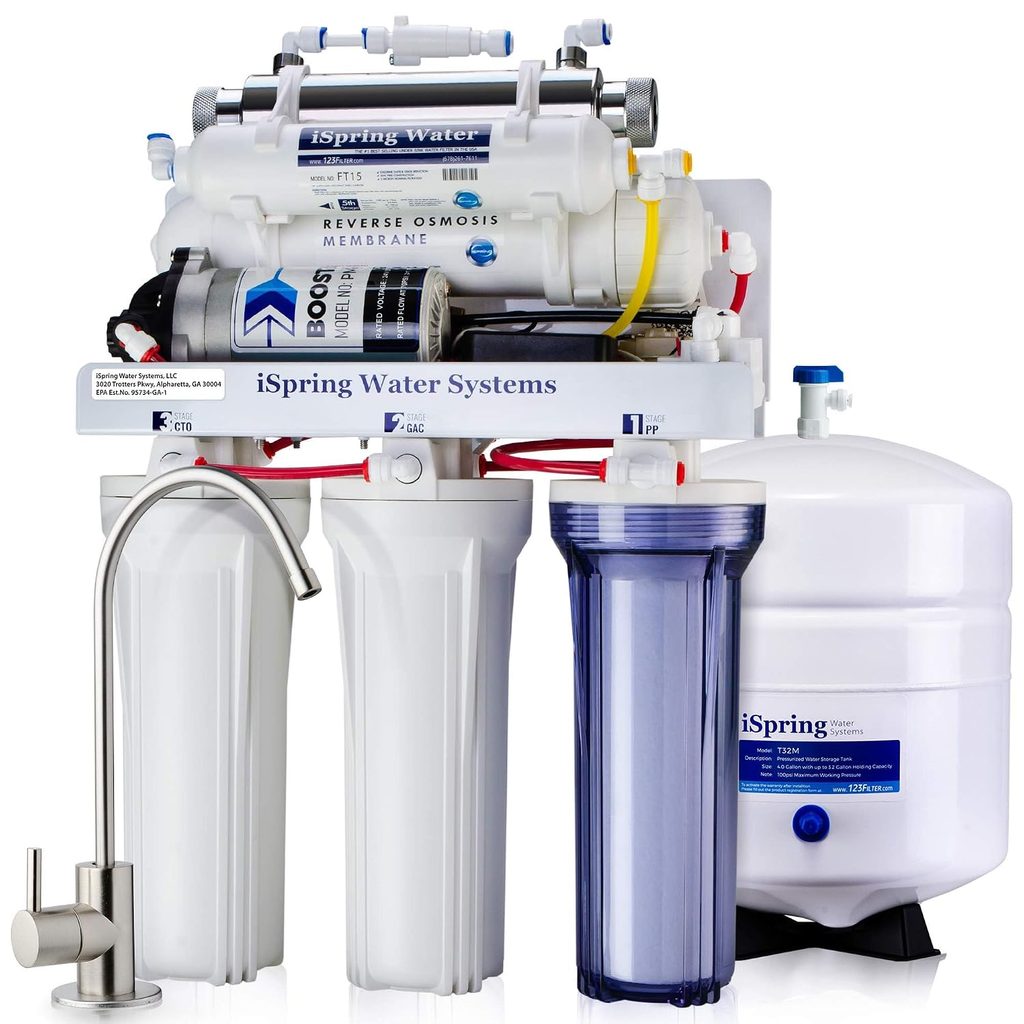
If your well delivers less than 40 psi at the kitchen, a booster pump is not optional. The RCC1UP-AK includes one, along with a UV stage and an alkaline remineralization filter, all rated at 100 gallons per day.
The pump lifts feed pressure to where the membrane works best, so you get faster tank recovery and better rejection of dissolved solids. It is an ideal match for shallow wells, older jet pumps, and homes at the end of a long supply line.

3. iSpring RCC7AK: Best Value
The RCC7AK is one of the most widely installed under sink RO systems in the US, and it has earned that reputation. It is a six stage, 75 GPD unit with an alkaline remineralization stage and a top mounted faucet that installs from above the counter.
It has no iron, UV, or pump features of its own. It works best on a well that already has sediment filtration, iron treatment, and steady pressure above about 45 psi.

4. Waterdrop G3P600: Best Tankless System
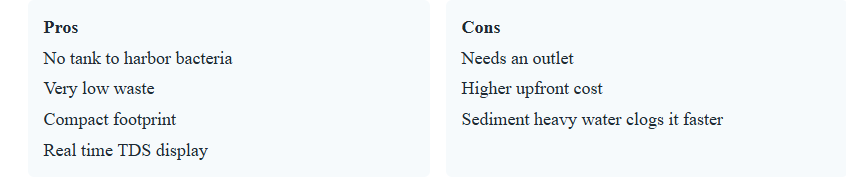
Going tankless solves two well water problems at once. There is no storage tank to grow bacteria, and the built in pump means the system does not depend on your well pressure.
The G3P600 is rated at 600 gallons per day and fills a glass in seconds. Its smart faucet shows live TDS readings, which gives you a simple way to spot membrane trouble early.
The 2:1 clean to drain ratio is the best in this lineup. On a well, that translates directly into fewer pump starts and less water going to your septic field.
5. Home Master TMAFC-ERP Artesian: Best for Sulfur Taste and Odor
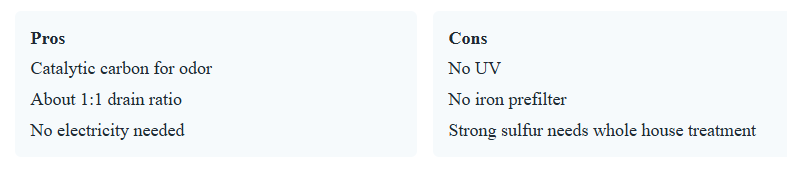
Plenty of wells carry a faint rotten egg smell from hydrogen sulfide. The TMAFC-ERP uses an 8.5 inch catalytic carbon block, which handles low levels of sulfur odor far better than standard carbon.
It shares the permeate pump and two pass remineralization of the TMHP, so waste stays around 1:1. It skips the UV and iron stages, so it suits wells that test clean for bacteria and low for iron.
6. APEC ROES-PH75: Best Alkaline Budget Pick
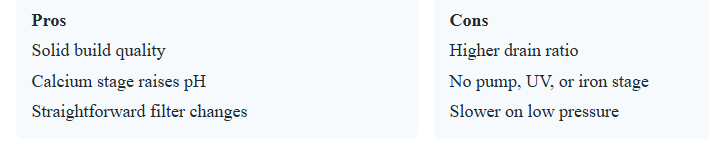
APEC is a California based company with a long track record in residential RO. The ROES-PH75 is a six stage, 75 GPD system that adds calcium back into the water to raise pH and improve taste.
That remineralization is helpful on wells, since many groundwater sources already lean acidic. Like the RCC7AK, it expects pretreated water and stable pressure.
A Field Story: Why the Cheapest RO Cost the Most
A few years back, we serviced a 310 foot drilled well for a family who had installed a budget RO unit themselves. Within eight months the membrane was producing under a gallon a day, and the water tasted metallic.
The well tested at 1.4 mg/L iron, almost five times the secondary standard, and household pressure sat around 35 psi because the pressure tank had lost its air charge. The membrane was coated orange, and the RO had been sending close to five gallons to the drain for every gallon it made.
We recharged the tank, added a whole house iron filter, and swapped in a permeate pump system. Two years later the same membrane is still testing under 20 ppm TDS, and the pump runs noticeably less.
How to Choose the Right RO System for Your Well
Step 1: Test your water first
The CDC recommends testing private wells every year for total coliform bacteria, nitrates, total dissolved solids, and pH. Add iron, manganese, hardness, and arsenic before you buy any RO system.
Your local health department or a state certified lab can run these tests. The EPA private wells page links to state resources.
Step 2: Match the system to your results

Step 3: Check certification
Look for systems certified to NSF/ANSI 58, the standard for reverse osmosis drinking water systems. You can confirm any claim in the NSF certified products database.
Step 4: Fix the well before blaming the filter
Short cycling, sputtering taps, and falling pressure often point to the well, not the RO. Our guide to the signs your well pump is going bad walks through what to check.
Surface water getting into a cracked or loose wellhead is also a common source of bacteria. A proper sanitary well cap is cheaper than treating the problem at every tap.
The Ideal Treatment Order on a Well
On most of the wells I work on, the best results come from treating water in this order:
- Sediment filter at the pressure tank to catch sand and grit.
- Iron filter or softener to remove iron, manganese, and hardness.
- Whole house UV if bacteria are present.
- Under sink RO for drinking and cooking water.
Following this sequence lets each stage do its own job. Your RO membrane then lasts its full rated life instead of failing early.
Maintenance Schedule for Well Water RO Systems
- Sediment and carbon prefilters: every 6 months, or every 3 to 4 months on high sediment wells.
- Iron prefilter: every 6 to 12 months, depending on iron level.
- RO membrane: every 2 to 3 years, or when TDS output climbs noticeably.
- UV lamp: every 12 months, even if it still glows.
- Storage tank: sanitize once a year and check the air charge at about 7 psi when empty.
A cheap handheld TDS meter is the best maintenance tool you can buy. Compare tap water to RO water every month, and change the membrane when rejection falls below about 90 percent.
Frequently Asked Questions
Can you use reverse osmosis on well water?
Yes, and it is one of the best ways to treat drinking water from a well. The key is protecting the membrane with sediment, iron, and bacteria treatment where your test results call for it.
Does reverse osmosis remove bacteria from well water?
RO membranes block most bacteria, but the storage tank and fittings can still harbor growth. If your well tests positive for coliform, pair RO with UV disinfection.
What water pressure does an RO system need on a well?
Most systems need at least 40 psi and work best around 50 to 60 psi. If your pressure is lower, choose a system with a booster pump or permeate pump.
How much water does an under sink RO system waste?
Older systems can send 3 to 4 gallons to the drain for every clean gallon. Permeate pump systems cut that to about 1:1, and the best tankless units do even better.
Final Verdict
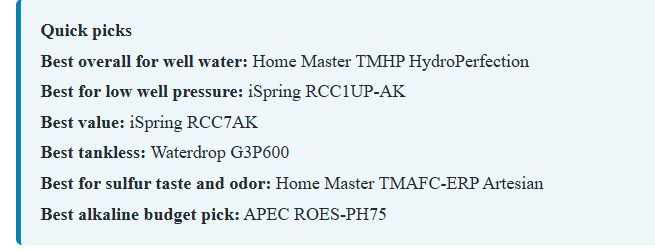
For most well owners, the Home Master TMHP HydroPerfection is the best under sink reverse osmosis system for well water because it handles iron, bacteria, pressure swings, and waste in one unit. If low pressure is your main issue, choose the iSpring RCC1UP-AK, and if space and efficiency matter most, go with the Waterdrop G3P600.
Whatever you pick, test your water first and fix the well before you blame the filter. That one habit will save you more money than any system on this list.
Also Read On:
>>>Best Whole House Sediment Filters and Spin Down Prefilters for Well Water
>>>Best UV Water Purifiers for Wells With Coliform Bacteria (2026)
>>>Well-X-Trol vs Flexcon vs Water Worker: Which Well Pressure Tank Brand Should You Buy?