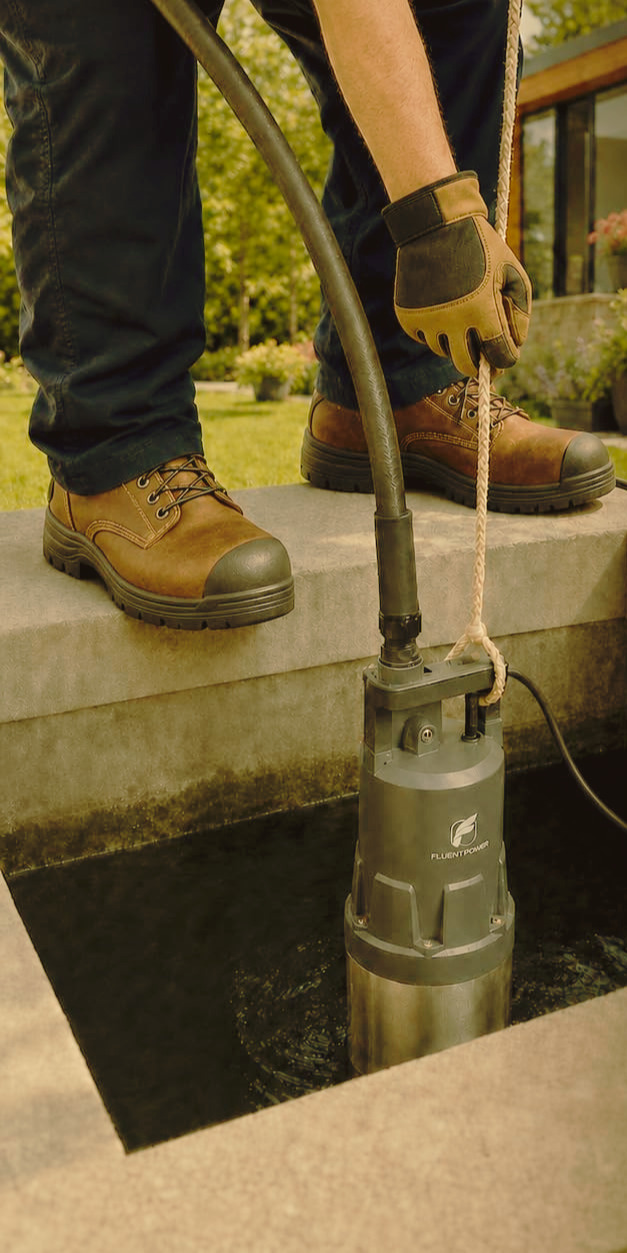
Battery Backup for Well Pump: How to Size a System That Actually Starts Your Pump
The lights go out, and within an hour the kitchen faucet coughs air. City homes keep their water during a blackout because the utility runs the pumps, but your well pump stops the second the grid does. A well planned battery backup for well pump power fixes that quietly, with no fuel, no noise, and no midnight trip to start a generator in the rain.
I have spent more than a decade drilling, equipping, and commissioning boreholes, and the most common backup mistake I see is not a cheap battery. It is a battery that was never sized for how a pump motor actually starts. This guide walks you through the three numbers that decide whether your setup works, with worked examples you can copy.
This article may contain affiliate links. If you buy through them, Boreholeflow may earn a commission at no extra cost to you. Read our disclosure.
Quick takeaways
- Your backup must handle the pump’s startup surge, typically 3 to 5 times its running watts.
- Most deep well pumps run on 240V, so a 120V only power station will not run them.
- A typical half horsepower pump uses only about 0.2 kWh per 100 gallons, so energy is rarely the problem. Surge is.
- A soft starter or constant pressure drive can cut the surge enough to let a smaller battery do the job.
Why Well Owners Need a Backup Plan More Than Anyone
You are far from alone on a private well. The EPA estimates that more than 43 million Americans rely on private wells for drinking water, across more than 23 million households. Every one of those homes loses running water, toilet flushing, and often heat (if a boiler is involved) the moment the power drops.
Those outages are getting longer. According to the U.S. Energy Information Administration, customers averaged 11 hours of interruptions in 2024, nearly twice the annual average of the decade before. Outages tied to major events such as hurricanes and winter storms averaged nearly nine hours in 2024, compared with about four hours a year from 2014 to 2023.
Where you live matters even more than the national average. South Carolina customers saw nearly 53 hours without power in 2024, while states like Arizona and South Dakota averaged under two. In 2022, the EIA reported Florida averaged 19.1 hours and heavily forested states such as Maine and Vermont saw frequent tree related outages.

Source: Energy Information Administration (EIA) reliability data. Averages hide long tails; individual rural outages after storms often run several days.
Averages also hide the bad days. Rural lines at the end of a feeder are often the last to be restored, so a two day outage for a well owner is common after a big storm.
Can a Battery Really Run a Well Pump?
Yes, and modern lithium systems do it well. The catch is that a pump motor is one of the hardest loads in your house to start. Three numbers decide whether a given battery and inverter will work: voltage, surge watts, and energy (kWh).
Get all three right and the pump starts cleanly every time. Miss one, usually surge, and the inverter trips the instant the pressure switch closes.
Step 1: Read Your Pump Nameplate
Before you shop, find the motor label or the control box sticker in your basement or well house. You need four facts: horsepower, voltage (115V or 230V), full load amps, and whether it is a 2 wire or 3 wire motor. If you see a separate control box near the pressure tank, you have a 3 wire pump.
Also look for locked rotor amps (LRA) or a code letter. That figure tells you the current the motor pulls in the first split second of starting, and it is the real number your inverter must survive.

Step 2: Size for the Startup Surge
An induction motor pulls a big burst of current to get the impeller spinning, then settles to a much lower running draw. For most residential well pumps that burst is roughly 3 to 5 times the running watts. Your inverter’s surge (peak) rating must clear it with room to spare.
| Pump size | Typical running watts | Typical starting watts | Energy per 100 gallons* |
|---|---|---|---|
| 1/2 HP | 750 to 1,000 W | 2,000 to 3,000 W | about 0.17 kWh |
| 3/4 HP | 1,000 to 1,500 W | 2,500 to 4,500 W | about 0.22 kWh |
| 1 HP | 1,500 to 2,000 W | 3,500 to 6,000 W | about 0.29 kWh |
| 1.5 HP | 2,000 to 2,500 W | 5,000 to 8,000 W | about 0.38 kWh |
*Assumes a 10 GPM pump running 10 minutes per 100 gallons. Ranges are typical field values; always confirm with your motor’s nameplate or manufacturer data.
Here is a simple rule I give clients: take the top of the starting range for your pump, then add 25 percent headroom for cold batteries, aging motors, and anything else running when the pump kicks on. For a 1 HP pump, that means looking for an inverter with a surge rating of about 7,500 watts.
Step 3: Work Out How Much Battery You Need
This is the good news section. Pumps draw a lot of power, but only for minutes at a time, so the total energy is small. Most families use a few hundred gallons a day normally and far less once they switch to outage habits.
Worked example: A family of four runs a 3/4 HP pump at 10 GPM. During an outage they cut back to about 150 gallons a day (shorter showers, no laundry). That is 15 minutes of pump time at roughly 1,300 watts, or about 0.33 kWh per day.
Add a refrigerator at roughly 1.5 kWh a day, a few lights, phone charging, and a furnace blower, and the whole essential load lands near 3 to 4 kWh daily. A 5 kWh battery covers a full day comfortably, and a 10 kWh system carries you through most two day outages without solar.
If you are planning a solar powered well in the first place, run your numbers through our solar pump sizing calculator before buying panels or batteries.
From the field: A couple I advised had a 1 HP submersible at 260 feet and bought a popular 3,600 watt power station after an ice storm left them hauling water from a neighbor. The first time the pressure switch closed, the unit beeped, flashed an overload code, and shut down. The battery had plenty of energy, but the motor wanted close to 6,000 watts for a fraction of a second.
We did not replace the battery. We added a soft starter in the pump circuit, which held the inrush below 3,000 watts, and the same unit has started that pump every outage since. Total extra cost was a few hundred dollars instead of a new system.
Four Battery Backup Setups for Well Pumps, Compared
There is no single best system. The right choice depends on your pump size, how long your outages last, and whether you want the rest of the house covered too.
| Setup | Best for | Pros | Watch out for |
|---|---|---|---|
| Whole home battery with 240V inverter | Any pump size, long outages | Automatic switchover, covers the whole house, pairs with rooftop solar | Highest cost; needs professional install |
| 240V capable portable power station | 1/2 to 1 HP pumps | Plug in setup, expandable, no permit for some installs | Surge limits; needs a transfer switch or inlet |
| DC solar pump with battery bank | Off grid homes, cabins, livestock | Very efficient, no surge issue, runs on sunlight | Lower flow; often replaces your AC pump |
| Battery plus small generator (hybrid) | Multi day outages | Generator recharges the battery, runs only a few hours | Still needs fuel storage |
Whole Home Battery Systems
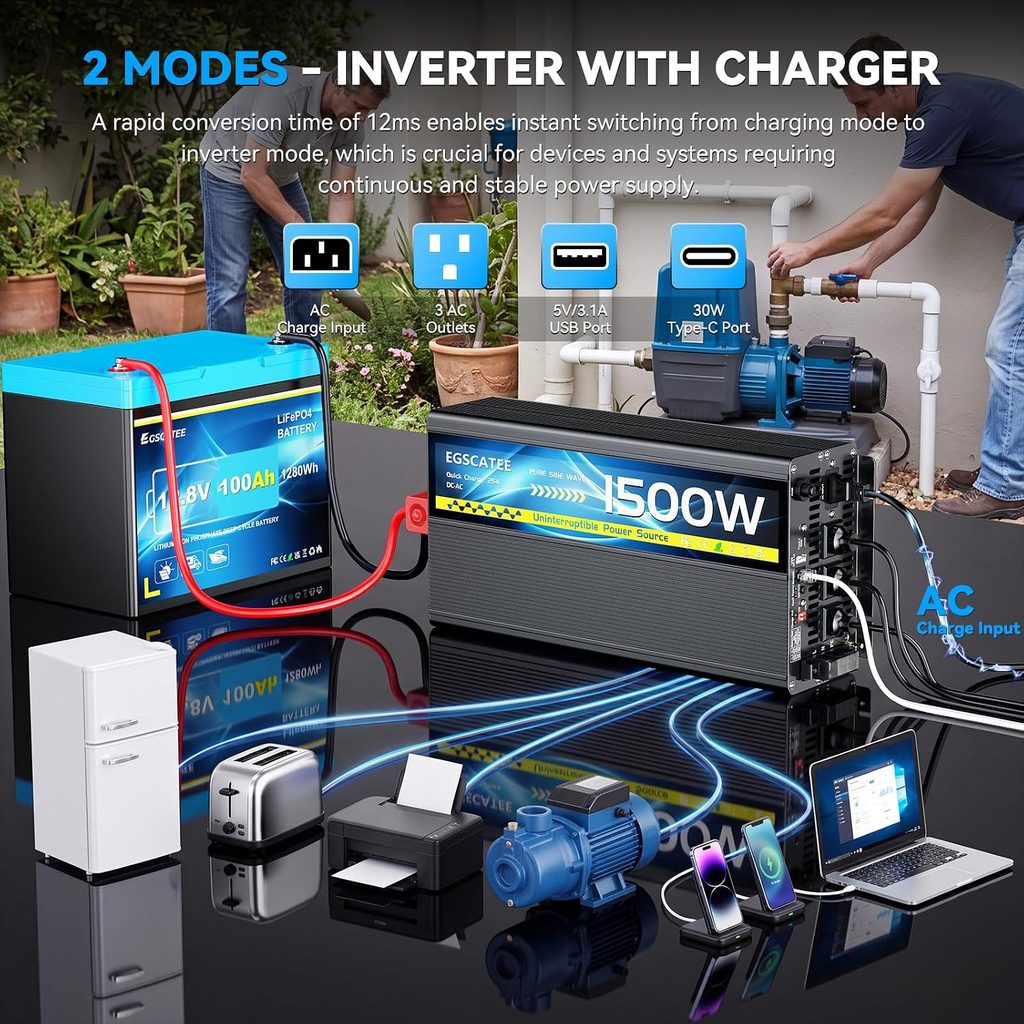
Wall mounted lithium iron phosphate (LiFePO4) systems sit next to your main panel and take over automatically when the grid fails. Most quality units now offer 240V output and high surge ratings, which makes them the most hands off option for larger pumps. Ask the installer specifically about motor starting, and give them your pump’s LRA so they can confirm the inverter will handle it.
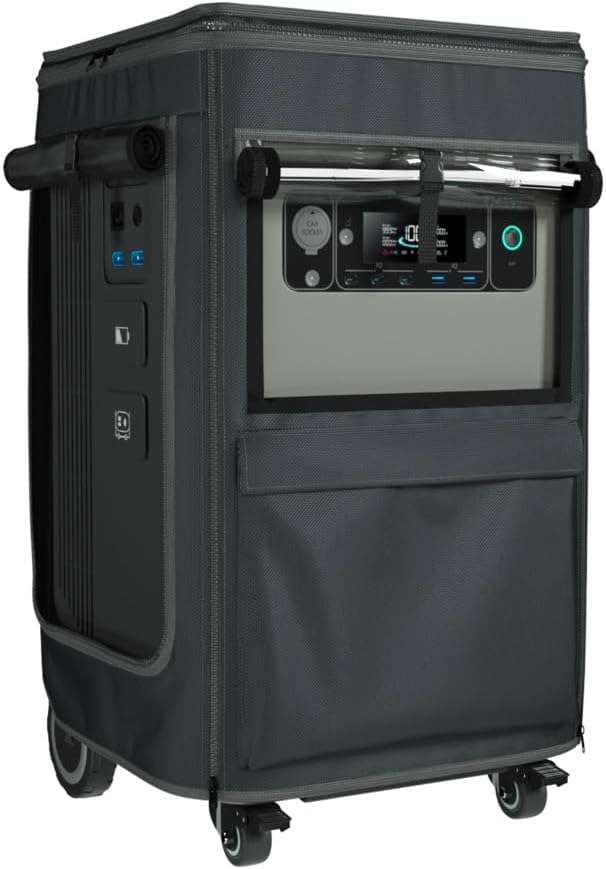
Portable Power Stations With 240V Output
Large portable units such as the Anker SOLIX F3800 and the EcoFlow DELTA Pro Ultra can output 120/240V and accept expansion batteries. They connect to your home through a power inlet box and transfer switch, so you can feed the pump circuit without unplugging anything. Check the published surge rating against your pump’s starting watts before you buy, not after.
DC Solar Pumps With Batteries
Some owners skip the surge problem entirely by installing a DC solar submersible with a battery bank and controller. DC brushless motors ramp up gently, so they never hit the inrush spike of an AC motor. The tradeoff is lower flow, which is why many people store water in a cistern; see our guide to the best water storage tanks for well systems.
The No Battery Fallback
Even the best battery is not a complete plan for a long grid down event. A manual pump installed alongside your submersible gives you water with zero electricity. Our best hand pumps for wells guide covers the models that share a casing with an existing pump.
How to Cut the Surge So a Smaller Battery Works
Reducing starting current is often cheaper than buying a bigger inverter. These are the three fixes I use most on job sites.
- Soft starter. A well pump soft starter ramps voltage up over a second or two and can cut inrush by 50 to 70 percent. It is the single best upgrade for battery backed pumps.
- Constant pressure drive. A variable frequency drive starts the motor slowly every time and only runs it as fast as demand requires. Our constant pressure well pump systems guide explains how these work.
- Fewer starts. A properly sized pressure tank means the pump starts less often, which saves battery and motor life. Check your setup against our best well pressure tanks sizing chart.
If your pump has been short cycling, fix that before adding a battery. Every extra start drains energy and stresses the inverter, and our short cycling diagnosis tool will help you find the cause.
Installation and Safety Essentials
A battery backup touches your main electrical system, so treat the install with the same care as a new circuit. Never backfeed a dryer outlet or any other receptacle with a homemade cord. That practice can energize the utility line and injure lineworkers trying to restore your power.
- Use a listed transfer switch, an interlock kit, or the automatic switchover built into a whole home system.
- Hire a licensed electrician and pull a permit where your county requires one.
- Mount batteries where temperatures stay roughly between 32°F and 104°F; lithium cells charge poorly in freezing well houses.
- Protect the pump itself with dry run and low voltage protection; see our well pump protection devices guide.
Common Mistakes to Avoid
- Sizing for running watts only. This is the number one reason backups fail on the first start.
- Buying 120V for a 240V pump. The pump will hum, overheat, or simply not turn.
- Ignoring the rest of the house. If the refrigerator compressor and pump start together, the surges stack.
- Never testing. Flip the main breaker once a season and run the house on battery for an hour to confirm everything works.
- Running an old, failing pump on battery. A worn motor draws more current; review the signs your well pump is failing before investing.
Frequently Asked Questions
How big a battery do I need to run a well pump?
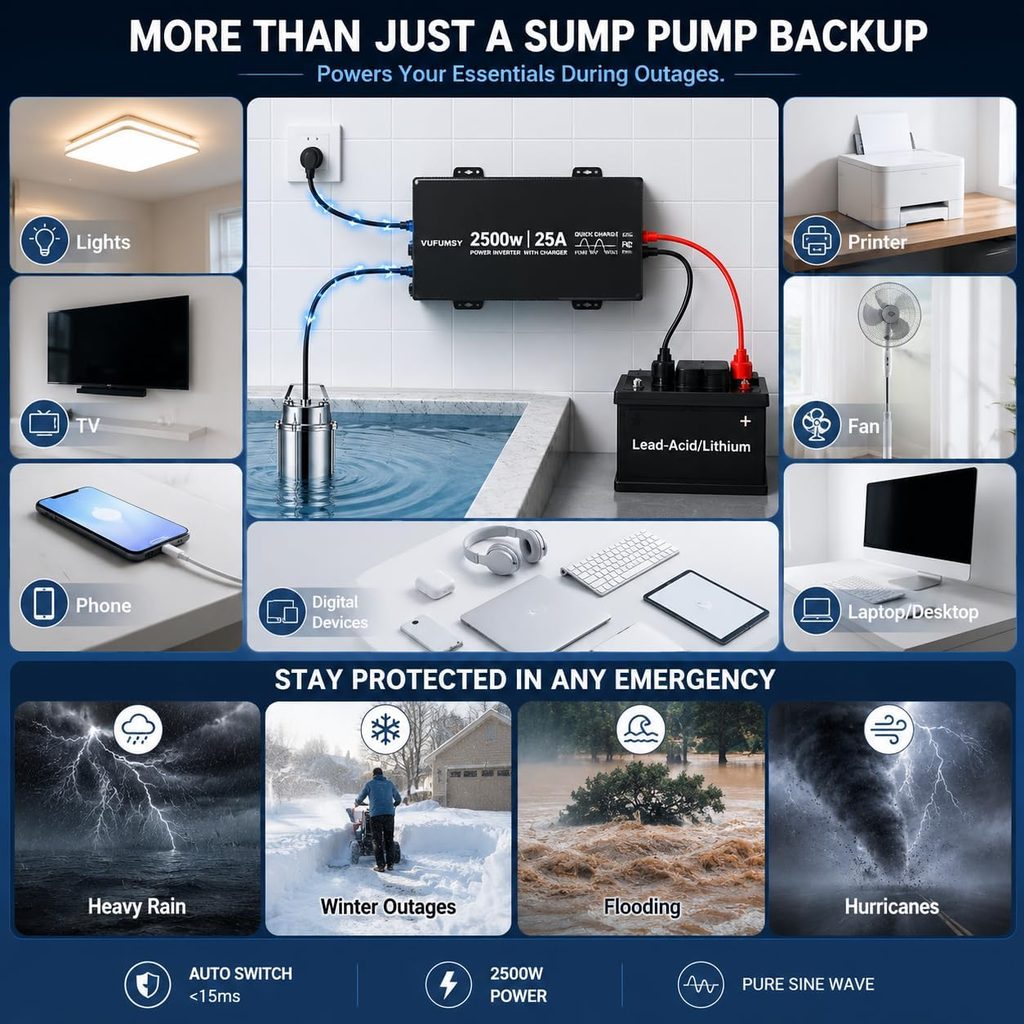
For energy, even 2 to 5 kWh covers a typical pump for a day or more of careful use. The more important rating is inverter surge, which should be about 3 to 5 times your pump’s running watts plus 25 percent headroom.
Will a portable power station run a 240V well pump?
Only if it outputs true 240V split phase power, either on its own or by linking two units through a hub. A 120V only unit will not run a 240V submersible no matter how large its battery is.
How long will a battery run my well pump?
A 1/2 HP pump uses roughly 0.17 kWh per 100 gallons, so a 5 kWh battery dedicated to the pump could deliver close to 3,000 gallons. In practice the battery also powers other loads, so plan for one to two days on a 5 to 10 kWh system without solar recharging.
Is a battery backup better than a generator for a well pump?
Batteries are silent, need no fuel, and switch over instantly, which suits short and medium outages. Generators handle very long outages better, so many well owners combine a battery with a small generator for recharging.
The Bottom Line
A battery backup for your well pump is less about buying the biggest battery and more about matching voltage and surge to your motor. Read the nameplate, size the inverter for the startup spike, add a soft starter if you are close to the limit, and test the system before the next storm.
Do that, and the next outage becomes a minor inconvenience instead of a day of hauling buckets. If you are unsure about your pump’s numbers, send me a message with the nameplate details and I will help you work through the sizing.
Explore more Solar and Off Grid guides →
Also Read On
>>>Best Generator for Well Pump Backup During a Power Outage (2026)