Best Chemical Injection Pumps for Shock Chlorination: A Driller’s Guide
If a lab report just came back positive for coliform, or your water smells like a swamp every few months, you are probably weighing your options for shock chlorinating the well.
The right chemical injection pumps for shock chlorination turn a messy bucket job into a measured, repeatable dose. I have spent over a decade drilling and servicing boreholes, and this guide covers the five pumps I trust, the math to size them, and when you can skip the pump entirely.
Boreholeflow is reader supported. When you buy through links on this page, I may earn a commission at no extra cost to you. Read the full disclosure.
Why Private Well Owners Shock Chlorinate
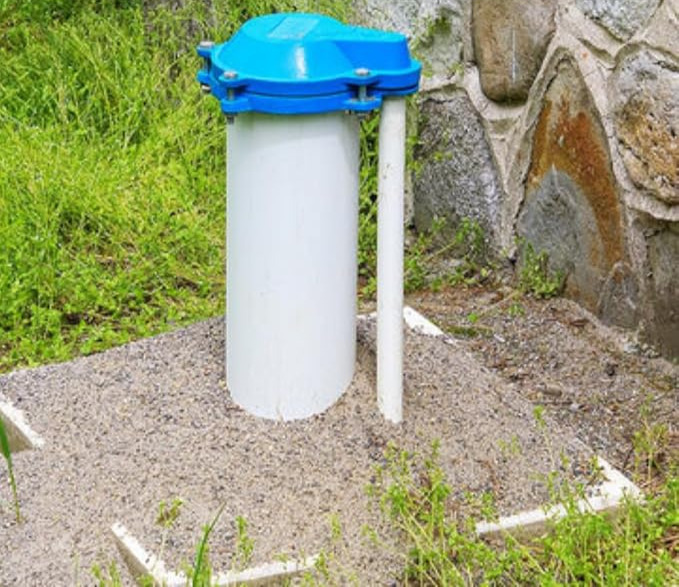
Private wells sit outside the federal Safe Drinking Water Act, so testing and treatment are entirely on the owner. The numbers show why that matters. A large USGS survey of roughly 2,100 domestic wells found bacteria far more often than most homeowners expect.
The coliform and E. coli figures come from the USGS study of domestic wells in principal aquifers, which sampled water before any home treatment. The same study found more than 20% of wells held at least one contaminant at a level of potential health concern. In a CDC waterborne disease surveillance report, 28 of 39 outbreaks were linked to groundwater, and 18 of those involved private or noncommunity wells the EPA did not regulate.
Regional surveys tell the same story. A recent study in southwest Wisconsin found 42% of private wells exceeded standards for bacteria or nitrate, with 34% positive for coliform. Shock chlorination is the standard first response when that test comes back positive, and it also knocks back iron, manganese, and sulfur bacteria.
Do You Actually Need a Pump to Shock a Well?
Here is the honest answer most product pages skip. A single shock can be done by pouring unscented bleach down the casing and recirculating it with a garden hose. If your well needs one shock after a pump repair and then tests clean, you do not need to buy anything.
A chemical injection pump earns its place in three situations:
- Recurring problems. Wells with iron or sulfur bacteria often need shocking every few months, and a pump makes each round consistent.
- Deep or high yield wells. Moving gallons of solution into a 400 foot well by hand is slow and uneven, while a pump meters it in at a known rate.
- A path to continuous chlorination. According to University of Nebraska Extension, recurring contamination calls for continuous disinfection rather than repeated shocks, and the same pump handles both jobs.
How I Picked These Pumps
I judged each pump on what actually fails in the field. That means chemical compatibility with sodium hypochlorite, resistance to vapor lock, pressure rating against a live water line, and how easy it is to service with wet hands at a wellhead. Pool pumps dominate this category, so I only kept models that are rated for drinking water or water conditioning work.
Comparison Table
| Pump | Type | Max Output | Max Pressure | Best For |
|---|---|---|---|---|
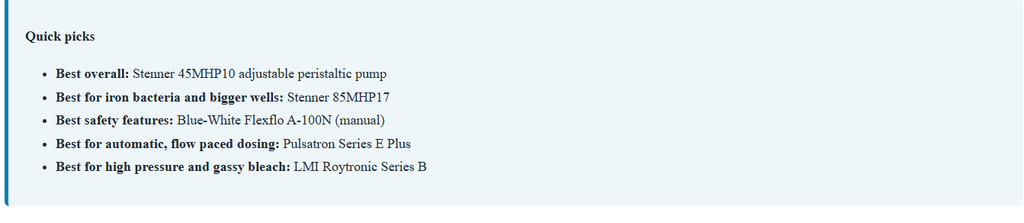
| Stenner 45MHP10 | Peristaltic | 10 GPD (adjustable) | 100 psi | Most homes |
| Stenner 85MHP17 | Peristaltic | 0.8 to 17 GPD | 100 psi | Iron bacteria, deep wells |
| Blue-White Flexflo A-100N | Peristaltic | 24 GPD (A1N20F model) | 100 psi | Leak protection |
| Pulsatron Series E Plus | Solenoid diaphragm | 44 GPD (LPE4 model) | 100 psi | Flow paced dosing |
| LMI Roytronic Series B | Solenoid diaphragm | Varies by model | Up to 150 psi | High pressure systems |
The 5 Best Chemical Injection Pumps for Shock Chlorination
1. Stenner 45MHP10: Best Overall
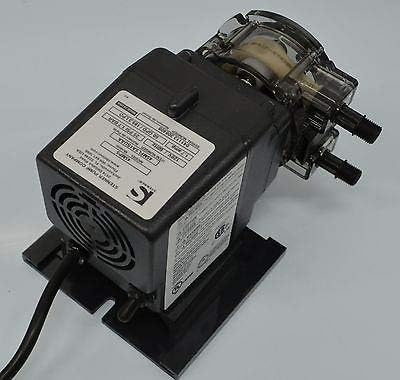
The Stenner 45MHP10 is the pump I see on more well systems than any other, and for good reason. It meters up to 10 gallons per day against 100 psi, which covers a typical household well with room to spare. Because it is peristaltic, there are no valves to clog with bleach crystals, and Stenner rates it to resist vapor lock and loss of prime.
Tube changes take about two minutes with no tools, and the motor, feed control, and pump head come apart separately if one fails. Watch the model code carefully, since the 45MPHP10 is the fixed rate version and you want the adjustable one.
Pros
- Valveless head that does not clog
- Adjustable output dial
- Huge parts and tube availability
Cons
- Pump tubes are a recurring cost
- No built in leak detection
2. Stenner 85MHP17: Best for Iron Bacteria and Larger Wells
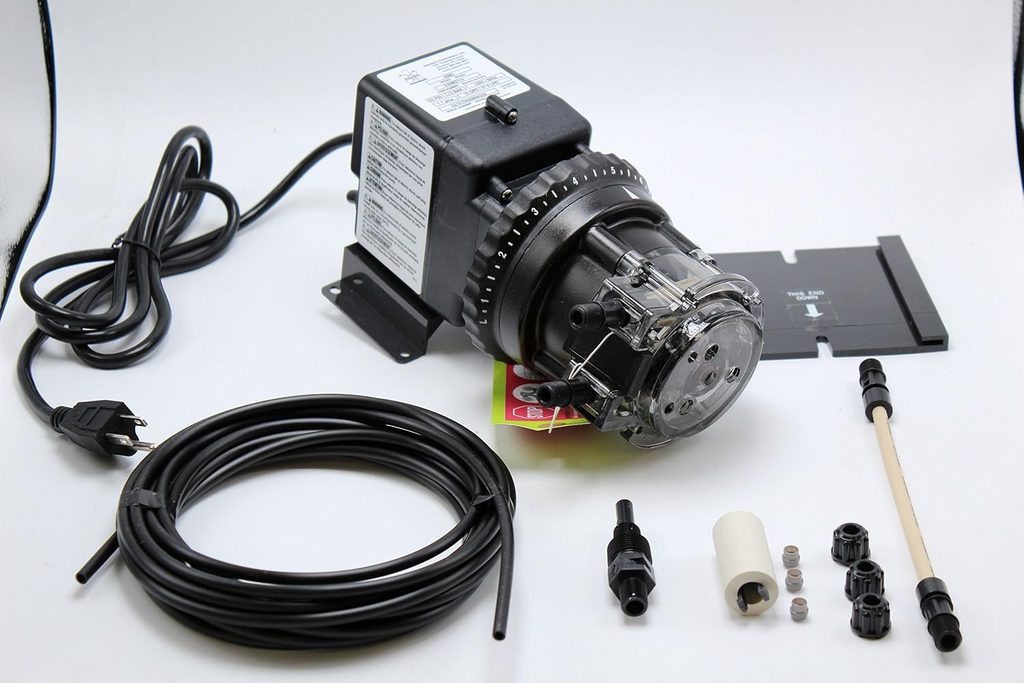
When a well needs frequent, heavy dosing, the 85MHP17 gives you more headroom. Its adjustable range runs from 0.8 to 17 gallons per day at up to 100 psi. Stenner specifically markets this pump for oxidizing iron, hydrogen sulfide, and manganese, which lines up with the wells that need shocking most often.
It self primes, can run dry without damage, and uses a three roller head that helps prevent siphoning. If your well is deeper than 300 feet or you plan to move to continuous chlorination later, start here.
Pros
- Wide 0.8 to 17 GPD range
- Runs dry without damage
- Built for iron and sulfur work
Cons
- Overkill for small, shallow wells
- Larger footprint than the 45 series
3. Blue-White Flexflo A-100N: Best Safety Features
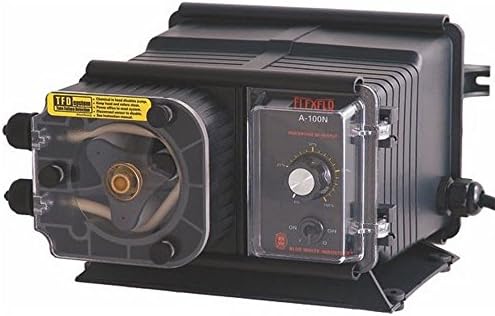
The Flexflo A-100N stands out for one feature: a patented Tube Failure Detection system that shuts the pump off if the tube ruptures. When you are pumping concentrated chlorine in a basement or well house, that matters. The A1N20F manual model delivers up to 24 gallons per day at 100 psi.
A variable speed DC motor keeps the feed smooth, and the box includes spare tubes, suction strainer, ceramic weight, and injection fitting. The catch is that many Flexflo listings are timer models built for pools, so confirm you are buying the manual dial version for well work.
Pros
- Automatic shutoff on tube failure
- Complete install kit included
- Smooth variable speed motor
Cons
- Easy to order the wrong pool variant
- Proprietary tube assemblies
4. Pulsatron Series E Plus: Best for Automatic, Flow Paced Dosing
Pulsafeeder’s Series E Plus is a solenoid diaphragm pump, a different design from the peristaltic picks above. Its strength is control, with a 100:1 turndown ratio and metering repeatable within 2% of maximum capacity. The LPE4 model delivers 44 gallons per day at 100 psi.
It accepts 4 to 20 mA or external pulse signals, so you can tie dosing to a water meter and feed chlorine in proportion to flow. That makes it a strong choice if shock chlorination is the first step toward a permanent treatment system.
Pros
- Very precise, repeatable dosing
- Accepts automatic control signals
- Bleed valve for easy priming
Cons
- Check valves need periodic cleaning
- More setup than a peristaltic pump
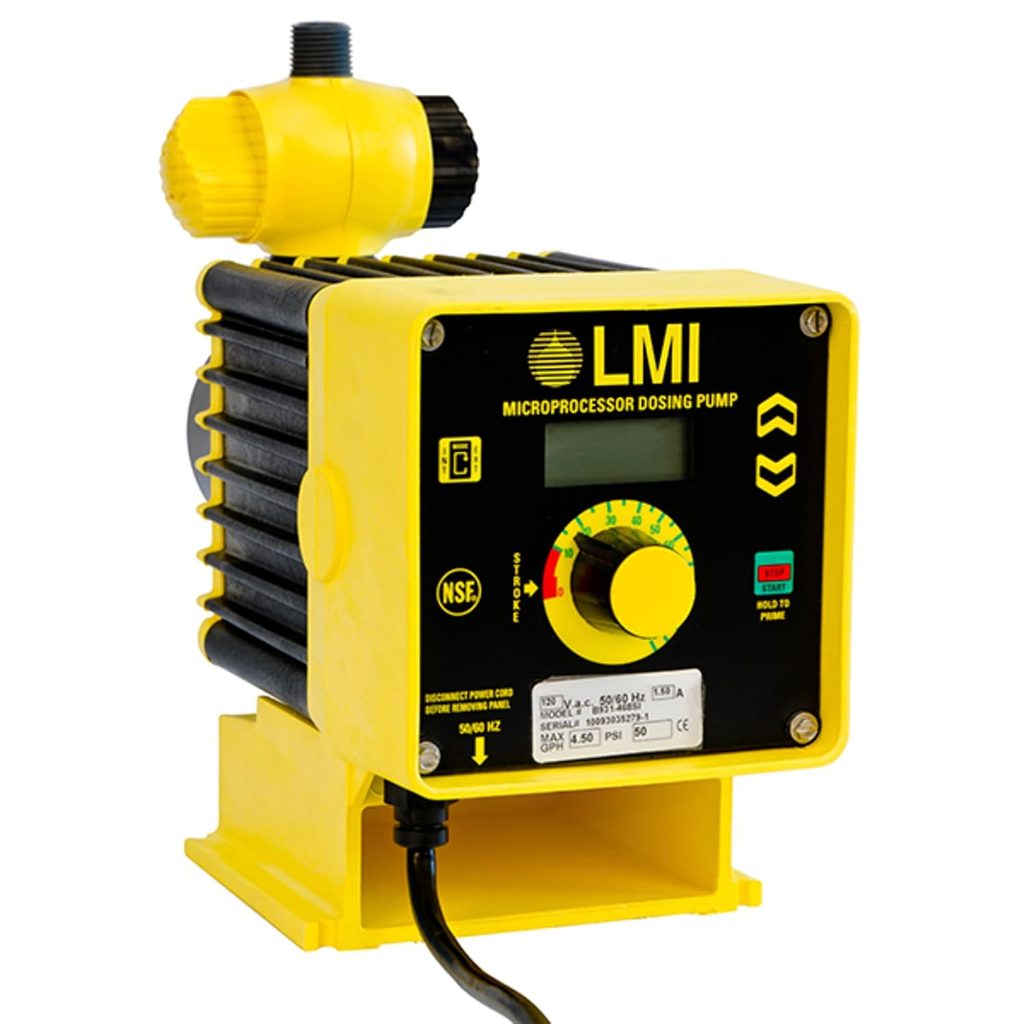
5. LMI Roytronic Series B: Best for High Pressure and Gassy Bleach
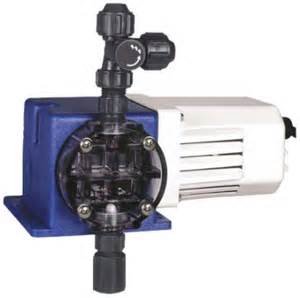
Sodium hypochlorite releases gas as it breaks down, and that gas can airlock a standard diaphragm pump. LMI built its AUTOPRIME liquid end specifically to stop that loss of prime. Some Roytronic Series B models are rated to 150 psi, useful on booster systems or high pressure lines.
It runs up to 100 strokes per minute and supports manual, pulse, or 4 to 20 mA control. This is a professional grade pump with a professional price, so it suits farms, small community systems, or homeowners who want the most robust option.
Pros
- AUTOPRIME fights gas lock
- High pressure capability
- Commercial build quality
Cons
- Most expensive pick here
- Control cables sold separately
How to Size a Pump for Shock Chlorination
Extension guides generally target 200 parts per million of free chlorine for a shock, and Iowa State Extension notes that anything from 100 to 200 ppm is adequate. To size the dose, you need the volume of water standing in your well. A 6 inch casing holds about 1.5 gallons per foot of water.
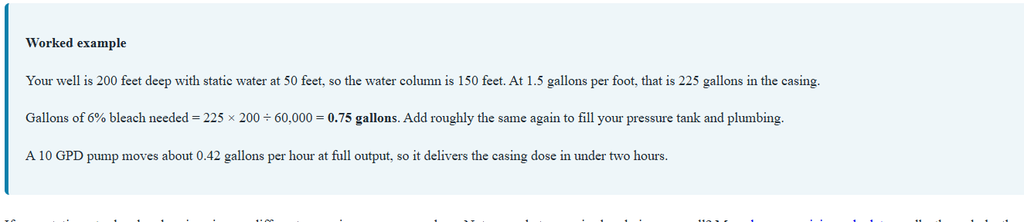
If your static water level and casing size are different, swap in your own numbers. Not sure what pump is already in your well? My solar pump sizing calculator walks through depth and flow if you are planning a system from scratch.
Setting Up the Pump for a Shock
- Run a hose from an outside spigot back into the well casing so water can recirculate.
- Place the pump suction line in a tank of unscented bleach rated NSF/ANSI 60, and connect the discharge to an injection fitting on the recirculation line.
- Start the well pump and dose until you smell strong chlorine at the hose.
- Open every faucet one at a time until chlorine reaches each one, including the water heater.
- Let the system stand, then flush the chlorinated water away from your septic system and plants.
Contact time matters. Mesa County Public Health recommends letting the solution stand for 6 to 12 hours, and advises against retesting sooner than three days after the shock.
From the field
A client called us about a well that kept failing coliform tests even after two bucket shocks. When we pulled the cap, the casing walls above the water line were coated in slime the bleach had never touched, because pouring it in only treated the standing water.
We set up a Stenner 45MHP10 on a recirculation loop and sprayed the dosed water down the inside of the casing for a full hour. The next two tests came back clean, and the owner now runs the same setup every spring before the growing season.
Safety Rules for Handling Chlorine
- Never mix chlorine with acids, ammonia, or other cleaners. The reaction releases toxic gas.
- Wear goggles and chemical resistant gloves whenever you change tubes or refill the tank.
- Bypass carbon filters, water softeners, and UV systems before shocking, then sanitize them separately.
- Use bottled water for drinking and cooking until a lab confirms the well is clean.
If you have under sink filtration, plan to replace cartridges after a shock, since chlorine can saturate them. My guide to the best under sink water filters covers replacement options.
Frequently Asked Questions
How often should I shock chlorinate my well?
Shock after any positive bacteria test, after pump or plumbing repairs, and after flooding. Wells with iron or sulfur bacteria may need it every few months, which is where an injection pump pays off.
Is a peristaltic or diaphragm pump better for chlorine?
Peristaltic pumps handle off gassing bleach well and have no valves to clog, which suits most homeowners. Diaphragm pumps offer finer automatic control and higher pressure ratings, which suits larger or automated systems.
Can I use pool chlorine to shock my well?
Only use products certified for drinking water, such as unscented household bleach labeled NSF/ANSI 60. Pool chemicals often contain stabilizers and additives that do not belong in a potable supply.
Will shock chlorination fix a well permanently?
No. Shocking treats contamination already in the system, but if bacteria keep returning, the source needs fixing or the well needs continuous disinfection.
The Bottom Line
For most private well owners, the Stenner 45MHP10 is the best balance of reliability, price, and easy servicing. Step up to the 85MHP17 for iron bacteria or deep wells, and choose the Pulsatron or LMI if you want automated dosing. Whichever you pick, test before you shock and test again after.
Have a question about your own well? Send me a message and I will help you work through it.
Also Read On:
>>>Best Well Water Test Kits: Lab Mail-In vs DIY Strips (2026 Guide)
>>>The Ultimate Guide to the Best Sump Pump
>>>Best Acid Neutralizers for Low pH Well Water: How to Stop Copper Pinhole Leaks