Best Acid Neutralizers for Low pH Well Water: How to Stop Copper Pinhole Leaks
Blue green stains in the tub. A metallic taste in your coffee. Then a damp spot on the ceiling that turns out to be a pinhole in a copper line.
If you are on a private well, those three clues usually point to one culprit: acidic, low pH water dissolving your plumbing from the inside out. The good news is that the fix is simple, affordable, and permanent once you choose the right acid neutralizer for your pH level.
This guide explains why low pH water destroys copper, how to read your test results, and which neutralizer type fits your home. It draws on more than a decade of drilling wells, where corrosive water is one of the most common problems we meet.
This post contains affiliate links. If you buy through them, we may earn a commission at no extra cost to you. Read our disclosure.

How Common Is Acidic Well Water?
A U.S. Geological Survey study of untreated groundwater from more than 20,000 wells found that half of all U.S. states have a high prevalence of well water corrosive enough to leach metals from plumbing, according to Associated Press coverage of the study. That groundwater supplies roughly 44 million Americans who rely on private wells.
Eleven East Coast states plus Washington, DC ranked highest, including Connecticut, Maine, Massachusetts, New Hampshire, Georgia, and South Carolina. Another 14 states, including Oregon, Washington, and Hawaii, also showed a high share of corrosive wells. In Connecticut alone, researchers estimated that between 75.3 and 84.9 percent of wells could contain corrosive groundwater.
Further south, the University of Georgia Extension reports that only about 74 percent of private wells in Georgia fall inside the EPA’s recommended pH range. Nearly all of the rest are acidic rather than alkaline, with only 1 percent testing above pH 8.5.
Why Low pH Water Causes Copper Pinhole Leaks
Rainwater picks up carbon dioxide from the air and soil, forming a weak carbonic acid. When that water moves through granite, sand, or other rock with little limestone to buffer it, the acid never gets neutralized.
Over years, the pipe wall thins until it perforates, usually at elbows, joints, and hot water lines first. Heat speeds up the chemical reaction, which is why water heaters and hot lines often fail years before the cold side.
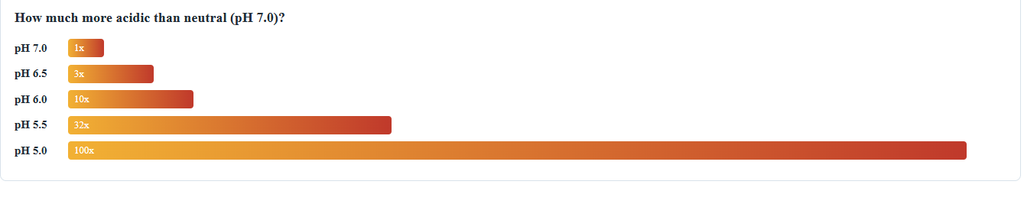
The pH scale is logarithmic, so small numbers hide big differences. As Virginia Cooperative Extension explains, water at pH 6.0 is 10 times more acidic than water at pH 7.0, and water at pH 5.0 is 100 times more acidic.
Warning Signs Your Well Water Is Too Acidic
- Blue green stains on sinks, tubs, and toilet bowls where water drips or pools.
- Pinhole leaks in copper lines, often appearing in several places over a few years.
- Metallic or bitter taste, especially in the first glass of the morning.
- Early water heater failure and corroded fixture finishes.
- Corroded brass fittings at the well head, pressure switch, or pump. If your pump is wearing out early, our well pump lifespan calculator can help you see whether corrosion is shortening its life.
Health note: The EPA action level for copper is 1.3 mg/L, and it recommends drinking water stay between pH 6.5 and 8.5. Homes plumbed before 1986 may also have lead solder, and corrosive water can pull lead into your tap. Private wells are not regulated by the EPA, so testing is entirely up to you.
Test Before You Buy
A $15 pH strip will tell you whether you have a problem, but a certified lab test tells you how to fix it. Ask for pH, alkalinity, hardness, iron, manganese, and a first draw copper and lead sample. Penn State Extension recommends collecting that first draw sample from water that has sat in the pipes overnight.
Take your raw water sample before any softener or filter. Also note your well pump’s flow rate in gallons per minute, because that number decides which neutralizer style will work. If unsure, time how long it takes to fill a 5 gallon bucket.
Which Neutralizer Type Matches Your pH?
| Raw water pH | Best treatment | Notes |
|---|---|---|
| 6.0 to 6.9 | Calcite neutralizer (backwashing or upflow) | Self limiting; will not overcorrect. Adds a little hardness. |
| 5.0 to 6.0 | Calcite and Corosex blend | Corosex (magnesium oxide) works faster but can overshoot pH if flow is low. |
| Below 5.0 | Soda ash chemical feed pump | Adjustable dosing; no added hardness. Needs a solution tank and power. |
| Any pH with high CO2 | Aeration, then calcite | Removing carbon dioxide raises pH and extends media life. |
The Best Acid Neutralizers for Well Water
Best Overall
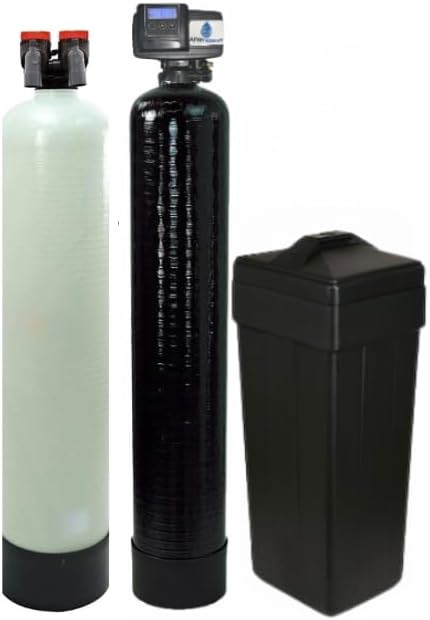
1. AFWFilters Fleck 2510 SXT Backwashing Calcite Neutralizer
This is the system we recommend to most well owners with pH between 6.0 and 6.9. The Fleck 2510 SXT valve is the industry workhorse, with parts available everywhere. The digital head backwashes on a timer, lifting and regrading the calcite bed so it never packs down or channels.
Best for: 2 to 4 bathroom homes. Watch for: backwash needs roughly 5 to 7 gallons per minute from your well, so confirm your pump can deliver it.
Best No Electricity
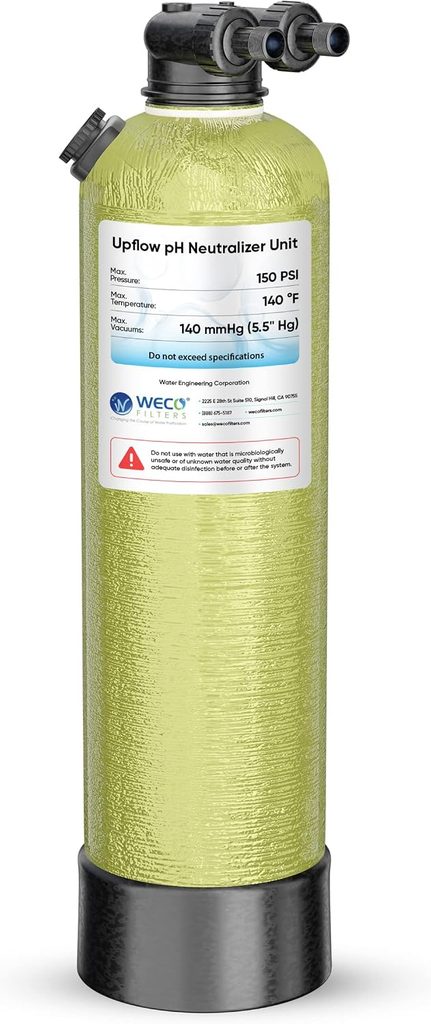
2. Upflow Calcite Acid Neutralizer (Clack In/Out Head)
Upflow neutralizers push water up through the media bed, which keeps the calcite loose without ever backwashing. There is no drain line, no power cord, and no programming. That makes them ideal for low yield wells, off grid cabins, and homes where the pump cannot meet backwash flow.
Best for: low flow wells and solar pumped systems. Watch for: add a sediment prefilter, since upflow tanks cannot flush out sand.

Best for pH 5.0 to 6.0
3. Fleck Backwashing Neutralizer with Calcite and Corosex Blend
Plain calcite slows down dramatically once pH falls below 6.0. Blending in roughly 10 to 20 percent Corosex gives the media the extra punch it needs to bring very acidic water into range. Because Corosex reacts aggressively, a backwashing valve is a must to keep the blend from cementing.
Best for: granite and sandy aquifers with pH in the mid 5s. Watch for: pH can overshoot after long idle periods, so retest a month after installation.
Best for Very Low pH
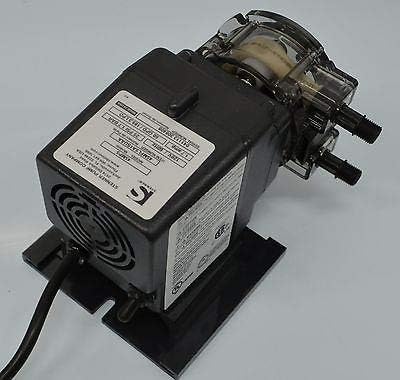
4. Stenner 45MPHP10 Chemical Feed Pump (Soda Ash)
When pH drops below about 5.0, calcite simply cannot keep up. A Stenner peristaltic pump wired to your pressure switch injects a measured dose of soda ash solution every time the well pump runs. The dose is adjustable and adds no hardness.
Best for: severely acidic water and high demand homes. Watch for: you will mix solution monthly and need a contact tank or static mixer downstream.
Budget Pick
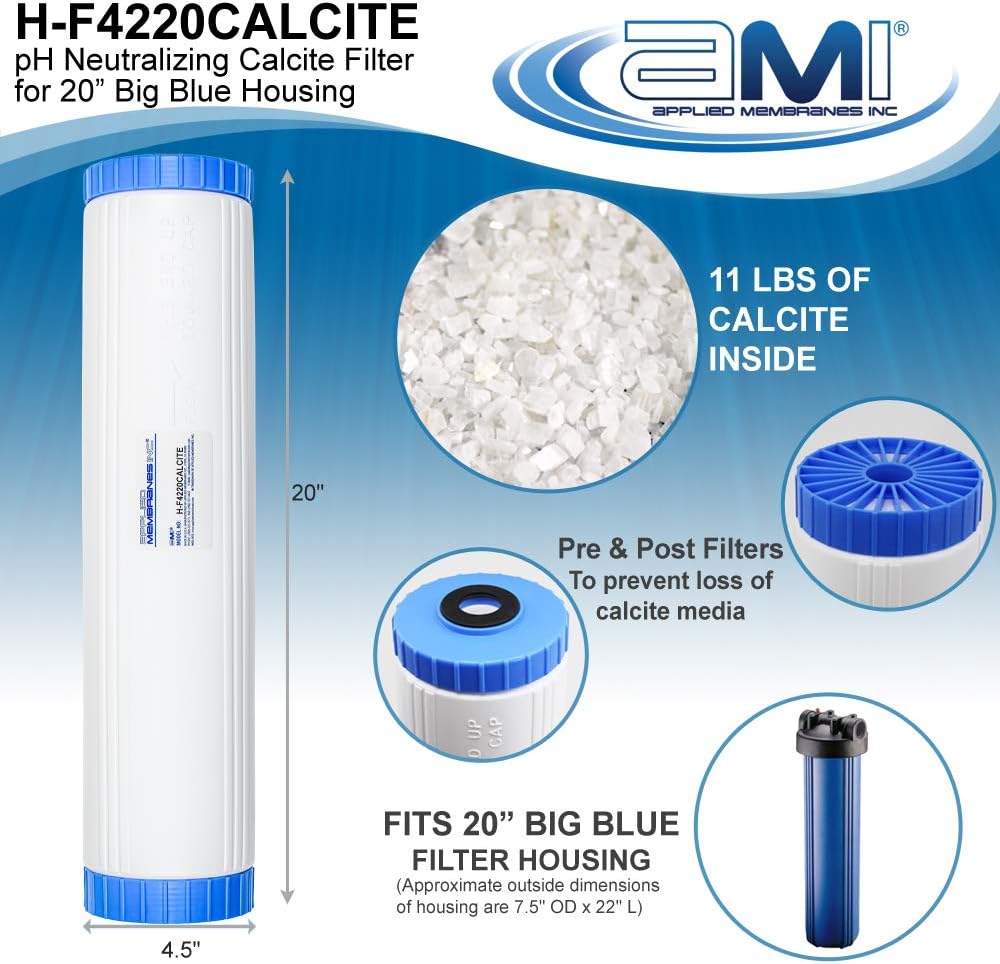
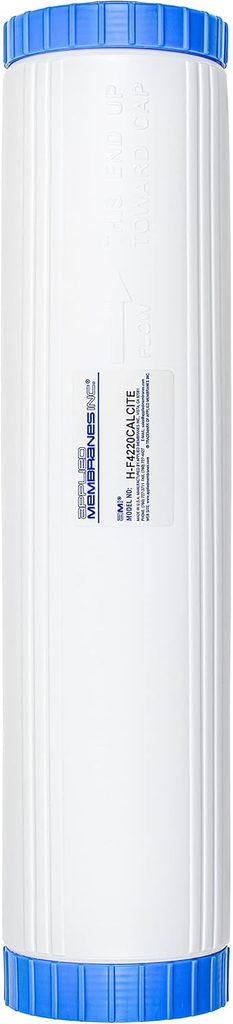
5. Big Blue 4.5 x 20 Inch Calcite pH Cartridge
For a seasonal cabin or a single line feeding a kitchen, a calcite cartridge in a standard Big Blue housing is the cheapest way to raise pH. It is a stopgap, not a whole house cure, since the small media volume wears out quickly.
Best for: low use cabins and testing whether pH correction solves your taste issue. Watch for: replace cartridges every 1 to 3 months depending on use.
How to Size an Acid Neutralizer
Size the tank by peak flow, not by family size alone. As a field rule, plan on about 1.0 cubic foot of calcite for a 1 to 2 bathroom home, 1.5 cubic feet for 2 to 3 bathrooms, and 2.0 cubic feet for 3 to 4 bathrooms.
Then match backwash flow to your well. A 10 x 54 inch tank holding 1.5 cubic feet usually needs around 5 gallons per minute to backwash properly. If your pump delivers less, step down a tank size or choose an upflow design.
Where It Goes in Your System
Install the neutralizer after the pressure tank and after any whole house sediment filter. It should come before an iron filter or softener, because most iron filters for well water need pH close to 7.0 to oxidize iron effectively.
Calcite adds a little hardness as it dissolves, so a softener after the neutralizer is common in hard water areas. Keep it upstream of any under sink reverse osmosis system too.
A Field Story: Twelve Leaks in Four Years
One homeowner we worked with had a 300 foot well drilled into granite and a house plumbed entirely in Type M copper. In four years he patched twelve pinhole leaks, replaced a water heater, and found mold behind a wall from a leak nobody heard.
His raw water tested at pH 5.8 with almost no alkalinity. We installed a 1.5 cubic foot backwashing neutralizer with a calcite and Corosex blend, and a month later his tap water read 7.1.
Two years on, he has had zero new leaks and the blue stains in the guest bath are gone. The neutralizer cost less than the drywall repair from a single hidden leak.
Maintenance and Running Costs
Calcite dissolves as it works, which is exactly how it raises pH. Expect to top up the tank every 6 to 12 months, usually with one third to one half of a 50 pound bag.
Retest pH twice a year and copper once a year, and check blends and feed pumps more often.
Already Have Pinhole Leaks? Do This First
- Repair active leaks and check walls for hidden moisture.
- Test raw water pH, alkalinity, hardness, and iron at a certified lab.
- Install the right neutralizer so corrosion stops before more pipe is damaged.
- Have a plumber assess wall thickness; badly thinned lines may still need replacing with PEX.
Neutralizing does not rebuild lost copper, but it protects every remaining foot of pipe, your water heater, and your well pump.
Frequently Asked Questions
What is the best acid neutralizer for well water?
For most homes with pH between 6.0 and 6.9, a backwashing calcite neutralizer with a Fleck 2510 SXT valve is the best acid neutralizer for well water. It is self limiting, low maintenance, and widely serviceable.
Can an acid neutralizer stop pinhole leaks?
Yes, it stops new corrosion by raising pH into the noncorrosive range. It cannot repair pipe that has already thinned, so severely damaged lines may still need replacement.
Does a water softener raise pH?
No. A softener exchanges hardness minerals for sodium and does not meaningfully change pH, so it will not stop acidic corrosion.
How often do you add calcite to a neutralizer?
Most homes top up every 6 to 12 months.
The Bottom Line
Acidic well water is silent, slow, and expensive if ignored. Test your water, match the neutralizer to your pH, and install it before the next pinhole shows up in a ceiling.
Also Read On:
>>>Best Well Water Test Kits: Lab Mail-In vs DIY Strips (2026 Guide)
>>>Best Under Sink Reverse Osmosis Systems for Well Water: A Driller’s 2026 Buying Guide
>>>Pump Cycle Counter and Lifespan Estimator: How Many Years Does Your Well Pump Have Left?