Best Well Water Booster Pumps for Low Water Pressure
We independently evaluate everything we recommend. This article contains affiliate links, and we may earn a commission at no extra cost to you. See our disclosure.
Weak Showers on a Well Are Usually a Pressure Problem, Not a Water Problem
If your shower turns into a dribble the moment someone starts the dishwasher, your well probably has plenty of water. What it does not have is enough pressure at the fixture. Those are two different faults, and buying the wrong hardware fixes neither.
Private wells are not a niche problem. More than 43 million Americans, about 15 percent of the population, draw drinking water from a domestic well. Nobody sends those households a pressure report, so the first sign of trouble is usually a bad shower.
I have spent more than a decade specifying pumps, sizing tanks against pump curves and test pumping new boreholes. Below is how I decide whether a booster pump is the right answer, which models I would actually put on a well, and how to size one so it does not destroy your pressure tank.
What Counts as Low Water Pressure
Most US homes sit comfortably between 45 and 65 psi. Below 40 psi you start to feel it, and the feeling gets worse the moment two fixtures run at once. Above 80 psi you are outside code, and the International Plumbing Code requires a pressure reducing valve to bring the building back under that ceiling.
The interesting number is what happens at the fixture. The EPA notes that a WaterSense showerhead rated at 2.0 gpm must still deliver at least 1.5 gpm when supply pressure drops to 20 psi. In other words, a modern showerhead loses a quarter of its flow before you even notice anything is wrong.
Showering is also where the pain lands hardest. The EPA puts showering at roughly 17 percent of indoor household water use, close to 40 gallons a day for the average family. That is the fixture your household judges the whole water system by.
Buy a $20 pressure gauge, thread it onto an outside hose bib and take two readings. Read it with nothing running, then read it again with a shower and a garden hose open. The gap between those two numbers tells you far more than the single static reading everyone quotes.
Check These Five Things Before You Buy Anything
A booster pump added to a sick system just makes an expensive sick system. In my experience, more than half of low pressure complaints on wells are fixed without buying a pump at all. Work through this list first.
1. Pressure switch setting. Most wells ship on a 30/50 switch. Moving to 40/60 costs nothing and is often the entire fix, provided your pump and tank are rated for it.
2. Pressure tank precharge. The air charge should sit 2 psi below your cut in pressure, checked with the tank drained. A waterlogged tank causes short cycling and pressure that surges and collapses. Our guide to the 7 best well pressure tanks covers the sizing and precharge math in full, and a tank air volume control kit helps on older galvanized tanks.
3. Clogged sediment filter. A whole house filter cartridge that has done its job is a restriction. I have seen a dirty 5 micron cartridge eat 15 psi on its own.
4. Iron or scale in the pipes. Decades of buildup narrow the bore and strangle flow. Booster pumps do not cure restricted plumbing, they just push harder against it.
5. An undersized or failing well pump. If the well pump itself cannot hold pressure while running, a booster will starve and run dry. Check the pump type and duty rating before you spend money downstream.
If all five check out and pressure is still weak, a booster pump is the correct tool.
The Best Booster Pumps for Low Water Pressure on Well Systems
Well systems are not city mains. The supply pressure fluctuates, the water may carry sediment and the booster will sometimes be asked to pull from an atmospheric storage tank. These picks are chosen for that reality.
1. Grundfos SCALA2 3-45: Best Overall for a Whole House on a Well
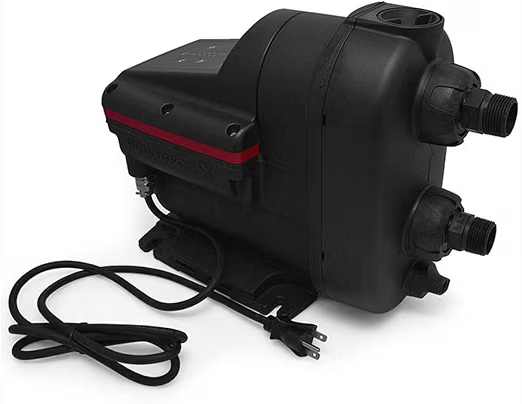
This is the unit I recommend most often, and the one I would install in my own home. It packs the pump, motor, pressure sensor, controller and a small tank into one sealed housing, so installation comes down to connecting pipe, priming and plugging it in. Variable speed control means it holds your set pressure instead of swinging between cut in and cut out.
The published numbers are honest and worth knowing. Rated flow is 13.2 gpm with a maximum of 20.3 gpm, rated head is about 89 feet and maximum head is roughly 148 feet. The default pressure setting is 43 psi and you can adjust it from the front panel.
Two details matter on wells specifically. It is self priming and will lift water from about 26 feet below the pump, which suits storage tank and shallow well setups. It is also quiet enough to sit in a utility room, because the motor is cooled by the water it moves rather than a fan.
One warning that catches people out. Maximum system pressure is roughly 145 psi, and on an unregulated well line pressure spikes can climb toward that figure. Fit a small thermal expansion tank downstream so the unit is not living at its ceiling.
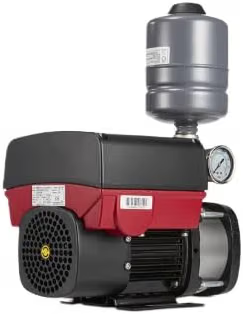
2. Grundfos CMBE 3-62: Best for Larger Homes and Higher Head
When a single SCALA2 runs out of head, the CMBE 3-62 is the next step up. It is a multistage constant pressure booster built for households running several bathrooms, irrigation zones or a long uphill run to an outbuilding. The integrated drive keeps pressure flat as demand swings.
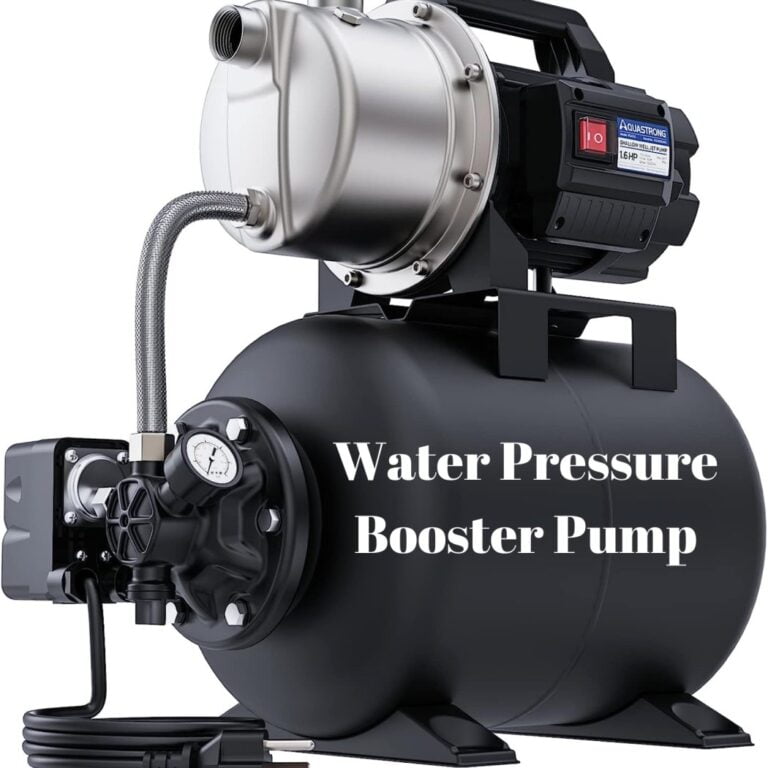
Choose this one when your problem is distance or elevation rather than a mildly weak switch setting. Homes on hillside lots and properties where the wellhead sits well below the house are the classic candidates. We break it down in our full water pressure booster pump guide.
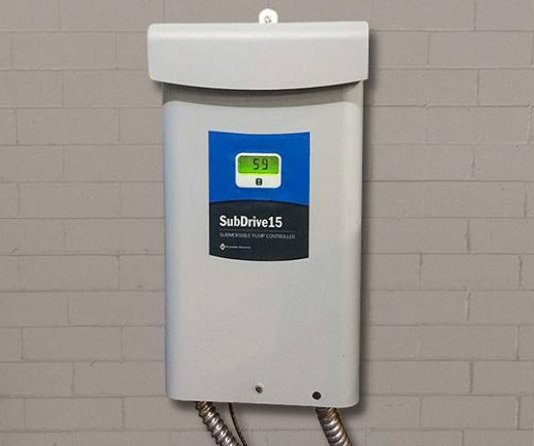
3. A Constant Pressure Controller: Best Fix When the Well Pump Is the Bottleneck
Sometimes the honest answer is that you do not need a second pump. If your submersible is healthy but the system cycles hard and pressure sags under load, a variable frequency controller on the existing pump delivers steady pressure without adding a machine to the basement. Franklin Electric and Grundfos both make residential units that retrofit to a standard submersible.
This route is usually cheaper than a booster plus the plumbing to install it. It also removes short cycling, which is the single biggest killer of well pumps I see in the field. Our roundup of the best automatic pump controllers covers the options and what each one actually controls.
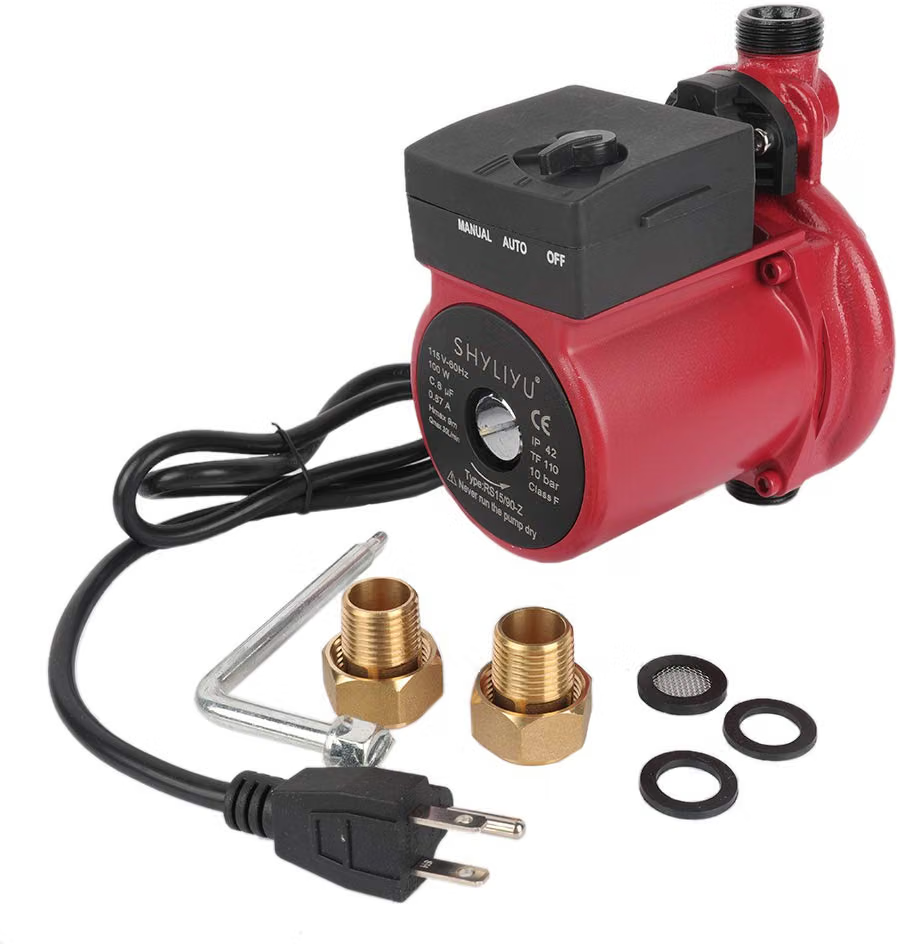
4. Wayne or Flotec Cast Iron Booster: Best Budget Pick
Not every job needs a variable speed unit. A simple cast iron centrifugal booster with an external pressure switch will lift a weak 30/50 system into comfortable territory for a fraction of the cost. You lose constant pressure and quiet operation, and you gain a pump that any local plumber can service.
Pair it with a properly precharged tank, because a fixed speed booster with no buffer will cycle itself to death. Cast iron also handles sediment better than thermoplastic if your well runs dirty in spring.
5. SEAFLO 55-Series Diaphragm Pump: Best for Cabins and Off Grid
For a cabin, an RV or a small off grid setup running from a storage tank, a 12V diaphragm pump is the sensible choice. The 55-Series delivers up to 5.5 gpm at a maximum of 55 psi, runs dry without damage and draws little enough power to sit on a modest battery bank. It is not a whole house solution and it is not meant to be.
We reviewed it in detail in our SEAFLO 55-Series breakdown. If your site has no grid power at all, pair it with a solar submersible pump feeding the storage tank.
How to Size a Booster Pump in Three Steps
Sizing is not complicated, but skipping it is why so many booster pumps disappoint. You need two numbers: how much flow you need and how much pressure you need to add.
Step 1: Work Out Your Peak Flow
Add up the fixtures that realistically run together. A shower is about 2.0 to 2.5 gpm, a kitchen faucet about 1.5 gpm, a washing machine about 2 gpm and a garden hose 5 gpm or more. For a typical three bathroom home, 8 to 12 gpm covers real peak demand.
Step 2: Work Out the Pressure You Need to Add
Take your measured pressure under load, not the static reading. Subtract it from your target. If you measure 28 psi while the shower runs and you want 55 psi, you need roughly 27 psi of boost.
Then add elevation. Every foot of vertical rise from the pump to the highest fixture costs 0.433 psi. A second floor bathroom 20 feet above the pump adds about 9 psi to the requirement.
Step 3: Convert to Feet of Head and Match the Curve
Multiply your total psi requirement by 2.31 to get feet of head. Our example of 27 plus 9, so 36 psi, works out to roughly 83 feet. Add 10 to 15 percent for friction loss in the pipework and fittings.
Now read the pump curve at your required flow, not at the headline maximum. A pump advertising 148 feet of maximum head delivers that at almost zero flow. At 13 gpm the same pump gives you closer to 89 feet, which is the number that matters.
A Job That Taught Me to Measure Under Load
A homeowner in a two story farmhouse called after replacing his showerhead twice and his pressure switch once. Static pressure at the hose bib read 52 psi, which looked perfectly healthy on paper. He was convinced the well was failing.
We opened a shower and a laundry tap and watched the gauge fall to 24 psi within 40 seconds. The pressure tank had lost its air charge years earlier, so there was almost no drawdown and the pump was cycling every 15 seconds. The well itself was fine.
We replaced the tank, set the precharge at 38 psi against a 40/60 switch, and added a SCALA2 to hold pressure at the upstairs bathroom. Pressure under full load now sits at 51 psi. The booster was the last part of the fix, not the first.
Installation Points People Get Wrong
Install the booster downstream of the pressure tank, never between the well pump and the tank. Putting it upstream defeats the tank and puts the booster in a fight with the submersible.
Always fit dry run protection. A booster that loses suction will burn a seal in minutes, and on a well the supply can fail without warning during a dry spell.
Put a sediment filter ahead of the booster and a union on both sides. Filters protect the impeller, and unions mean the next service takes 20 minutes instead of an afternoon of cutting pipe. If your water carries iron or grit, our guide to household water filtration is worth reading alongside this.
Frequently Asked Questions
Will a booster pump damage my well?
Not if it is installed downstream of the pressure tank and fitted with dry run protection. Problems arise when a booster is plumbed directly onto the well line and pulls harder than the aquifer can yield.
How much pressure can a booster pump add?
Residential units typically add 20 to 60 psi depending on flow. Remember that boost falls as flow rises, so always read the pump curve at your real peak demand.
Do I need a separate pressure tank for the booster?
Variable speed units like the SCALA2 have a small built in buffer and do not need one for normal operation, though a thermal expansion tank is wise on a well. Fixed speed boosters do need a tank or they will short cycle.
Can a booster pump fix low flow as well as low pressure?
No. If the well or the pipework cannot deliver the gallons, no booster will invent them. Boosters raise pressure, and pressure and flow are not the same thing.
How much does a booster pump cost to run?
A 550 watt unit like the SCALA2 running two hours a day uses roughly 1.1 kWh, which is a few dollars a month in most states. Variable speed models cost less to run than fixed speed ones because they throttle to demand.
The Short Version
Measure your pressure under load before you buy anything, because static readings hide the fault. Rule out the pressure switch, the tank precharge and a clogged filter first, since those account for most weak shower complaints on wells.
If you still need a booster, the Grundfos SCALA2 3-45 is the best all round choice for a house on a well, the CMBE 3-62 handles bigger homes and longer runs, and a constant pressure controller is often the smarter fix when the well pump itself is cycling. Size it against the pump curve at your real flow, install it downstream of the tank, and protect it from running dry.
The EPA reminds well owners that nobody regulates a private well but the person who owns it. Pressure is part of that ownership, and it is one of the few parts you can measure yourself in ten minutes.
Also Read On:
>>>https://boreholeflow.com/seaflo-55-series-diaphragm-pump/