Best Whole House Sediment Filters and Spin Down Prefilters for Well Water
Sand in a faucet aerator is how most well owners discover they have a sediment problem. By the time you see it at the tap, grit has already passed through your pressure switch, your water heater, and every valve in the house. A good whole house sediment filter stops that damage at the front door of your plumbing.
I have spent more than a decade drilling and commissioning boreholes, and sediment is the complaint I hear most after a new pump goes in. This guide covers the best whole house sediment filter options and spin down prefilters for private wells, plus how to size and stage them so they actually last.
BoreholeFlow is reader supported. When you buy through links on this page, we may earn a commission at no extra cost to you. Read our disclosure.
Quick picks
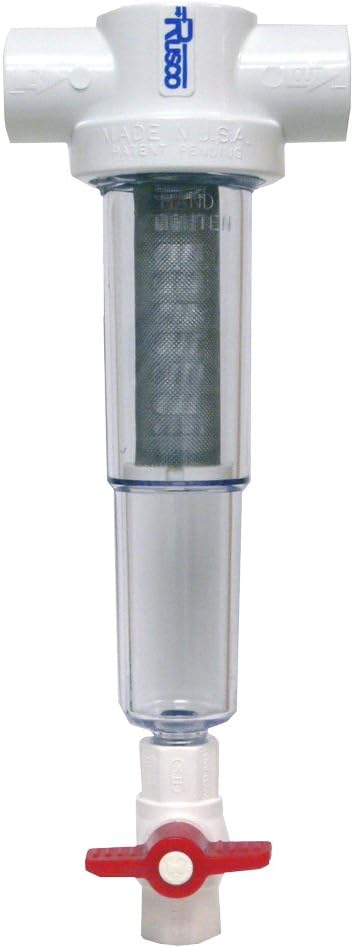
- Best overall spin down: Rusco 1-140-F Spin Down Filter
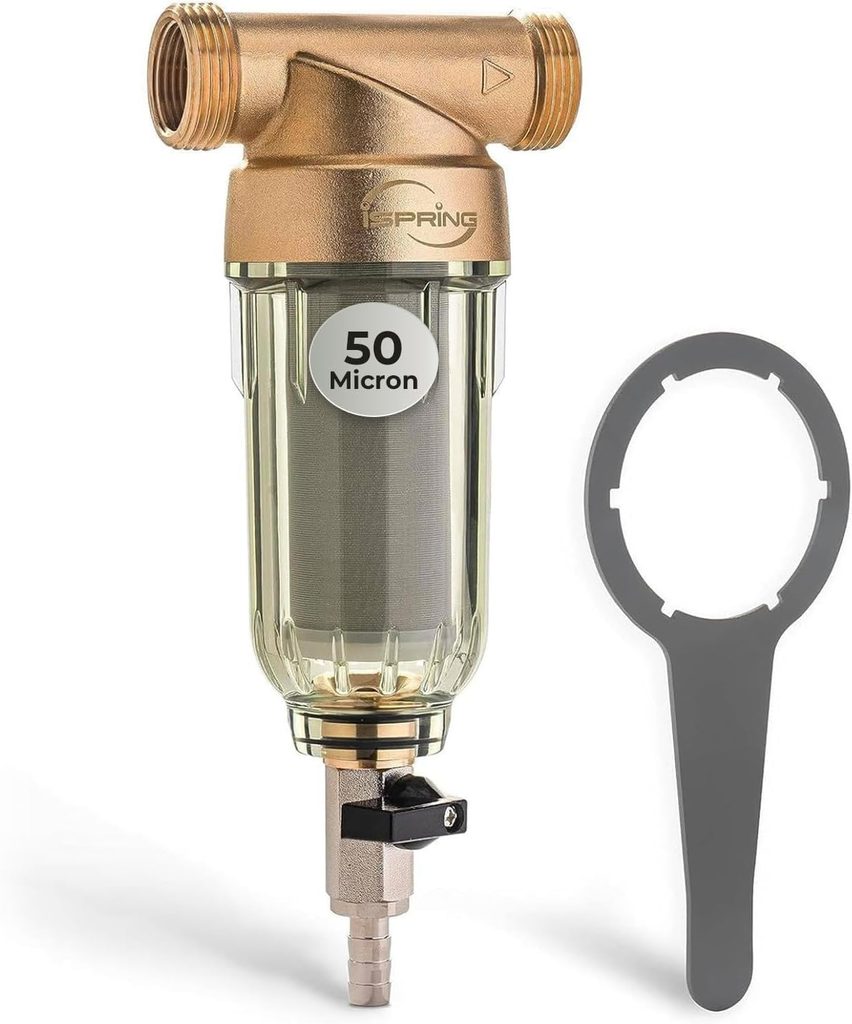
- Best budget spin down: iSpring WSP50 Spin Down Filter
- Best for very sandy wells: iSpring WSP50J Jumbo Spin Down
- Best for high flow homes: Rusco 2-60-F Spin Down
- Best cartridge sediment filter: Pentair Pentek 20 inch Big Blue with 5 micron cartridge
- Best multi stage system: Express Water WH300SCKS 3 Stage System
Why Well Owners Need Sediment Filtration
More than 43 million Americans, roughly 15 percent of the population, rely on private wells for drinking water, according to the Geological Survey. The EPA estimates that adds up to more than 23 million households. None of those wells are regulated under the Safe Drinking Water Act, so treatment is entirely the owner’s job.
Testing is not common either. A USGS study of about 2,100 private wells found that roughly one in five contained at least one contaminant above a human health benchmark. A separate study of rural Iowa well households found that only about 9 percent had tested their water in the past year.
Sediment itself is usually an aesthetic and mechanical problem rather than a health one. The trouble is what it does to equipment. A well maintained water heater typically lasts 10 to 15 years, and sediment settling on the tank floor is one of the main reasons units fail early.
Sediment also wears out pump impellers and plugs appliance inlet screens. Worse, grit coating an ultraviolet sterilizer sleeve shields bacteria from the light, and silt blinds the media bed in an iron filter.
Spin Down vs Cartridge Sediment Filters
These two filter types do different jobs, and most wells benefit from both. Think of the spin down as the bouncer at the door and the cartridge as the fine screen inside.
Spin down prefilters
A spin down filter uses a washable mesh screen, usually stainless steel or polyester, inside a clear housing. Water enters at an angle and swirls, so heavier sand drops to the bottom of the bowl. You open a valve at the base for a few seconds and the trapped grit flushes out.
Mesh screens typically range from about 50 to 250 microns. They catch sand, pipe scale, and rust flakes, but they will not stop fine silt or clay. Their big advantage is that you almost never replace anything, because the screen can be flushed hundreds of times.
Cartridge sediment filters
Cartridge filters use a disposable element made of spun polypropylene, pleated polyester, or string wound fiber. They trap much finer particles, commonly 5 to 50 microns. Once a cartridge is loaded, you throw it away and drop in a new one.
On a sandy well without a spin down in front, a 5 micron cartridge can clog in weeks. Put a spin down ahead of it and the same cartridge often lasts three to six months. That pairing is the single most cost effective upgrade most well owners can make.
How Big Is a Micron? A Visual Guide
A micron is one millionth of a meter. A human hair is roughly 70 microns wide, which gives you a sense of how fine a 5 micron filter really is. The chart below shows where common filter ratings sit against typical well sediment.
Filter ratings vs particle sizes (microns)
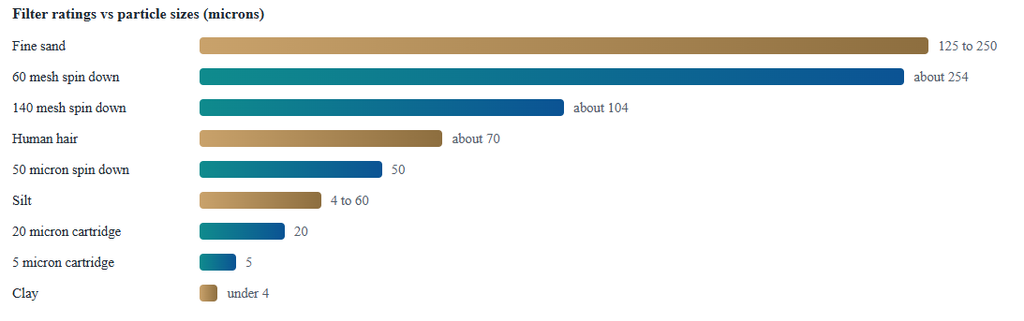
Most manufacturer micron ratings are nominal, not absolute. The NSF/ANSI 42 standard, for example, defines six particulate reduction classes, and each one only requires at least 85 percent reduction in its size range. Some particles smaller than the rating will always get through, which is why staging filters matters.
The Best Whole House Sediment Filters and Spin Down Prefilters
| Model | Type | Rating | Flow | Best for |
|---|---|---|---|---|
| Rusco 1-140-F | Spin down | 140 mesh (about 104 micron) | 2 to 20 GPM | Most private wells |
| iSpring WSP50 | Spin down | 50 micron stainless | Up to 20 GPM | Budget installs |
| iSpring WSP50J | Spin down, jumbo | 50 micron, 316L stainless | Up to 25 GPM | Heavy sand loads |
| Rusco 2-60-F | Spin down, 2 inch | 60 mesh (about 254 micron) | 18 to 100 GPM | Large homes, irrigation |
| Pentek Big Blue 20 inch | Cartridge | 5 micron (DGD-5005-20) | Housing 15 GPM | Fine silt polishing |
| Express Water WH300SCKS | 3 stage cartridge | Sediment, KDF, carbon | About 15 GPM | Sediment plus taste and odor |
1. Rusco 1-140-F Spin Down Filter (Best Overall)
Rusco has been building spin down filters since 1977, and theirs are still the ones I see most often on well installations. The 1-140-F uses a 140 mesh polyester screen, which works out to about 104 microns. It handles 2 to 20 gallons per minute through 1 inch pipe and is rated for 150 psi working pressure.
The clear cover lets you see sand building up, and a ball valve at the bottom flushes it in seconds. The cover comes off by hand for a full cleaning, and Rusco is clear that using tools on it voids the warranty.
Pros: proven design, wide range of mesh sizes, cheap replacement screens. Cons: slip connections mean you need PVC fittings or adapters.
2. iSpring WSP50 Spin Down Filter (Best Budget)
The iSpring WSP50 is the most popular entry level spin down for a reason. It uses a stainless steel mesh rated at 50 microns, and the housing has double threads on each end: 1 inch male NPT and 3/4 inch female NPT. That makes it a simple drop in for most well lines.
The flush valve has a garden hose barb, so you can run the sediment straight to a drain or the yard. iSpring notes that the stainless screen usually lasts one to two years before replacement. Be aware that a 50 micron screen can clog quickly on very sandy water, so it suits light to moderate sediment best.
Pros: low price, finer screen than most spin downs, lead free brass head. Cons: small bowl needs frequent flushing on heavy sediment wells.
3. iSpring WSP50J Jumbo Spin Down (Best for Very Sandy Wells)
If you are flushing a standard spin down every day, upgrade to the WSP50J. Its bowl holds about 1 gallon, which iSpring says is 22 times the capacity of a traditional sediment filter. The flow rating climbs to 25 GPM.
The screen is 316L food grade stainless steel. For new wells that are still producing sand during their first months of use, this model buys you a lot of breathing room between flushes.
Pros: huge sediment capacity, high flow, durable mesh. Cons: needs more wall space and costs more than the standard version.
4. Rusco 2-60-F Spin Down (Best for High Flow Homes)
Large homes, farms, and properties that irrigate from the well need a filter that will not choke the pump. The Rusco 2-60-F uses 2 inch pipe and handles 18 to 100 GPM. Its 60 mesh screen, about 254 microns, catches coarse sand without creating noticeable pressure drop.
Pros: massive flow capacity, minimal pressure loss. Cons: overkill for a typical 10 GPM household pump.
5. Pentair Pentek 20 Inch Big Blue with 5 Micron Cartridge (Best Cartridge Filter)
The Big Blue is the workhorse cartridge housing of residential water treatment. The 20 inch housing (model 150233) has 1 inch NPT ports, a 15 GPM rating, and a pressure relief button that makes cartridge changes far less messy. It accepts any standard 4.5 by 20 inch cartridge.
For well water, I recommend Pentek’s DGD-5005-20 dual gradient cartridge. It is a 5 micron spun polypropylene element rated at 20 GPM, with a denser inner layer and a coarser outer layer so it holds more dirt before clogging. Install it after a spin down and expect cartridge changes every three to six months on most wells.
Pros: high flow, huge cartridge selection, easy service. Cons: cartridges are an ongoing cost.
6. Express Water WH300SCKS 3 Stage System (Best Multi Stage)
If you want sediment filtration plus taste and odor improvement in one frame, the Express Water 3 stage system is a tidy option. It runs a sediment cartridge, then KDF, then a carbon block. The company rates it at up to 0.25 gallons per second, which is about 15 GPM.
It ships on a mounting frame with pressure gauges and 1 inch connections, and the first housing is clear so you can see when the sediment stage is loaded. On a sandy well, put a spin down in front of it.
Pros: all in one, gauges included, no wastewater. Cons: carbon and KDF stages add cost you may not need for sediment alone.
How to Choose the Right Sediment Filter
Match the flow rate to your pump
Your filter must pass at least as much water as your pump delivers, or you will feel it as weak showers. Check the GPM rating on your pump or pressure tank setup. A typical three bathroom home needs 10 to 15 GPM, so pick a filter rated at or above that.
Stage your micron ratings
Never jump straight from raw well water to a 1 or 5 micron cartridge. Step down in stages so each filter only does the work it is built for.

On extremely sandy wells, some installers move the spin down ahead of the pressure tank to protect the tank and pressure switch. Either location works, as long as the spin down comes before any cartridge or media filter.
Watch for warning signs in the sediment itself
A little sand is normal. A sudden jump in sand, or sand that keeps getting coarser, can mean a failing well screen, a pump set too close to the bottom, or a collapsing borehole. If you see that pattern, a filter is treating the symptom, so read our guide on signs your well pump is going bad or have the well checked with an inspection camera.
Field Story: The Washing Machine That Kept Quitting
A homeowner in rural Ohio called about a two year old washing machine that kept throwing a slow fill error. A technician had already cleaned the inlet screens twice, and both times they were packed with fine tan sand. The family had also replaced a water heater element the year before.
The well was a 180 foot drilled well with a new submersible pump. When we pulled water at the pressure tank drain into a clear jar, sand settled to the bottom within a minute. The previous installer had set the pump only a few feet above the bottom of the well, so it was drawing in fines every time it started.
We raised the pump 15 feet, installed a Rusco 140 mesh spin down after the pressure tank, and added a 20 inch Big Blue with a 20 micron cartridge followed by a 5 micron. Six months later, the spin down was catching about a tablespoon of sand a week, the cartridges were lasting four months, and the washer had not faulted once. The filters only worked because the pump placement was fixed too.
Installation and Maintenance Tips
- Flush the spin down on a schedule. Weekly is a good start; adjust once you see how fast sand builds up.
- Plumb the flush valve to a drain. A short hose to a floor drain or outdoors turns flushing into a five second job.
- Install pressure gauges before and after cartridge filters. A drop of 10 psi or more across the filter means the cartridge is loaded.
- Protect the pump too. Sediment and short cycling often travel together, so consider well pump protection devices if your pump is working hard.
Frequently Asked Questions
What micron sediment filter is best for well water?
For most wells, a 50 to 140 micron spin down followed by a 5 micron cartridge works well. If your water carries a lot of silt, add a 20 or 30 micron cartridge between them. Going straight to 5 microns on raw well water usually clogs the cartridge fast.
Do I need a spin down filter if I already have a cartridge filter?
If your well produces visible sand, yes. A spin down catches the coarse grit that would otherwise load a cartridge in weeks. It typically pays for itself in saved cartridges within the first year.
Where should a whole house sediment filter be installed?
Install it after the pressure tank and before any other treatment equipment, including softeners, iron filters, and UV systems. On very sandy wells, a spin down can go ahead of the pressure tank to protect the tank and switch.
How often should I change a whole house sediment filter?
Most cartridges last three to six months on well water, but heavy sediment can shorten that to one month. Change it when pressure drops noticeably or a gauge shows a 10 psi loss across the housing. Spin down screens are flushed rather than replaced and often last one to two years.
The Bottom Line
For most private wells, the best whole house sediment filter setup is a two stage pairing: a Rusco or iSpring spin down to catch sand, followed by a 20 inch Big Blue with a 5 micron cartridge. That combination protects every appliance and treatment system downstream for a modest cost. If your sediment suddenly gets worse, look at the well and pump before buying a finer filter.
Planning the rest of your treatment train? Start with our guide to the best iron filters for well water, then add UV disinfection at the end of the line
Also Read On:
>>>Best UV Water Purifiers for Wells With Coliform Bacteria (2026)
>>>Best Iron Filters for Well Water in 2026
>>>Flotec FP217-810 Universal Pressure Tank Air Volume Control Kit