Best UV Water Purifiers for Wells With Coliform Bacteria (2026)
A positive coliform test is one of the most unsettling letters a well owner can get. The good news is that coliform bacteria are one of the easiest well water problems to solve, and a properly sized ultraviolet (UV) purifier is the most reliable long term fix. This guide walks you through what a positive result means, how to choose the best UV water purifier for coliform bacteria, and which systems we would actually install.
We have spent more than a decade drilling and servicing water wells, so this is not a list copied from product pages. You will get the certifications that matter, the pretreatment most buyers skip, and the sizing mistakes that leave bacteria alive in the pipes.
This article may contain affiliate links, and we may earn a commission from purchases made through those links. For more information, please refer to our disclosure.
Quick answer: If your well tested positive for E. coli, choose an NSF/ANSI 55 Class A system such as the VIQUA PRO20. If you have total coliform only and a tight budget, the iSpring UVF55FS or HQUA TWS12 are strong value picks. Fix the source and add pretreatment first, or no UV light will work as promised.
How Common Is Coliform in Private Wells?
More common than most homeowners expect. According to the EPA, over 43 million Americans, roughly 15 percent of the population, rely on private wells. Those wells fall outside the Safe Drinking Water Act, so nobody tests your water unless you do.
The national data is sobering. A USGS study of more than 2,100 domestic wells found total coliform in about 34 percent of the wells tested for bacteria and E. coli in about 8 percent. The same body of research found that about one in five wells had at least one contaminant above a human health benchmark.

Sources: USGS Pennsylvania study (78 wells), USGS SIR 2008-5227, SWIGG study, University of Wisconsin (539 wells).
One detail from the Pennsylvania study surprises people. Total coliform showed up in 62 percent of the 78 wells sampled, and it appeared just as often in wells with sanitary caps as in wells without them. A good well cap helps, but it is not a guarantee.
Total Coliform vs. E. coli: Why It Changes Your Choice
Total coliform is a large group of bacteria found in soil, plants, and surface water. Most strains will not make you sick, but their presence tells you surface water is reaching your well.
E. coli is a subgroup that lives in human and animal intestines. A positive E. coli result means fecal contamination, often from a septic system, livestock, or wildlife, and pathogens may be riding along. That result calls for a stronger UV dose and a certified system.
How a UV Purifier Kills Coliform Bacteria
A UV system is a stainless steel chamber with a germicidal lamp inside a clear quartz sleeve. As water flows past, light at 254 nanometers scrambles the DNA of bacteria, viruses, and cysts so they cannot reproduce. It adds no chemicals and changes nothing about taste or odor.
What matters is the dose, measured in millijoules per square centimeter (mJ/cm²). Dose depends on lamp power, how long water stays in the chamber, and how clear the water is. This is where certifications come in.

Many state health departments require Class A systems for primary disinfection. Connecticut’s design guidelines, for example, call for NSF/ANSI 55 Class A units and a 5 micron prefilter ahead of the lamp.
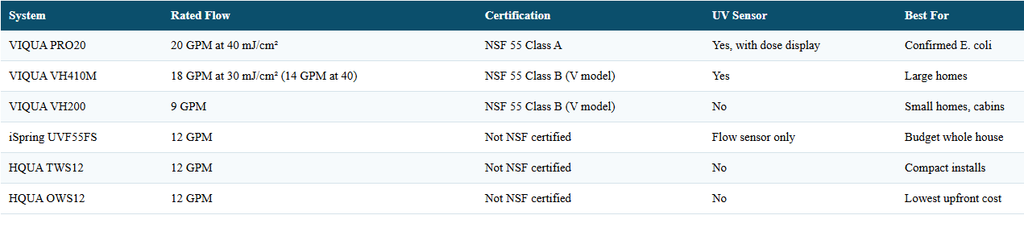
Our Top Picks at a Glance
The Best UV Water Purifiers for Coliform Bacteria
Best Overall for E. coli
1. VIQUA PRO20
The PRO20 is the system we recommend when a lab report shows E. coli or when your county requires certified treatment. It is NSF/ANSI 55 Class A certified at 20 GPM while delivering the full 40 mJ/cm² dose. A UV intensity sensor and built in flow meter display the actual dose in real time, so you are not guessing whether the lamp is doing its job.
The amalgam lamp is rated for two years, which halves your lamp changes compared with standard units. The tradeoff is price, as it costs several times more than budget systems. For a household with young children or anyone with a weakened immune system, that verification is worth paying for.
Pros: Class A certified, real time dose monitoring, two year lamp. Cons: Highest upfront cost, needs clean pretreated water to hold its rating.
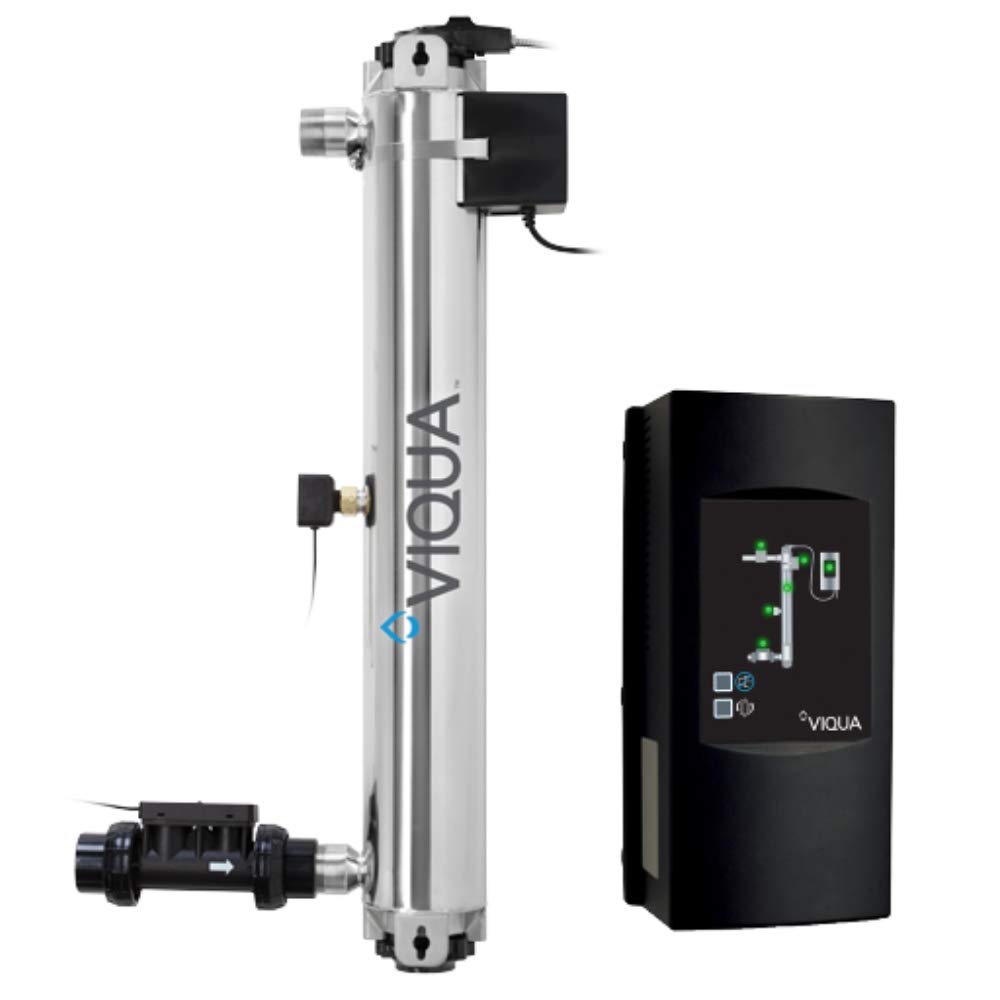
Best for Large Homes
2. VIQUA VH410M
The VH410M handles up to 18 GPM at a 30 mJ/cm² dose, or 14 GPM at the full 40 mJ/cm² dose. That makes it a good fit for homes with four or more bathrooms and irrigation demand. Its UV sensor triggers an alarm if light intensity drops from a dirty sleeve or aging lamp.
Look for the VH410M-V version if certification matters to you, since that model carries NSF 55 Class B certification. The lamp lasts 9,000 hours, which works out to one replacement per year.
Pros: Trusted brand, UV sensor, high flow, constant current ballast. Cons: Class B rather than Class A, sensor reads intensity rather than dose.
Best for Small Homes
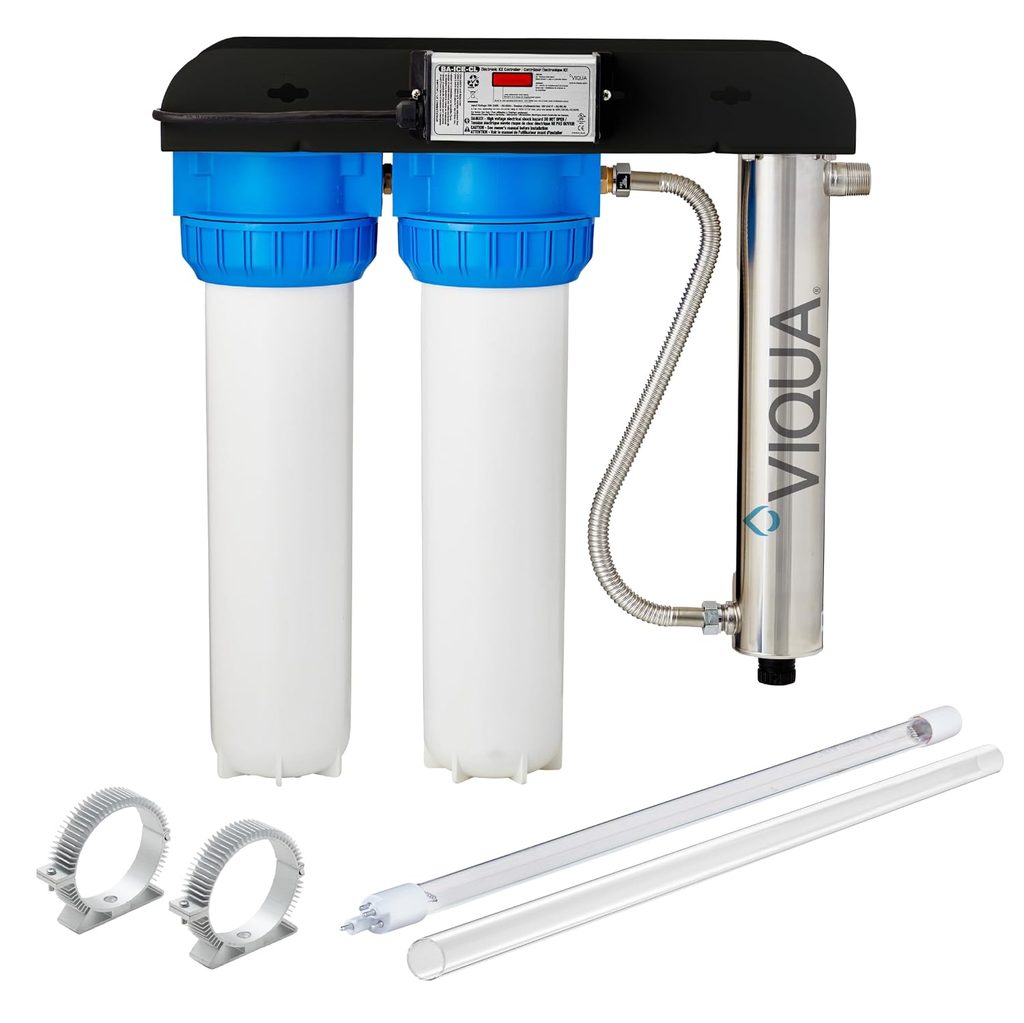
3. VIQUA VH200
For a one or two bathroom home, a cabin, or a guest house, the VH200 gives you Viqua build quality at a lower price. It is rated at 9 GPM, which covers a shower and a kitchen faucet running together. The controller counts down lamp life and sounds an alarm if the lamp fails.
It lacks a UV sensor, so annual sleeve cleaning and lamp changes are on you. If you are comparing compact systems, our guide to UV water purifiers for small homes covers more options.
Pros: Reliable brand, compact, lamp failure alarm. Cons: Lower flow, no intensity sensor.
Best Budget Whole House
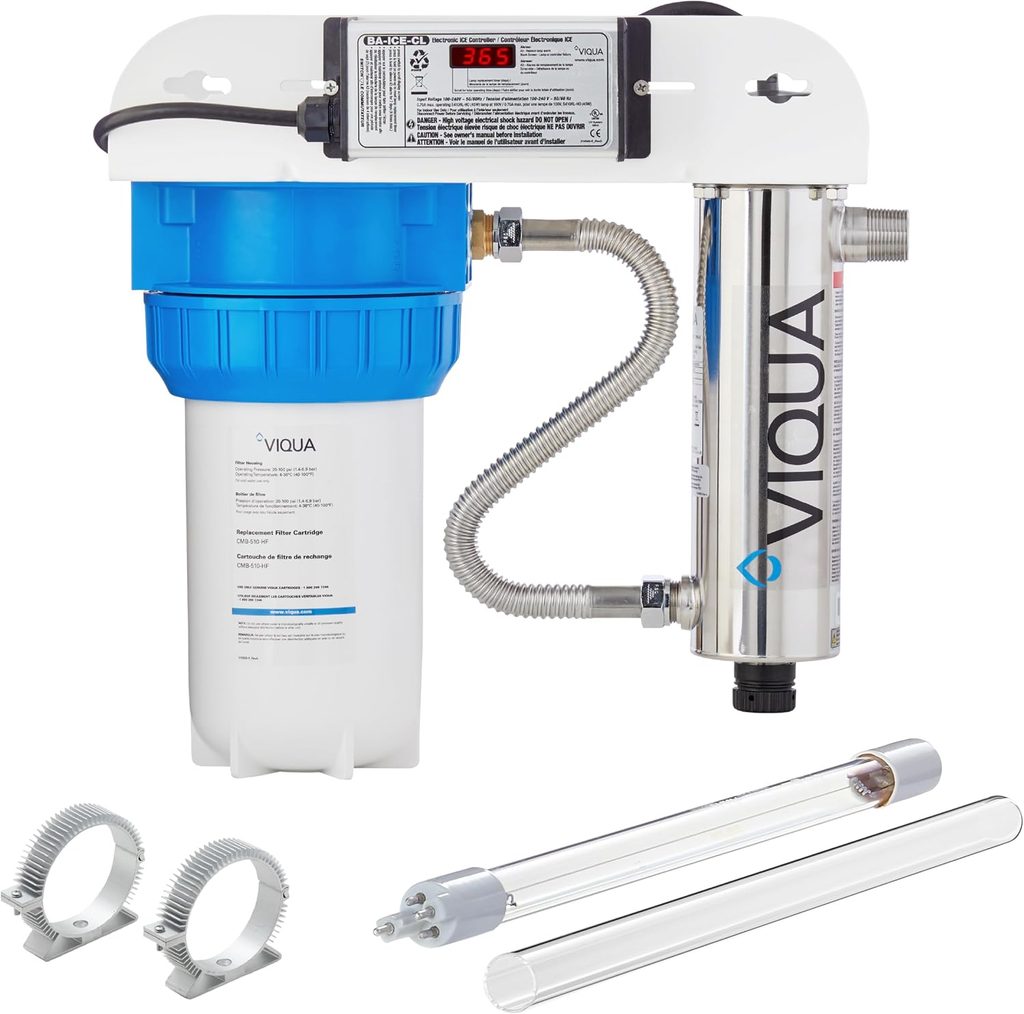
4. iSpring UVF55FS
The UVF55FS pairs a 55 watt lamp with a long 37.5 inch stainless chamber, which gives water more contact time at 12 GPM. Its smart flow switch turns the lamp on only when water moves, which reduces heat buildup and stretches lamp life. iSpring rates the lamp at up to 9,000 hours.
There is one catch for coliform treatment. The flow sensor will not turn the lamp on below about 0.66 GPM, so a dripping faucet or an ice maker line could pass water untreated. For bacteria problems, we suggest running it in continuous “Move” mode rather than “Auto.”
Pros: Strong lamp for the price, long chamber, responsive US support. Cons: Not NSF certified, low flow sensor gap.
Best Compact Design
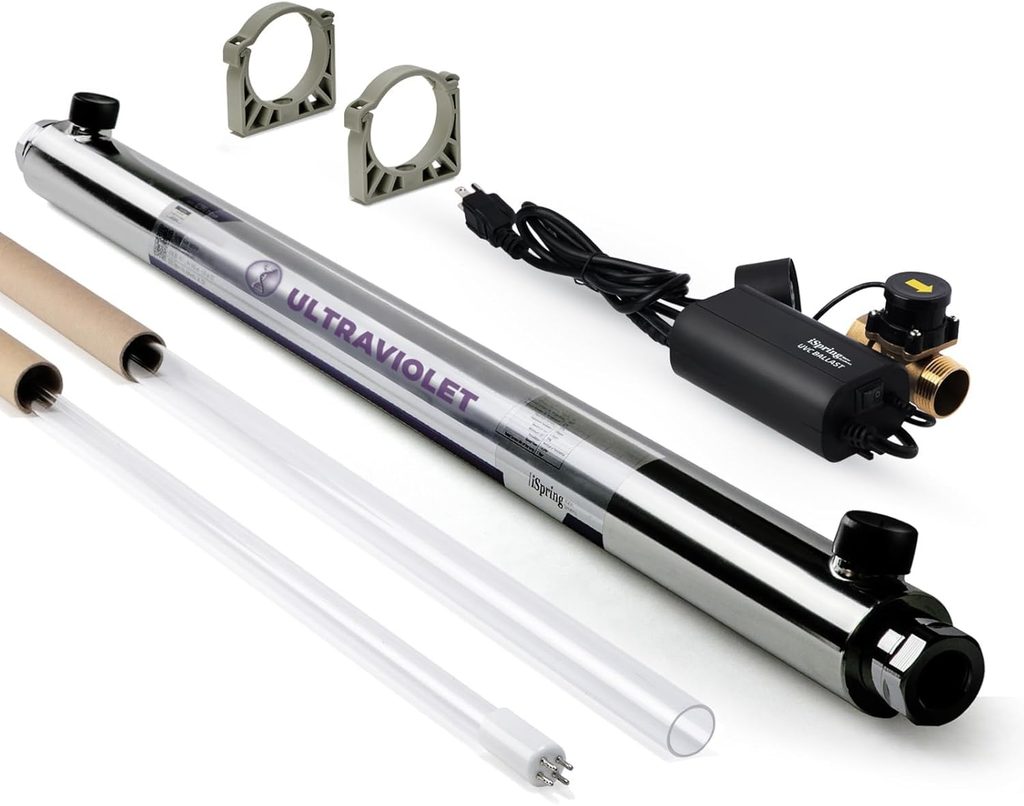
5. HQUA TWS12
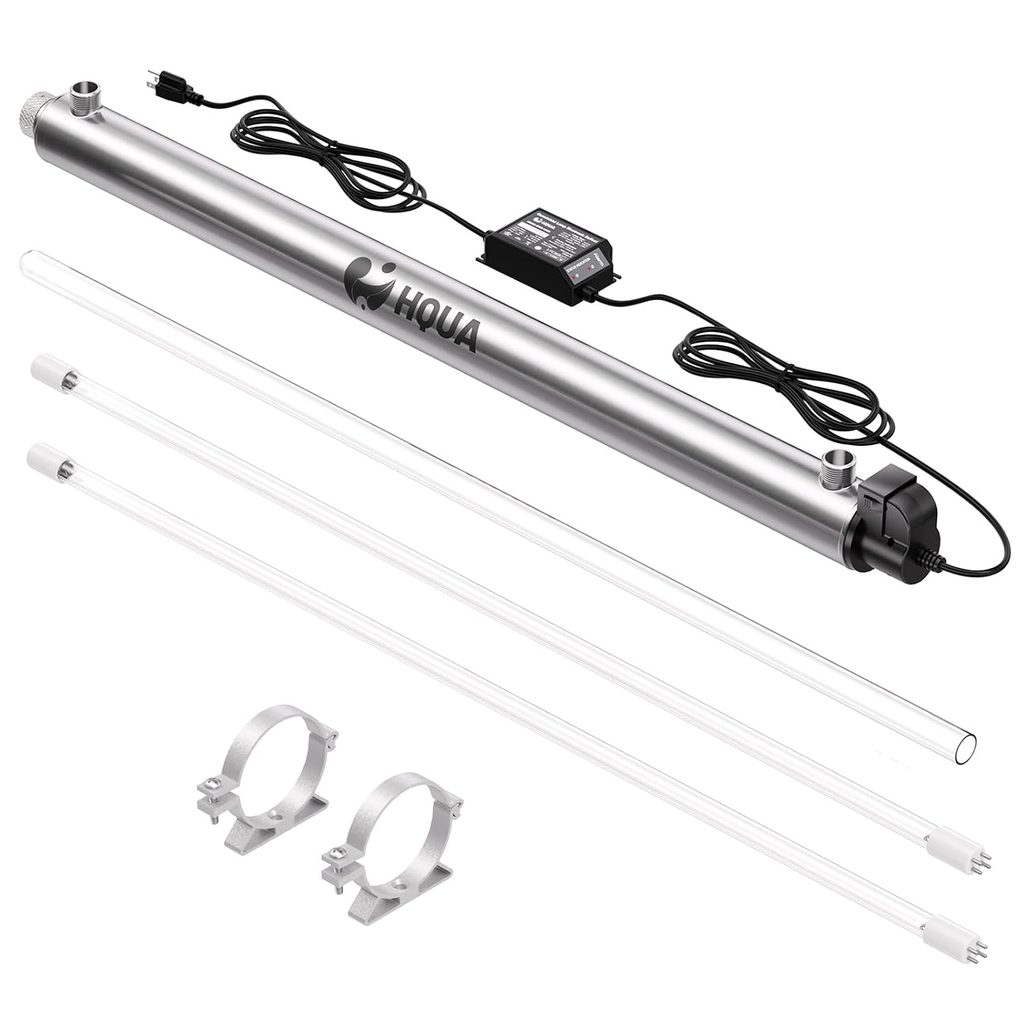
The TWS12 fits a 55 watt lamp into a chamber about 21 inches long and 3.5 inches wide. That shorter footprint helps in crowded utility rooms where a 37 inch chamber will not fit. It ships with a spare lamp and a spare quartz sleeve, which covers your first year of maintenance.
Pros: Compact, spare parts included, 55 watt lamp. Cons: No certification, no sensor, quality control varies between batches.
Lowest Upfront Cost
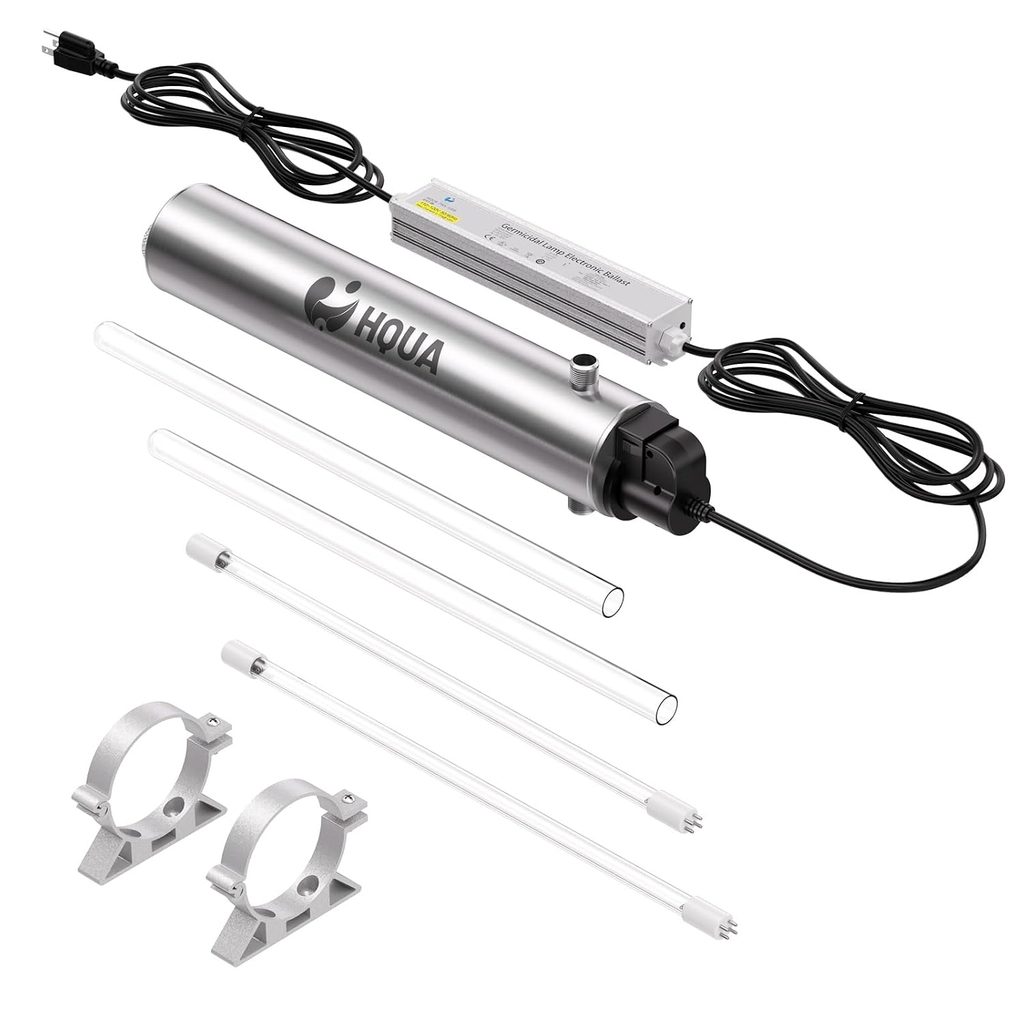
6. HQUA OWS12
The OWS12 is the entry point for whole house UV. It uses a 40 watt lamp in a 37 inch stainless chamber, rated at 12 GPM, and includes a spare bulb. For a modest home with total coliform only and very clear water, it does the job.
The 40 watt lamp gives less dose margin than 55 watt units at the same flow. If your test showed E. coli, spend the extra money on a certified system instead.
Pros: Very affordable, spare bulb included. Cons: Lower dose margin, no certification or sensor.
Pretreatment: The Step That Makes or Breaks UV
UV light only kills what it can reach. Iron, hardness, sediment, and tannins coat the quartz sleeve or absorb light, letting bacteria pass through in the shadows. Most manufacturers, including Viqua, set these limits for the water entering the chamber:
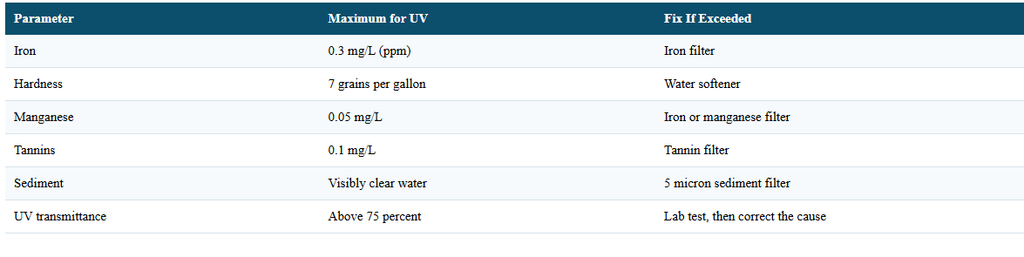
Iron is the most common problem we see. If your water leaves orange stains, read our guide to the best iron filters for well water before you buy any UV system.
How to Size a UV Purifier for Your Well
Size by peak flow, not average use. If water moves through the chamber faster than its rating, bacteria get less exposure and can survive. Use this as a starting point:

Your pump also sets a ceiling. Check its rated GPM, or the flow of your constant pressure pump system, and choose a UV unit rated at or above that number. When in doubt, size up.
Where to Install UV in Your Treatment Train
UV always goes last, right before water branches to the house. A typical sequence looks like this:
- Well pump and pressure tank
- Sediment prefilter (5 micron)
- Iron filter or water softener, if needed
- UV purifier
- Household plumbing
Install it indoors, away from freezing, with a dedicated outlet and shutoff valves on both sides. If you store water in a cistern, place the UV after the storage tank, since bacteria can regrow in standing water. Our water storage tank guide explains how to set that up.
From the Field: A Real Coliform Fix
A few years ago, a family called us after their annual test showed total coliform and E. coli in a 160 foot well. The homeowner had already bought a budget UV unit online and installed it, yet the retest came back positive again. They were frustrated and ready to drill a new well.
When we inspected the system, two problems stood out. The well cap had a cracked gasket that let insects and runoff into the casing, and the water carried 1.2 mg/L of iron that had coated the quartz sleeve in an orange film within weeks. The UV lamp was working, but almost no light was reaching the water.
We replaced the cap, shock chlorinated the well, added a sediment filter and an iron filter, and swapped in a Class A system. The next two tests came back clean. The lesson is simple: UV is the last line of defense, not a substitute for a sealed well and clear water.
Before You Install: Find and Fix the Source
A UV purifier treats the symptom. Before you buy, take these steps:
- Inspect the well cap and casing. Look for cracks, missing gaskets, or a cap below ground level. A well inspection camera can reveal damaged casing joints.
- Check drainage. Ground should slope away from the wellhead, and septic systems should sit at a safe distance.
- Shock chlorinate. This clears existing bacteria from the well and plumbing.
- Retest. Wait one to two weeks after shocking, then send a sample to a certified lab.
If coliform returns after shocking, the contamination is ongoing, and permanent UV treatment makes sense. The CDC and the National Ground Water Association recommend testing private wells for coliform at least once a year.

Maintenance and Power Outages
UV maintenance is simple but not optional. Plan for these tasks:
- Replace the lamp every 12 months. Most lamps are rated for 9,000 hours and lose strength even while still glowing.
- Clean the quartz sleeve at every lamp change, or more often if you have hard water.
- Change the prefilter every three to six months.
- Test the water once a year and after floods or well repairs.
Power is the other weak point. When the lamp is off, water flows through untreated. Rural homes should consider a solenoid valve that shuts off water when the lamp fails, plus a backup generator for the well pump sized to cover the UV unit too.
Frequently Asked Questions
Does a UV purifier remove coliform bacteria?
UV does not physically remove bacteria. It inactivates them so they cannot reproduce or cause illness. A properly sized system on clear water is highly effective against total coliform and E. coli.
What UV dose kills coliform bacteria?
NSF/ANSI 55 Class A systems deliver at least 40 mJ/cm², the dose recommended for water with known bacterial contamination. That level also covers Giardia and Cryptosporidium.
Can I use a UV system without a prefilter?
Not on most well water. Sediment and minerals block UV light and coat the sleeve, so a 5 micron prefilter is the minimum.
How long does a UV lamp last?
Most residential lamps are rated for 9,000 hours, or about one year of continuous use. Some premium amalgam lamps, like the one in the VIQUA PRO20, last two years.
Should I shock chlorinate before installing UV?
Yes. Shocking clears bacteria from the well and pipes, and a follow up test tells you whether contamination is ongoing.
The Bottom Line
If your well tested positive for E. coli, the VIQUA PRO20 is the safest choice because its Class A certification and dose display prove the job is getting done. For total coliform in larger homes, the VIQUA VH410M balances flow and reliability, while the iSpring UVF55FS is the best value pick for tighter budgets.
Whichever unit you choose, seal the well, add pretreatment, size for peak flow, and retest after installation. Do those four things and coliform stops being a recurring worry. Questions about your own results? Contact our team and we will help you read your water test.
Also Read On:
>>>Best Iron Filters for Well Water in 2026
>>>Best UV Water Purifiers for Small Homes
>>>Solar Pump Payback Calculator: How Many Years to Break Even?