Best Well Caps, Sanitary Seals, and Vermin Proofing for Private Wells
The well cap is the cheapest part of your entire water system, and it is often the part that fails first. A loose cap with a gap of a fraction of an inch is all an earwig, ant colony, or field mouse needs to get inside your casing. Once they do, they carry coliform bacteria straight into the water you drink.
This guide covers the best well caps and sanitary seals for private wells, how vermin proofing actually works, and the simple upgrades that solve a surprising number of failed water tests. Everything here comes from years of standing over wellheads on drilling jobs, plus the research that backs it up.
This article may contain affiliate links, and we may earn a commission from purchases made through those links. For more information, please refer to our disclosure.

Why Your Well Cap Matters More Than You Think
About 43 million Americans, roughly 14 percent of the population, rely on private domestic wells for drinking water according to the U.S. Geological Survey. Unlike city water, those wells are not covered by the federal Safe Drinking Water Act. That means you are the only person responsible for keeping your wellhead sealed and your water tested.
The risk is real. The same USGS study of about 2,100 domestic wells found that more than one in five contained at least one contaminant above a human health benchmark. Microbial contaminants turned up in as many as one third of the roughly 400 wells tested for them.

Not every positive test traces back to the cap. Failing septic systems, livestock, and flooding can contaminate a whole aquifer. But when bacteria enter one well at a time, the wellhead is usually the doorway.
Standard Caps vs Sanitary Caps vs Sanitary Seals
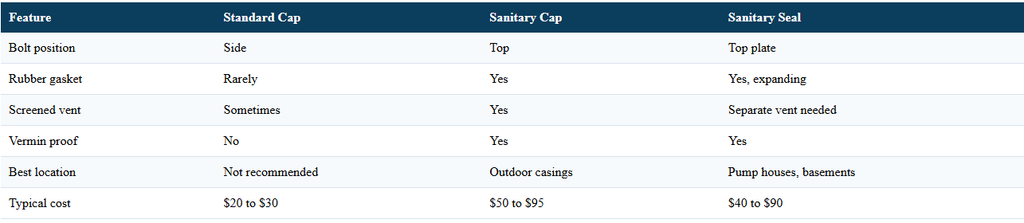
These three terms get mixed up constantly, even by plumbers. They do different jobs, so it pays to know which one you have before you buy anything.
Standard well caps
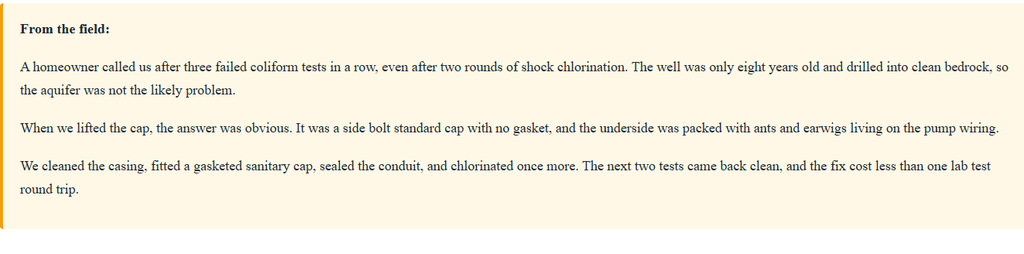
A standard cap slips over the casing and is held by set screws or bolts around its side. According to Penn State Extension, the small air gap between this type of cap and the casing lets insects, small mammals, and surface water get inside. If your cap has bolts on the side and no rubber gasket, it is almost certainly a standard cap.
Sanitary (vermin proof) well caps
A sanitary cap looks similar, but its bolts usually run vertically through the top. Tightening them compresses a rubber gasket against the casing, creating a sealed fit. A small screened vent still lets the well breathe as the water level rises and falls, without letting bugs in.
Sanitary well seals
A sanitary seal is a flat plate that fits inside the top of the casing, with an expanding rubber gasket squeezed between two plates. Seals are mostly used where the casing ends inside a pump house or basement, and some codes allow them only in protected locations. Outdoors, a properly vented sanitary cap is usually the better choice.
What the Research Says About Sanitary Caps
The strongest evidence comes from Pennsylvania, one of the few states without mandatory statewide construction standards for private wells. A 2002 USGS study of more than 100 Pennsylvania wells found that ungrouted wells were three times more likely to contain E. coli than grouted ones. Investigators also found obvious insect infestations under the cap in nearly half of the wells they inspected.
Penn State then tested the fix. Sixteen wells with coliform bacteria were shock chlorinated and fitted with sanitary caps, and the results are below.
Penn State Sanitary Cap Study Results
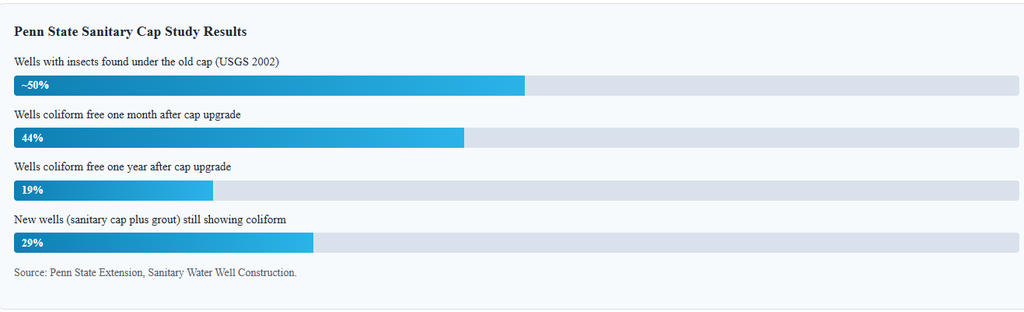
The takeaway is honest and useful. A sanitary cap worked best on wells with light contamination, under 3 colonies per 100 mL, and much less well on heavily contaminated ones. It is a strong first step, not a cure for a polluted aquifer.
Regulators agree. Wisconsin code has required vermin proof caps on new private wells since 1991, and the Wisconsin DNR lists a loose or non vermin proof cap as a common cause of bacteriological contamination.
Best Well Caps and Sanitary Seals for 2026
Every pick below has a gasketed seal, a screened vent, and stainless steel hardware. Before ordering, measure your casing. Most residential wells use 6 inch steel or PVC casing with an outside diameter of 6 5/8 inches, but 4 and 5 inch casings are common on older wells.
BEST OVERALL
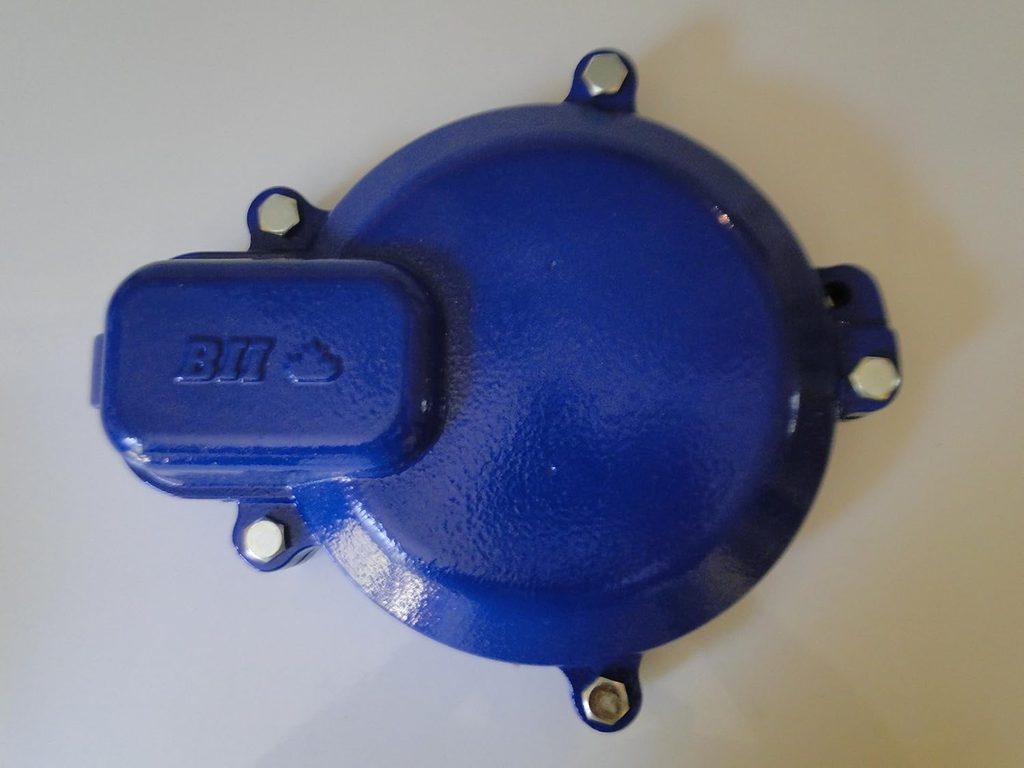
1. Boshart WTC Watertight Cast Iron Well Cap
This is the cap we would put on most outdoor wells. It uses an O ring system to seal the casing to the retainer ring, plus a second O ring between the cover and ring, compressed by four top bolts. The cast iron body is heavy enough to shrug off lawn equipment bumps that crack lighter caps.
Why it stands out: large screened vents, a grounding terminal, extra clearance for submersible pump cable, and a well log card inside for recording pump depth and install details. Expect to pay around $90 from plumbing suppliers.
Watch out for: the 1 inch conduit connection, which may be too small for larger pump wiring.
BEST FOR WET OR COASTAL SITES
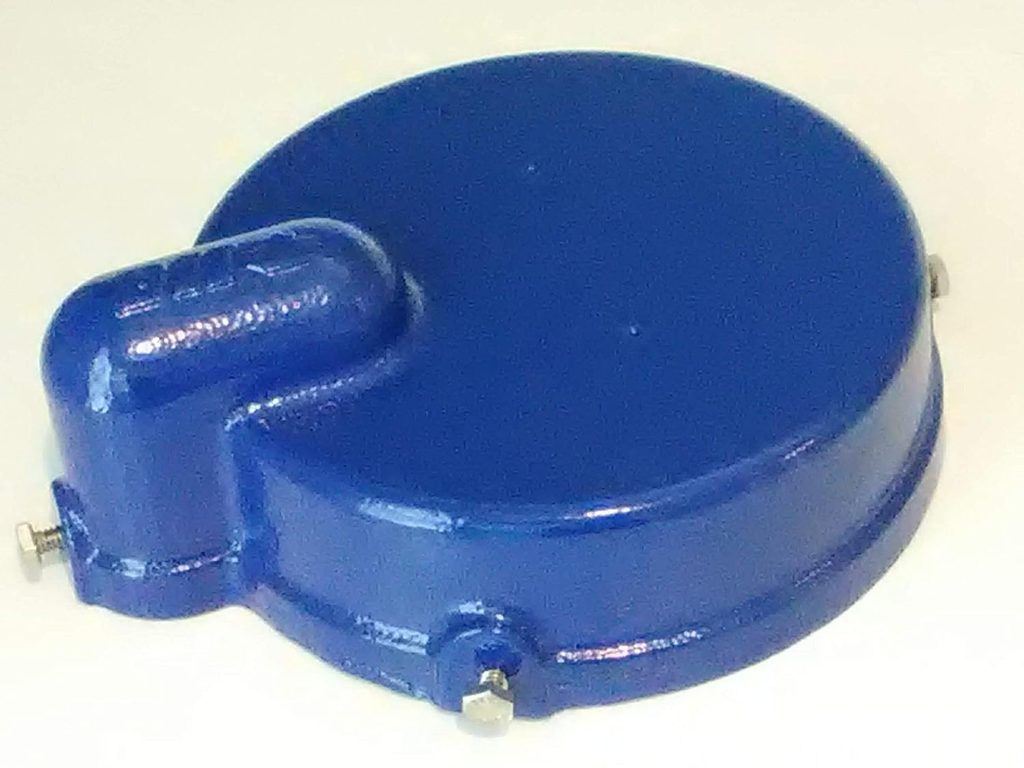
2. Boshart WTC Watertight Aluminum Well Cap
Same double O ring design as the cast iron version, in an aluminum body that will not rust. It is lighter and easier to handle on your own, which matters when you are threading pump wires through the conduit hub.
Why it stands out: corrosion resistance for humid, salty, or frequently flooded sites, and a 1 1/4 inch conduit version is available. Prices run roughly $75 to $90.
Watch out for: aluminum dents more easily than cast iron, so protect it from mowers and vehicles.
BEST LOCKING CAP
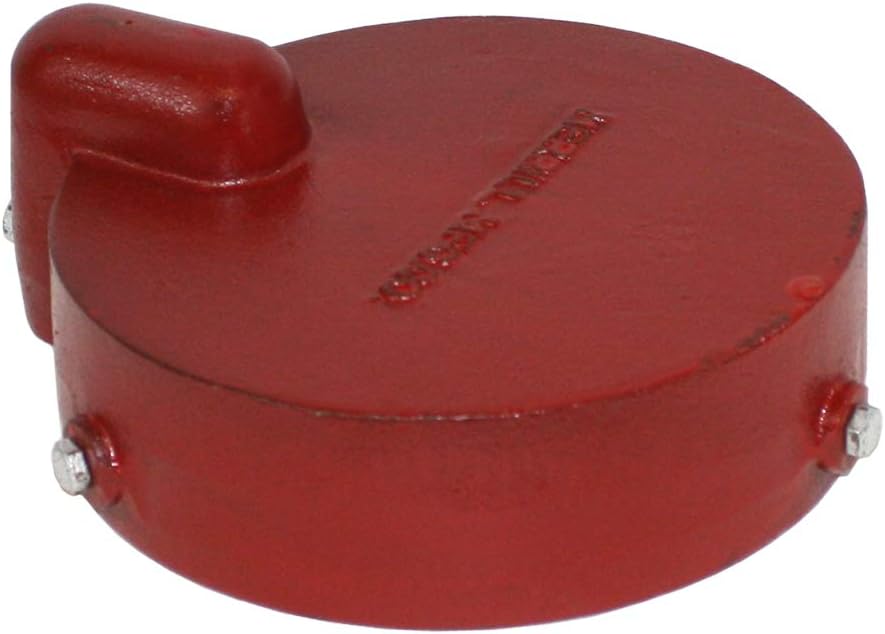
3. Baker Monitor Locking Well Cap
Baker’s Monitor cap is US made from heavy cast iron with a powder coat finish, stainless hardware, and a rubber seal. Its deep pocket gives extra room for pump cable, and two vent screens keep it vermin proof.
Why it stands out: the locking feature stops tampering, which makes sense for wells near roads, rental properties, or remote cabins and livestock wells.
Watch out for: the padlock is usually sold separately, so pick a brass or stainless lock that will not seize.
BEST FOR LARGER PUMP WIRING
4. Boshart WTCC Locking Watertight Cap (1 1/4 inch conduit)
This version uses a wide gasket compressed by five bolts and a deep pocket that seals casings cut unevenly, up to 1 1/2 inches below the top. That forgiving fit is a big deal on older wells where the casing was never cut square.
Why it stands out: the larger 1 1/4 inch conduit hub suits heavier pump cable, deep well installs, and wells with a level sensor or float wiring added. It also has a lockable cover.
Watch out for: confirm cast iron versus aluminum when ordering, since listings use similar model numbers.
BEST FOR WELLS INSIDE A BUILDING
5. Campbell Sanitary Well Seal
If your casing ends inside a pump house, basement, or well room, a sanitary seal is often the cleaner fit. The expanding gasket grips the inside of the casing and the drop pipe passes straight through the plate.
Why it stands out: a tight, low profile seal for jet pump and indoor setups, sized by casing diameter and drop pipe size.
Watch out for: you still need a properly screened vent, and many codes do not allow seals on outdoor casings.Check Price on Amazon
How to Vermin Proof Your Wellhead Step by Step
A good cap is only half the job. Vermin proofing means closing every route into the casing and keeping water away from the outside of it.
- Kill power to the pump at the breaker before you touch the cap or wiring.
- Remove the old cap and clear out insects, nests, webs, or dead rodents from the casing top and wiring.
- Check the casing height. Most state codes want the casing at least 12 inches above finished grade, and higher in flood zones.
- Inspect the casing rim for cracks or a ragged cut that could stop the gasket from sealing.
- Install the sanitary cap and tighten the top bolts evenly in a crisscross pattern so the gasket compresses all the way around.
- Seal the conduit. Use a proper conduit fitting so the wire entry does not become a new insect highway.
- Check the vent screen for tears, and replace any screen that has rusted through.
- Shock chlorinate the well, then retest for coliform bacteria one to two weeks after the chlorine clears.
Finally, slope the soil so surface water drains away from the casing in every direction. Penn State also recommends keeping a 100 foot protection zone around the well free of fertilizer, pesticides, and animal waste.
When a Cap Alone Is Not Enough
If your well still tests positive after a sanitary cap and disinfection, the contamination is probably coming from somewhere else. Common culprits include a cracked casing, a missing grout seal, a nearby septic field, or a shallow well that draws surface water.
A well inspection camera can show casing cracks, joint failures, or debris that a cap swap will never fix. For ongoing low level bacteria, pairing your sanitary cap with one of the best UV water purifiers for coliform bacteria gives you a second line of defense at the point of entry.
Grouting adds roughly $500 to $1,000 to a new well, and in most cases it cannot be added to an existing one. If you are drilling or deepening, ask for grouting and a sanitary cap in the contract.
Buying Checklist
- Casing size: measure the outside diameter, not the inside.
- Casing material: confirm the cap is rated for steel or PVC casing.
- Conduit size: 1 inch for most residential pumps, 1 1/4 inch for heavier cable.
- Vent screen: stainless steel mesh, not plain steel.
- Hardware: stainless bolts that will come apart in ten years.
- Locking: worth it for roadside, rental, or remote wells.
- Flood risk: a watertight cap if your wellhead can be submerged.
While you are at the wellhead, it is a good moment to check the rest of the system. Protect your pump with the right well pump protection devices, and learn the signs your well pump is going bad before it fails.
Frequently Asked Questions
How do I know if my well cap is sanitary?
Look at where the bolts sit. A sanitary cap has bolts on top that compress a rubber gasket, plus a screened vent. Side bolts with a visible gap usually mean a standard cap.
Can I install a sanitary well cap myself?
Yes, if you are comfortable shutting off power and handling pump wiring. Penn State notes homeowners with basic electrical knowledge can do it, and a driller typically charges around $100 to disinfect and install one.
How much does a sanitary well cap cost?
Penn State puts typical sanitary caps at $50 to $75, compared with $20 to $30 for a standard cap. Heavy duty cast iron and locking models run closer to $90 to $100.
Does a well cap need a vent?
Yes. As your pump runs, the water level drops and the casing needs to pull in air. A screened vent allows that airflow while keeping insects out.
How often should I test after replacing the cap?
Retest one to two weeks after shock chlorination, then test for coliform bacteria and nitrate at least once a year. The EPA private wells guidance also recommends testing after flooding or repairs.
The Bottom Line
A sanitary well cap costs less than a tank of gas, yet it closes the most common doorway for bacteria into a private well. For most homeowners, the Boshart WTC Watertight Cast Iron Well Cap is the best balance of seal quality, durability, and price.
Pair it with good grading, a sealed conduit, and an annual coliform test, and you will have done more for your water quality than most well owners ever do. If you need a certified contractor, you can search the National Ground Water Association’s directory at WellOwner.org. For more upgrades around the wellhead, browse our well components guides.
Also Read On:
>>>Best Submersible Well Pumps for Deep Wells: 1/2 HP vs 1 HP vs 1.5 HP by Depth and GPM
>>>Flotec FP217-810 Universal Pressure Tank Air Volume Control Kit
>>>Best UV Water Purifiers for Wells With Coliform Bacteria (2026)