
A driller’s notebook on wells and boreholes
I’m Ateya, Project Manager at Bonvic Drilling Co. Ltd, the borehole drilling company I co-founded in 2010. Boreholeflow is where I write down what the field has taught me about pumps, tanks and water treatment.
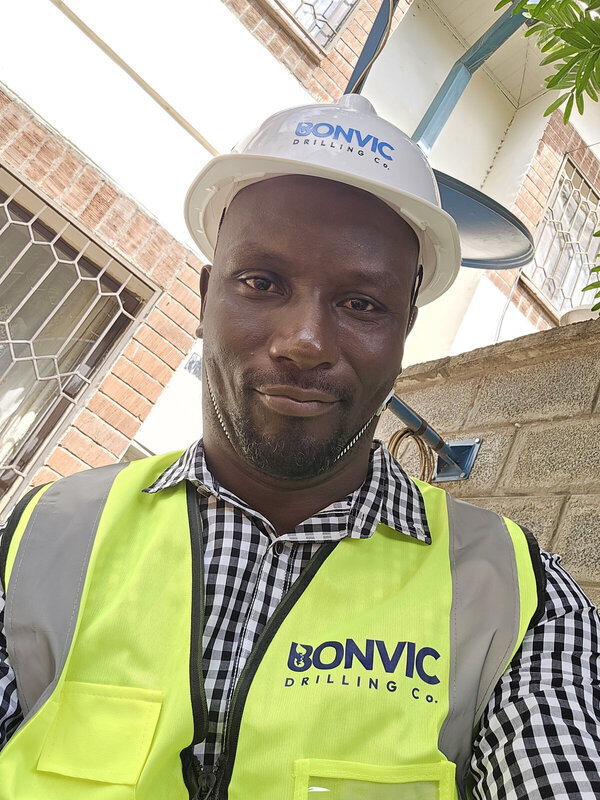
Most well advice online is written by people who never installed a pump
Millions of homes, farms and small businesses get their water from their own well or borehole. Most of what you find online about choosing pumps and tanks skips the sizing math. It says “consult a professional” instead of giving a real recommendation.
The gap between what a typical affiliate blogger writes and what a driller knows is huge. Owners pay for that gap when they buy the wrong equipment, install it badly or replace it years too soon.
That is why every guide here is written from field experience first and spec sheets second.
Written for well owners everywhere
The physics of lifting water is the same in every country, so the advice is too.
US and Canada
Rural homes and cabins on private wells, 60 Hz power and imperial units.
UK and Europe
Farms, rural homes and holiday properties on boreholes, 50 Hz and metric.
Australia
Homesteads, stations and bore water systems far from the mains.
Africa
Households, schools and institutions that rely on their own borehole.
Where it matters I flag the differences, such as 60 Hz versus 50 Hz, imperial versus metric, and which brands are easy to find in your region.
Every part of a well water system
If it is part of a well or borehole system, you will find it here or on the list to cover.
Pumps
Submersible, jet, solar and booster pumps, plus the controllers and pressure switches that run them.
Pressure tanks
Diaphragm, bladder and fiberglass tanks, with sizing and precharge.
Water treatment
Sediment and iron filters, softeners, UV systems and water testing.
Well components
Well caps, pitless adapters, drop pipe, foot valves and torque arrestors.
Solar and off grid
DC pumps, panel direct systems, controllers and battery banks.
Troubleshooting
Short cycling, pressure problems, no water, odor and discoloration.
A few honest things you should know
I’m based in Kenya
Most of my field work has been on boreholes in East Africa, using Grundfos, DAB, Pedrollo and Lorentz equipment. When I write about Goulds, Amtrol or Franklin Electric, I draw on years with their equivalents. A 10 GPM pump still needs 10 gallons of drawdown whether it sits in Texas or Trans Nzoia.
I haven’t held every product I review
I compare on engineering specs, failure patterns I have seen across hundreds of installations, maker track records and verified owner feedback. If I have not installed a specific model, I say so.
This site earns affiliate commissions
If you buy through a retailer link here, I may earn a small commission at no extra cost to you. It funds the site and never decides the rankings. Read the full disclosure.
The process behind every buying guide
- Find the real question behind the search, such as what someone looking for a pressure tank is actually trying to fix.
- Survey the products sold by major retailers and plumbing suppliers.
- Compare specs against what matters in the field: drawdown, precharge, warranty, pressure rating, connection size and materials.
- Cross check against the failure modes I have seen with equivalent equipment.
- Narrow the list to the five to seven products worth recommending.
- Write the sizing math and setup steps so you can actually use what you buy.
No fictional “six month testing in Arizona heat”. Just field experience applied to products you can buy, with engineering that holds in any country. Read the full editorial policy.
Questions, corrections or a strange installation?
I read everything that comes through the contact page. You can also watch real job sites on the Bonvic Drilling YouTube channel.
Boreholeflow is owned and operated by Ateya. It is independent and not affiliated with any pump, tank, filter or equipment maker. Visit Bonvic Drilling.