How to Use a Belt Sander.
A belt sander is one of the most powerful tools you can have in your workshop. Whether you are smoothing a rough board, stripping old paint, or leveling an uneven surface, knowing how to use a belt sander the right way makes all the difference.
In this guide, you will learn the exact steps and tips for clean, smooth results every time.
We independently evaluate all of our recommendations. If you click on links we provide, we may receive compensation.
Table of Contents
What Is a Belt Sander?
A belt sander is a power tool that uses a continuous loop of sandpaper, called a sanding belt, stretched between two rotating drums. It moves at high speed to aggressively remove material from a surface. You can use it on wood, metal, and even plastic, making it a versatile tool for both rough and finish work.
If you are looking for a reliable option to get started, check out the WEN 6321 Variable Speed Belt Sander. It offers smooth speed control and is great for beginners and pros alike.
Choosing the Right Grit for the Job
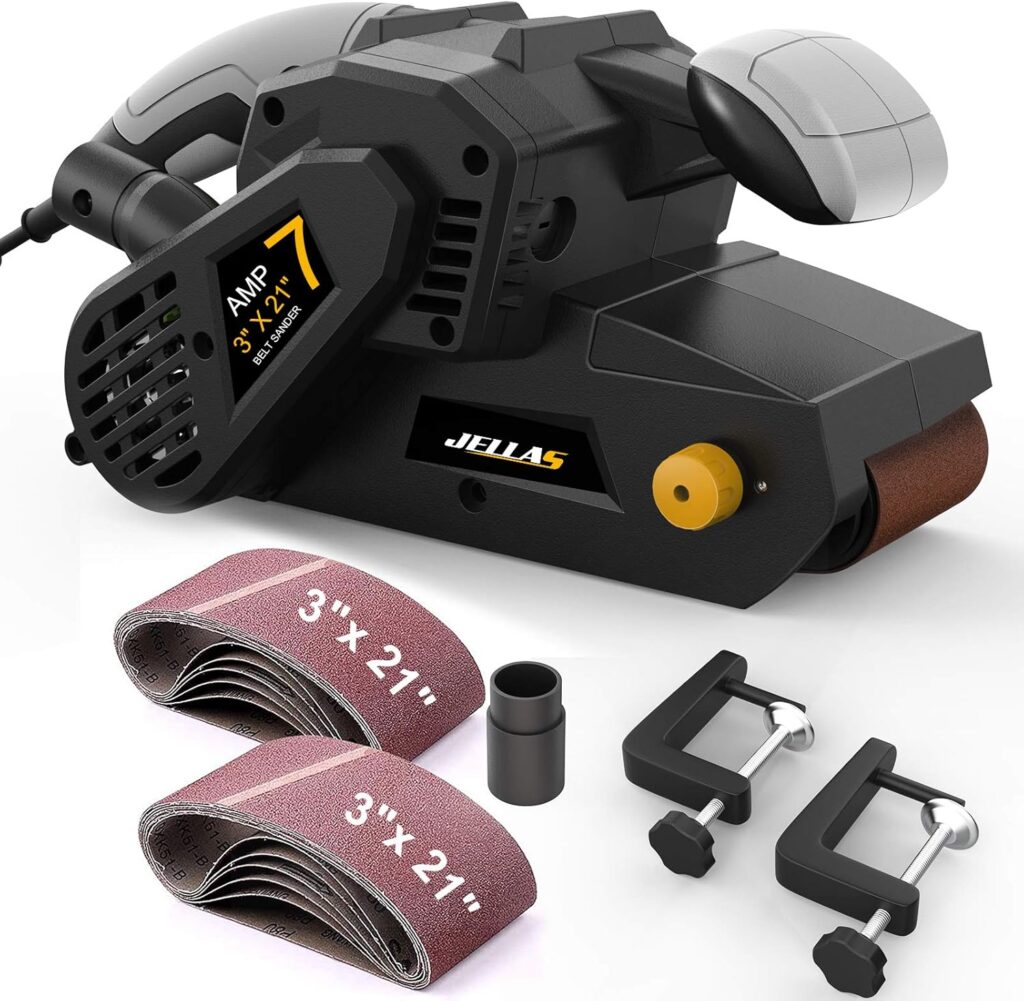
Selecting the correct sandpaper grit is the first critical decision before you start sanding. Grit refers to the coarseness of the abrasive on the belt. Use the wrong one and you can damage your workpiece or waste time making little progress.
Here is a simple grit guide to follow:
- Coarse grit (40 to 60): Use this to strip paint, remove deep scratches, or flatten very uneven surfaces.
- Medium grit (80 to 100): Ideal for smoothing rough lumber or removing tool marks after coarse sanding.
- Fine grit (120 to 150): Use this for finish sanding before staining or painting your workpiece.
Always start with a coarser grit and work your way up to a finer one. Jumping to a fine grit too early will not fix deep imperfections.
Setting Up Your Belt Sander
Before you turn on the tool, take a few minutes to set it up properly. Follow these steps:
- Install the belt correctly. The arrow on the inside of the belt must match the direction arrow on the sander body. A reversed belt will tear and snap quickly.
- Check belt tension. A loose belt will track poorly and give you uneven results. Adjust the tension knob until the belt is snug.
- Test the tracking. Run the sander briefly and watch how the belt moves. Adjust the tracking dial until the belt runs centered on both drums.
- Secure your workpiece. Clamp your wood firmly to a workbench before you start. Movement during sanding leads to uneven surfaces and potential injury.
How to Use a Belt Sander Step by Step
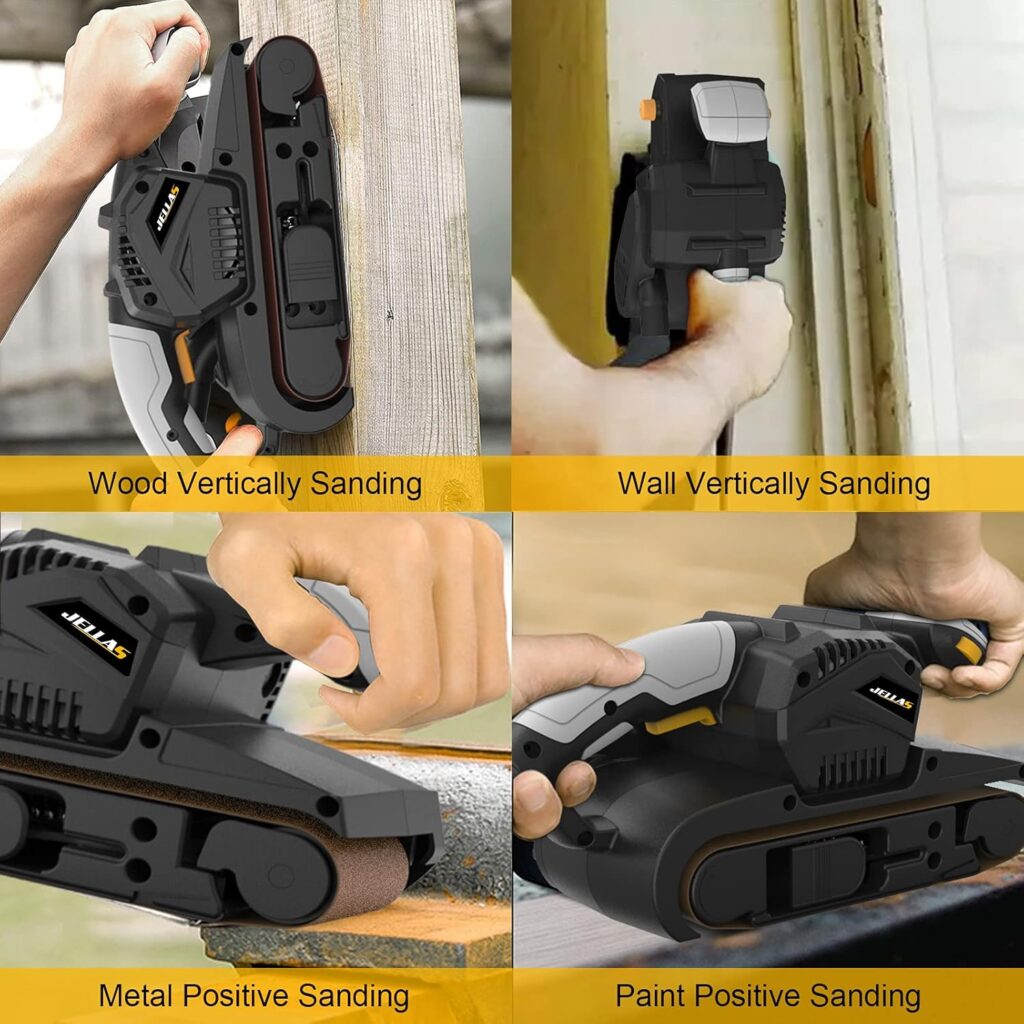
Once your setup is complete, you are ready to sand. Follow these steps for consistent, professional results:
- Turn the sander on before touching the surface. Never set a running sander flat on the wood while it is stationary as it will gouge the surface immediately.
- Move with the grain. Always sand in the direction of the wood grain to prevent cross grain scratches that are difficult to remove later.
- Keep the sander moving at all times. Pausing even for a second while the belt is running will create a depression or burn mark on the surface.
- Apply light, even pressure. Let the weight of the tool do the work. Pressing hard will not speed up sanding and will create uneven results.
- Overlap each pass. Move the sander so each pass overlaps the previous one by about half its width. This ensures you sand the entire surface evenly.
Belt Sander Tips and Techniques
These extra techniques will help you get better results and extend the life of your belts:
- Use a sanding frame or edge guide when sanding close to a border or when you need a perfectly straight edge.
- Clean your belt regularly using a rubber sanding belt cleaner stick. This removes clogged sawdust and extends belt life significantly.
- For curved surfaces, consider a spindle attachment or switch to a random orbital sander which handles contours better.
- When sanding end grain, use the same light pressure and keep moving to avoid burning the wood fibers.
For great belt replacements, browse the best sanding belts to keep your tool running at peak performance.
Safety Tips You Should Always Follow
A belt sander generates significant dust and runs at high speed. Always take safety seriously:
- Wear safety glasses to protect your eyes from flying debris.
- Use a dust mask or respirator since fine wood dust is harmful to your lungs over time.
- Keep both hands on the tool during operation to maintain full control.
- Disconnect the power before changing belts or making any adjustments.
- Never use a sander with a torn or damaged belt as it can snap and cause injury.
Conclusion
Using a belt sander correctly comes down to preparation, technique, and consistency. When you choose the right grit, set up your tool properly, keep the sander moving, and follow the grain, you will achieve smooth, professional results every time.
Start with a reliable machine like the WEN 6321 Belt Sander, practice these techniques, and you will quickly build the confidence to tackle any sanding project in your workshop.
Also Read On:
Best Safety Glasses for Power Tool Use