Solar Pump Payback Calculator: How Many Years to Break Even?
We independently evaluate all of our recommendations. If you click on links we provide, we may receive compensation.
Most people ask the wrong question about solar pumps. They ask what a solar pump costs, when the number that actually decides the purchase is what the alternative costs over the same twenty years.
This solar pump payback calculator runs both sides of that comparison. Enter your daily water need, your well depth, and the cost of whatever you would otherwise do, and it returns your upfront spend, your yearly running cost, your payback period in years, and a twenty year total for each option.
I size these systems for a living. The numbers baked into this tool come from real quotes, real trenching bills, and real fuel logs, not from manufacturer marketing sheets.
☀️ Solar Pump Payback Calculator
Find out how many years it takes for a solar pump to pay for itself against grid power, a generator, or your existing utility bill.
Step 1 · What are you comparing solar against?Running power to the wellA gas generatorUtility power already at the well
You have no electric service at the wellhead and would need to trench or run overhead line to get it there.
Step 2 · Your water need and your wellDaily water need (gallons)
Household of four uses roughly 300. Add 20 per head of cattle and 1,000 per irrigated acre in season.Pumping water level (feet)
Depth to water while the pump is running, not total well depth. Use your well log.Surface lift to tank (feet)
Vertical rise from the wellhead up to your storage tank or cistern inlet.Who installs the solar side? I do it myself Hired contractor
Contractor figure covers array mounting, wiring, and pump setting on a typical residential well.
Step 3 · Cost of running power to the wellDistance to nearest power (feet)Line extension cost per foot ($)
Buried line runs $20 to $45. Overhead runs $10 to $25. Ask your utility for the written figure.Electricity rate ($ per kWh)Calculate My Payback →
How the solar pump payback calculator works
The tool does not guess at your energy use. It calculates the physical work of lifting your water, then prices that work three different ways.
First it builds your Total Dynamic Head by adding pumping water level, surface lift to your tank, and a friction allowance of ten percent. Then it converts your daily gallons into hydraulic horsepower, applies a realistic wire to water efficiency, and lands on the pump wattage and panel array your site actually needs.
From there it prices the solar hardware, prices whatever you would otherwise install, and runs both forward twenty years. The payback figure is the extra money solar costs upfront divided by the money it saves every year.
If you want the sizing side in more depth before you look at money, run your numbers through the solar pump sizing calculator first, then come back here.
What each result actually means
The solar pump payback calculator returns four numbers, and each one answers a different question about the purchase.
Payback period
This is the year your cumulative spend on solar crosses below your cumulative spend on the alternative. Anything under five years is a clear buy. Anything past fifteen is a purchase you make for independence, not for savings.
Upfront cost
Solar front loads almost everything. You pay for the pump, the panels, the mounting, the controller, and the labor on day one, and then your fuel bill is zero forever.
Grid and generator setups do the opposite. They look cheap the day you buy them and then bill you every month for twenty years.
Twenty year total cost of ownership
This is the honest number, and it is the one most quotes hide. It includes the purchase, two decades of running cost, and scheduled pump replacement for both options.
Solar systems get one pump replacement in that window because a quality brushless DC pump runs ten to fifteen years. Conventional AC pumps get two, because they typically last eight to twelve under daily duty.
What running power to a well really costs
This single input decides most solar payback outcomes, and it is the one homeowners guess at most badly. Utilities charge by the foot, and the spread is enormous depending on terrain, easements, and whether the line goes overhead or underground.
| Line extension type | Typical cost per foot | Cost at 1,000 feet |
|---|---|---|
| Overhead, open flat ground | $10 to $18 | $10,000 to $18,000 |
| Overhead, trees or slope | $18 to $30 | $18,000 to $30,000 |
| Buried, soft soil | $20 to $32 | $20,000 to $32,000 |
| Buried, rock or road crossing | $35 to $60 | $35,000 to $60,000 |
Those are the figures that make solar obvious. A residential solar pump system for a 200 foot well runs somewhere between $2,500 and $6,000 installed, so any line extension past a few hundred feet loses on cost before you have paid a single power bill.
Call your utility and ask for a written line extension estimate before you run this calculator. The number they give you will be more accurate than any national average, and some utilities credit part of the cost against future usage.
Three payback scenarios from the field
These are composite cases built from jobs I have been involved in. The names and details are changed, but the arithmetic is real.
The back pasture well: payback in year two
A cattle operation needed 1,800 gallons a day at a stock well about 1,400 feet from the nearest transformer. The utility quoted $31,000 to bring in buried service, and the owner had been running a portable generator out there twice a day for three years.
The solar build came in at $5,400 including a 1,200 watt array, a helical pump, a controller, and a 2,500 gallon poly tank. Against the generator he had been feeding roughly $2,100 a year in fuel and oil.
Payback against the generator landed at just under two years. Against the grid extension, solar was cheaper on day one by more than $25,000.
The suburban retrofit that should not have happened
A homeowner with a 140 foot well and power already at the wellhead wanted to go solar for the savings. His well pump used about 420 kWh a year, which at his rate was $71.
A solar conversion would have cost him $4,200. Payback on electricity alone was over fifty years, which is four times the life of the equipment.
He did not buy it, and that was the right call. What he bought instead was a proper pressure tank that stopped his pump short cycling, which saved him more over ten years than solar would have.
The outage case where payback missed the point
A rural family on a ridge line lost power six to nine times a year, sometimes for three days. Their AC pump quit with the grid, so every outage meant hauling water in drums for livestock and flushing toilets from a rain barrel.
On pure electricity cost, their solar payback ran twenty eight years. When they priced what those outage days actually cost them in hauled water and lost time, the figure came to about $900 a year.
That input alone pulled payback down to under six years. This is why the calculator has a box for outage cost, and why leaving it at zero understates solar for a lot of rural sites.
Five mistakes that wreck solar payback math
1. Pricing the pump and forgetting the array
People see a $600 solar pump on Amazon and assume that is the system. The panels, the rack, the controller, and the wire usually cost more than the pump itself.
2. Using total well depth instead of pumping water level
A 400 foot well with water standing at 120 feet does not lift from 400 feet. Using the wrong figure inflates your head, your pump size, and your array by two or three times.
3. Ignoring what the generator really costs
Fuel is the visible cost, but oil changes, plugs, air filters, and a replacement unit every five or six years add up to as much as the gas. Generators also fail on the day you need them most.
4. Buying the cheapest pump and calling it a savings
A brushed motor pump under $100 lasts one to three years. Replacing it seven times over twenty years costs more than one quality brushless unit, and every failure means pulling pipe.
5. Skipping storage and oversizing the array instead
Storage is the cheapest component in any solar water system. Adding 1,000 gallons of tank is far cheaper than adding 500 watts of panel, and it does more for reliability.
When solar does not pay back
I would rather you skip a sale than buy something that does not suit your site. Solar pumping loses the payback argument in three common situations.
The first is when utility power is already at the wellhead and reliable. A typical household well pump costs $60 to $120 a year to run, and no amount of panel savings recovers a $4,000 conversion against a bill that small.
The second is very high flow demand, such as pressurized irrigation over several acres. The array required scales with flow, and past a certain point the panel bill overtakes any fuel savings.
The third is heavy shade or a site with fewer than four peak sun hours in winter. Your array has to be oversized to compensate, and the payback window stretches past the life of the hardware.
The gear that moves your payback number
Three components decide whether your real world payback matches this calculator. Get them right and the model holds, get them wrong and your costs drift upward within a few years.
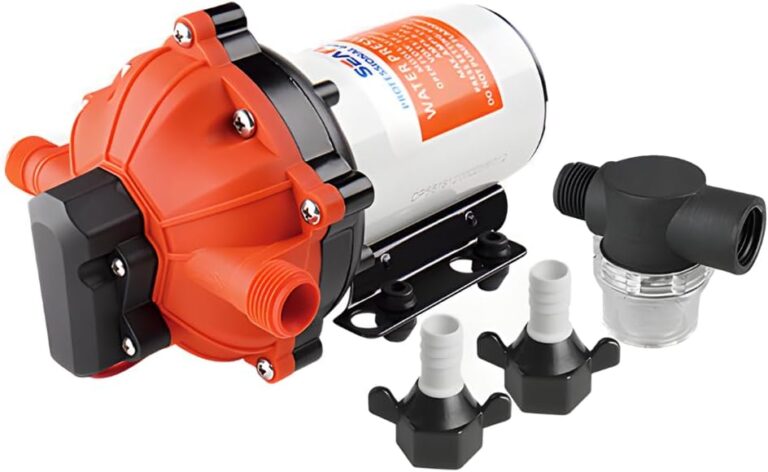
A brushless DC pump with dry run protection
Brushless motors are the difference between a three year pump and a fifteen year pump. Dry run protection matters even more, because a pump that keeps running on an empty well burns out in hours.Check Prices on Amazon →
An MPPT controller, not a PWM one
An MPPT controller keeps your panels at their maximum power point as sun conditions swing. Running without one costs you a quarter of your daily output, which means buying a quarter more panel to compensate.Check Prices on Amazon →
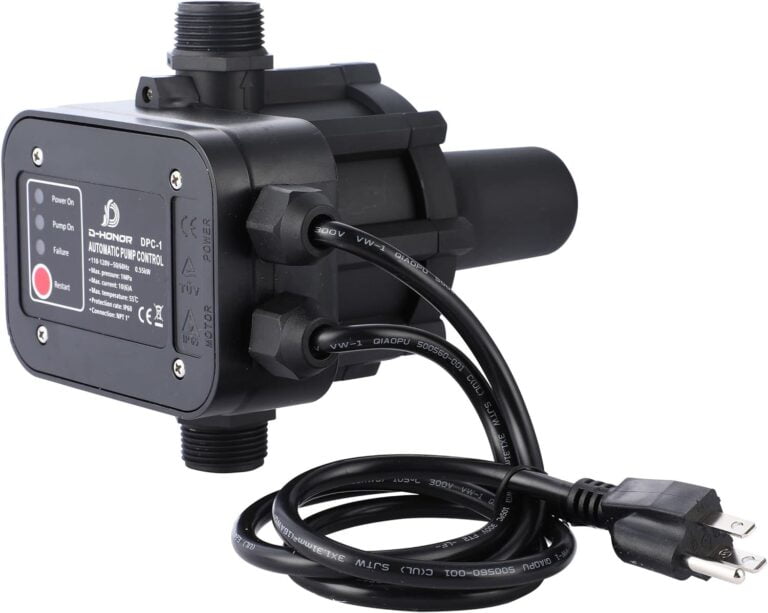
A pump controller or float switch on the tank
Automatic control stops your pump cycling against a full tank, which is where a lot of premature failures start. Our guide to the best automatic pump controllers covers the models worth fitting.Check Prices on Amazon →
If you are still weighing pump types before you commit, our full review of the best solar submersible water pumps compares six models on head, flow, and build quality. For surface and light duty applications, see our guide to solar powered water pumps.
Comparing against a generator? Our breakdown of backup generators for home use covers what these units actually cost to own, and the best electric water pumps guide covers the AC side of the comparison.
Run your final component prices back through the solar pump payback calculator once you have real quotes in hand. Estimates get you to a decision, but quoted numbers get you to the right one.
Solar pump payback calculator: common questions
What is a typical payback period for a solar well pump?
Against a grid extension of more than 500 feet, solar usually pays back immediately or within two years. A generator, expect two to five years. Against utility power already at the well, payback often runs past twenty years and rarely makes financial sense.
How much does a complete solar well pump system cost?
A residential system for a 150 to 250 foot well runs $2,500 to $6,000 installed. The pump is usually $600 to $1,800, the array $500 to $1,200, the controller around $180, and labor $1,000 to $1,600 if you hire it out.
Does a solar pump save money if I already have power at my well?
Usually not on electricity alone. A household well pump costs $60 to $120 a year to run, so a $4,000 conversion takes decades to recover. The case only works if you place real value on pumping through outages.
Are solar pumps eligible for tax credits?
Solar equipment for residential property has historically qualified for the federal residential clean energy credit, and many states add their own incentives. Rules and percentages change, so confirm current eligibility with a tax professional before you count a credit in your payback math.
How long does a solar pump system last?
Panels carry 25 year output warranties and routinely outlive them. A quality brushless pump runs ten to fifteen years, controllers last eight to twelve, and budget pumps under $200 often fail inside three.
Is solar cheaper than a generator for a remote well?
Almost always, and the gap widens every year. A generator running two hours a day burns roughly $500 to $900 in fuel annually plus servicing, while a solar array running the same duty costs nothing to feed.
Do I need batteries, and how do they affect payback?
Most installations skip batteries because the storage tank does the same job at a fraction of the cost. Adding a battery bank typically pushes payback out by three to six years, so only add one if you genuinely must pump after dark.
What is the cheapest way to improve my payback number?
Add storage. A 1,500 gallon tank costs a few hundred dollars and lets you run a smaller pump and a smaller array, which trims the two largest lines in your upfront cost.
📬 Get My Free Solar Pump Cost Worksheet
One page PDF with component price ranges, the twenty year cost template, line extension benchmarks by region, and the questions to ask your utility.
About the author
I am Ateya, Project Manager at Bonvic Drilling Co. Ltd, a borehole drilling and water infrastructure company. I have spent more than a decade specifying pumps for well sites, sizing arrays against real pump curves, running test pumping on new boreholes, and pulling out systems that were sold on the wrong numbers.
Every figure in this calculator comes from equipment I have specified or installed, not from a spec sheet. If your result looks wrong for your site, it usually means one input is off, and the pumping water level is the usual culprit.
Also read >>>The Ultimate Guide to the Best Sump Pump