Best Fish Tape and Wire Pulling Tools.
If you have ever tried to run wire through a finished wall or a long conduit without the right tool, you already know how quickly that job turns painful.
The right fish tape or wire pulling tool transforms that struggle into a straightforward task. Whether you are an electrician running cable through conduit on a job site or a homeowner threading speaker wire behind drywall, there is a tool built exactly for what you need.
We independently evaluate all of our recommendations. If you click on links we provide, we may receive compensation.
What Is a Fish Tape?
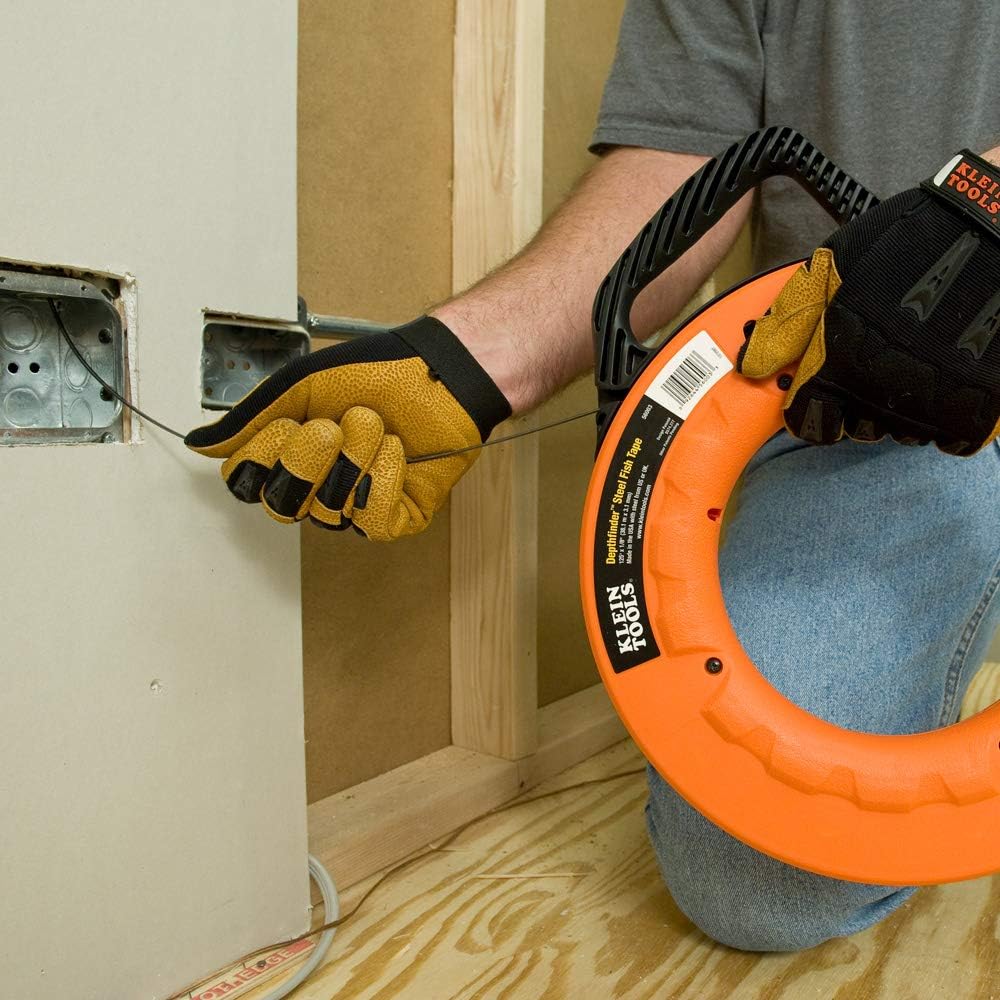
A fish tape is a long, flexible strip of metal or fiberglass coiled inside a compact reel. You feed it through conduit or wall cavities, attach your wire to the hook at the tip, then pull it back to drag the wire through.
It sounds simple because it is. The challenge is choosing the right one for your specific application.
Fish tapes come in steel, fiberglass, and nylon varieties. Steel tapes are strong and conductive, so you use them in dead conduit.
Fiberglass tapes are non-conductive and flexible, making them safer when you cannot confirm a conduit is completely de-energized. Nylon tapes are the most flexible and work well in tight bends.
Key Features to Look For.
- Length: Shorter reels (25 ft.) handle walls and ceilings. Longer ones (100 ft and above) cover full conduit runs in commercial settings.
- Material: Steel for heavy pulls in straight runs, fiberglass for safety around potential live circuits, nylon for complex bends.
- Case design: A well-sealed case protects the tape and makes rewinding faster. Look for a smooth-feeding reel that does not bind.
- Tip style: A strong, bent tip hooks wire securely. Some tapes include interchangeable tips for different applications.
- Handle comfort: You will be cranking this reel under tension. A comfortable, ergonomic handle reduces fatigue on long pulls.
Table of Contents
Top Fish Tape and Wire Pulling Tools to Consider
1. Klein Tools 56005 Fish Tape
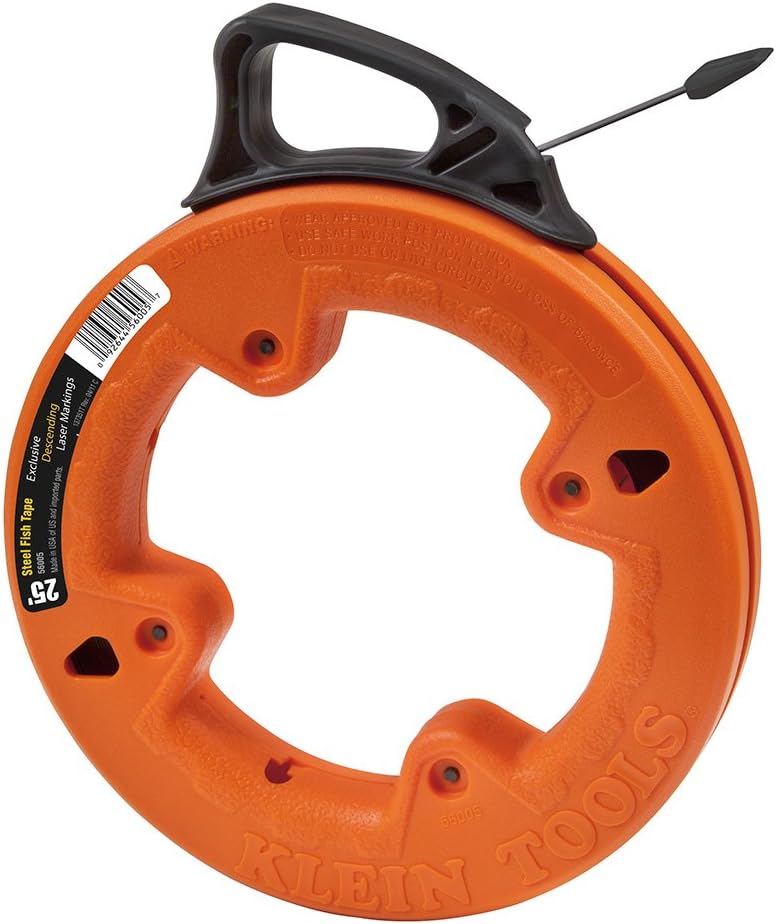
Klein is the name most electricians trust, and this 50 ft steel fish tape earns that reputation on the job site.
The steel is tempered for spring memory so it pushes through conduit without folding back on itself.
The enclosed case keeps the tape protected and feeding smoothly. You get a bent tip that grabs wire reliably and a comfortable grip that holds up through a full day of pulls.
View the Klein Tools Fish Tape on Amazon: Klein Tools 56005 Fish Tape
2. Southwire 56850101 Fish Tape
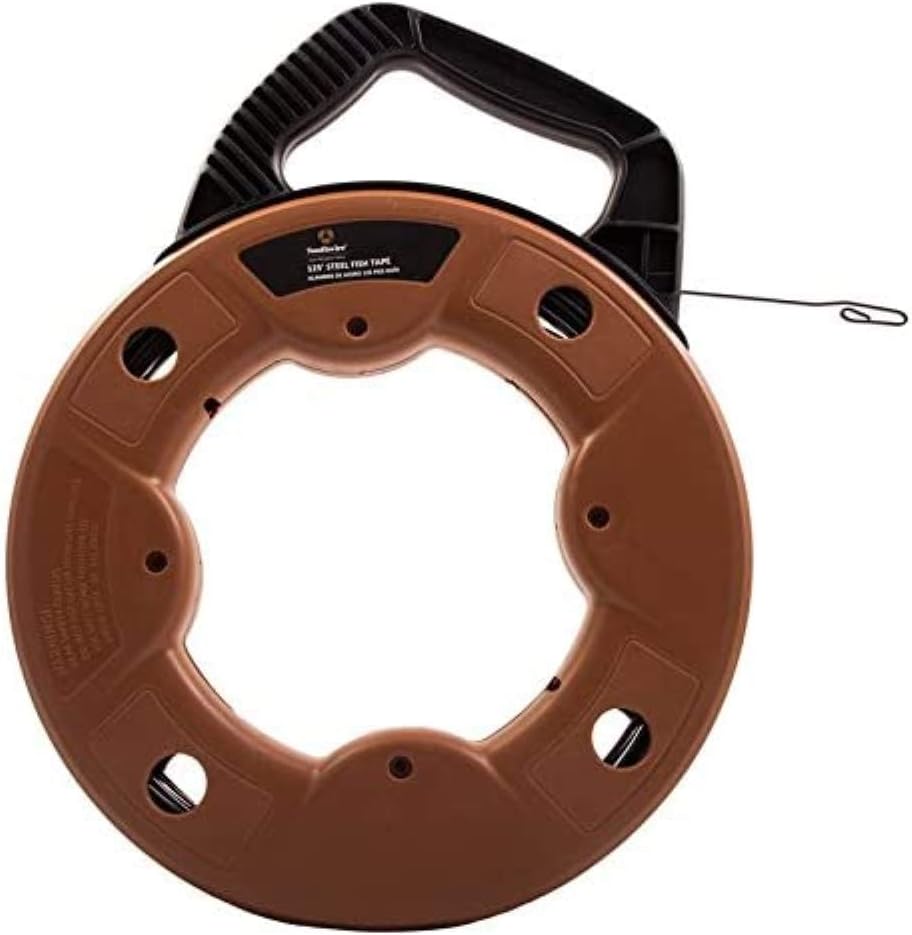
Southwire delivers a fiberglass fish tape that is genuinely non-conductive along its entire length, not just part of it. This matters when you are working in environments where energized conduit is a possibility.
The 50 ft. reel feeds and rewinds smoothly, and the case latches shut to protect the tape during transport. This one handles tight bends far better than steel options in the same class.
View the Southwire Fish Tape on Amazon: Southwire 56850101 Fish Tape
3. Ideal Industries 31-050 Tuff-Grip Fish Tape
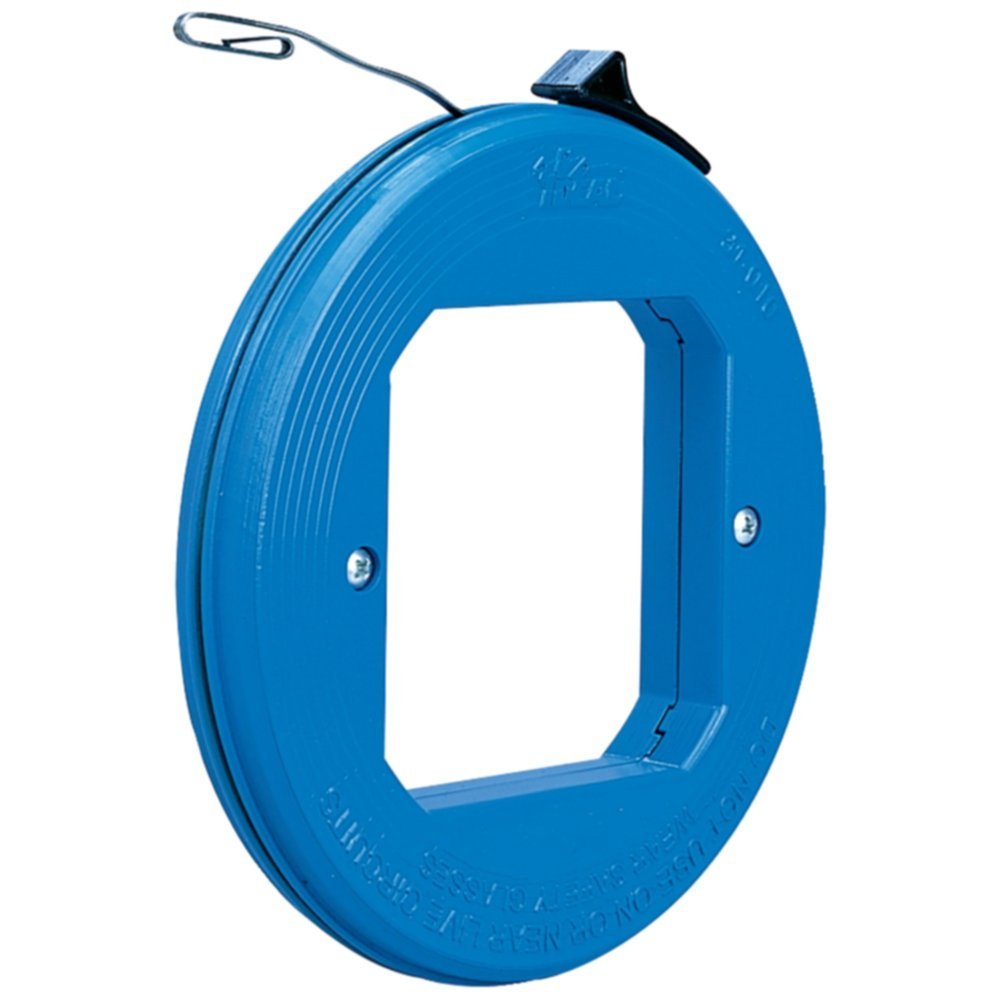
Ideal builds this tape for professionals who pull wire all day, every day. The 50 ft steel tape has a round cross-section that slides through conduit fittings more easily than flat tapes.
The case features a wide-mouth opening for fast feeding and a rubberized grip handle that stays comfortable under heavy tension. If you are doing high-volume work, this tape will hold up.
View the Ideal Industries Fish Tape on Amazon: Ideal Industries 31-050 Fish Tape
4. Greenlee Wire Pulling Grip
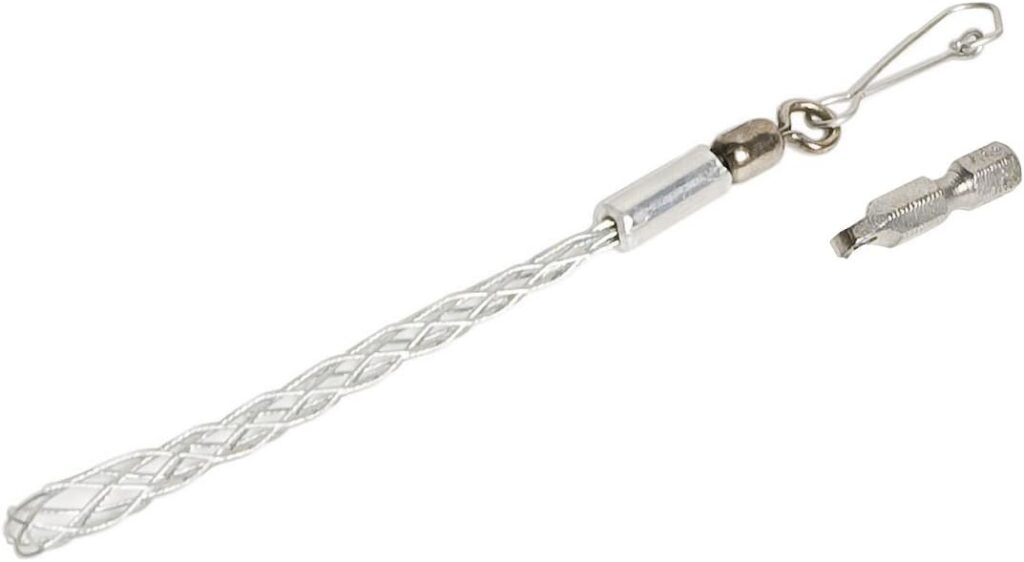
A wire pulling grip works differently from a fish tape. You slide it over the wire bundle, and it tightens its weave under tension to grip the wire securely. Greenlee makes these grips in a range of wire diameter sizes.
You attach the loop at the end to your pull string or fish tape and haul the wire through in one clean pass. This is the tool that eliminates slipping connections during long conduit pulls.
5. Gardner Bender EFT-15W Fiberglass Fish Stick Kit
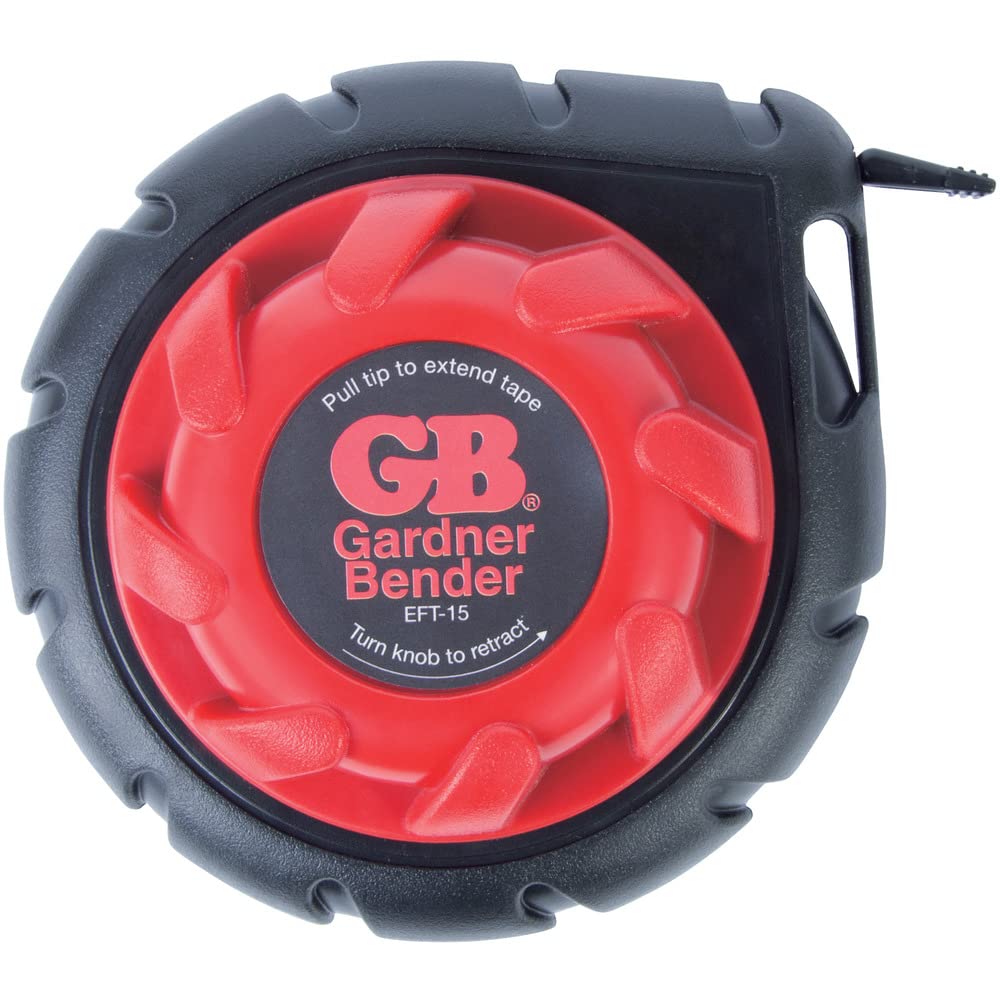
When conduit is not in the picture and you need to navigate wire through wall cavities and insulation, fish sticks are the answer. Gardner Bender packs 15 ft of linkable fiberglass rods into this kit.
You connect them section by section to reach across wall cavities and above ceilings. They include a flexible leader for navigating corners and hooks for grabbing wire at the destination point.
Tips for Successful Wire Pulls
- Apply wire pulling lubricant to reduce friction on long conduit runs.
- Always check conduit for obstructions by pushing a pull string through before committing to a wire run.
- Secure your wire to the fish tape tip with electrical tape for a smooth connection that does not snag at fittings.
- Work in pairs when possible. One person feeds the wire at one end while the other pulls from the opposite end.
- Store fish tapes in a cool, dry area. Leaving steel tapes coiled in a hot vehicle accelerates corrosion.
Final Thoughts
The best fish tape for you depends on your specific job. For conduit work around potentially energized circuits, go fiberglass.
For heavy-duty straight runs where you need maximum push strength, steel is the answer. For wall cavities and finished spaces, fish sticks give you the reach and flexibility you need. Pick the right tool for the job, and your wire pulls will go cleanly every time.
Also Read On: