Best Clamps for Woodworking: Every Type Reviewed 2026
If you want clean, professional results in your woodworking projects, you need the right clamps. A good clamp holds your pieces firmly while glue dries, keeps joints square, and lets you work hands-free.
Whether you are a beginner building your first shelf or a seasoned woodworker tackling complex joinery, choosing the correct clamp type makes the job easier and the results better.
This guide covers every major type so you can pick exactly what your workshop needs.
We independently evaluate all of our recommendations. If you click on the links we provide, we may receive compensation.
Table of Contents
1. Bar Clamps
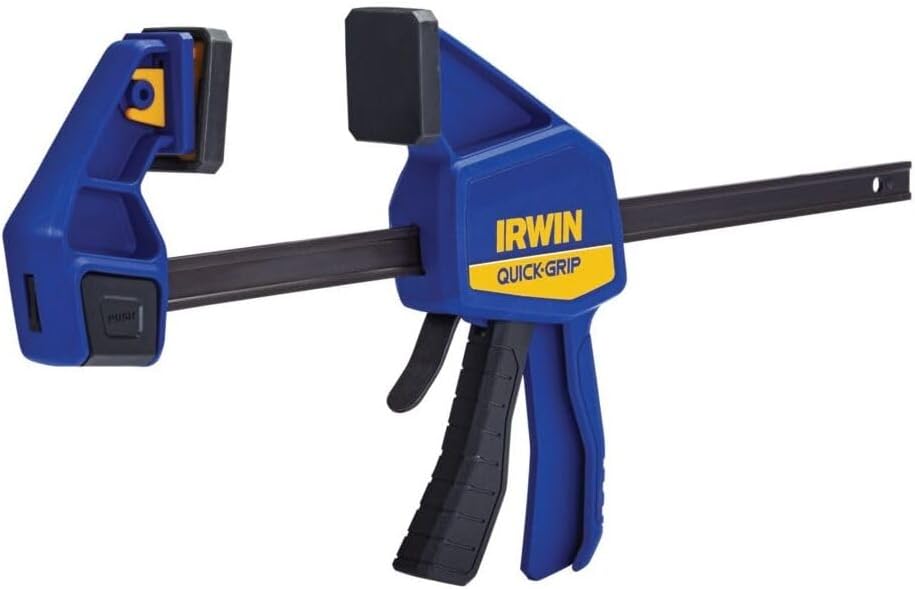
Bar clamps, also called F-clamps, are the most versatile clamps you can own. You slide the lower jaw along a steel bar and tighten the screw handle to apply pressure. They come in lengths from 6 inches to over 48 inches, which makes them ideal for gluing wide panels, tabletops, and cabinet frames.
The IRWIN QUICK-GRIP One-Handed Bar Clamp is a top pick because it lets you apply and release pressure with a single hand, leaving your other hand free to hold workpieces in position. It is a smart choice if you work alone frequently.
2. Pipe Clamps
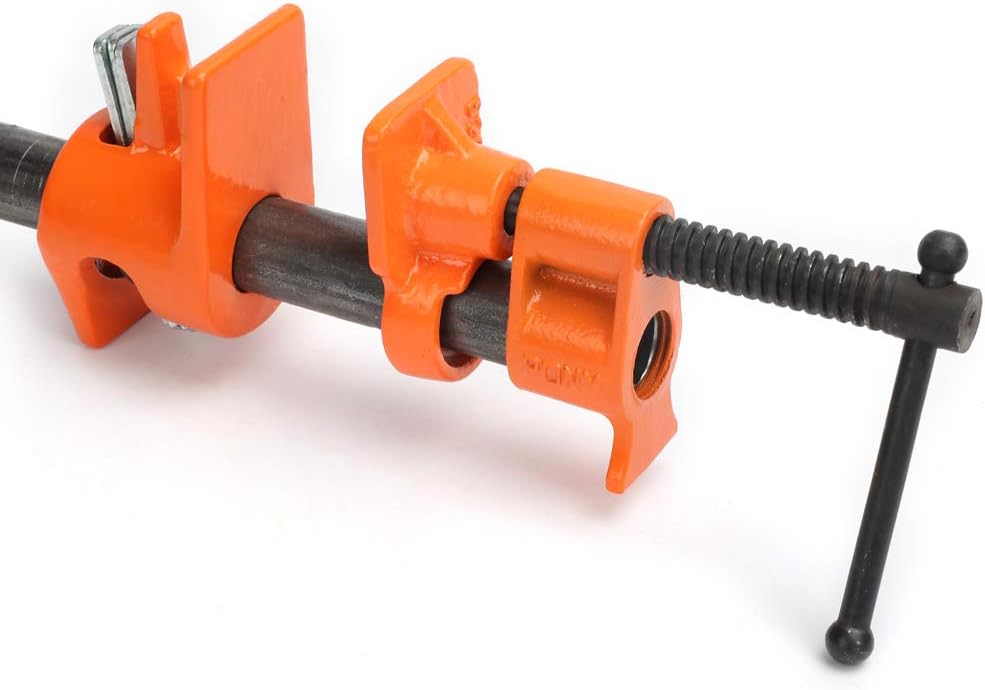
Pipe clamps attach to standard black iron pipe, giving you a customizable reach at a low cost. You buy the clamp heads separately and thread them onto whatever pipe length your project requires. This makes them one of the most affordable options for large glue-ups like full-sized cabinet doors or dining tabletops.
The Pony Jorgensen Pipe Clamp Fixture Set gives you solid clamping force and works with both 3/4 inch and 1/2 inch pipe. If you already have pipe on hand from a previous project, these heads are the most cost-effective upgrade for your shop.
3. C-Clamps
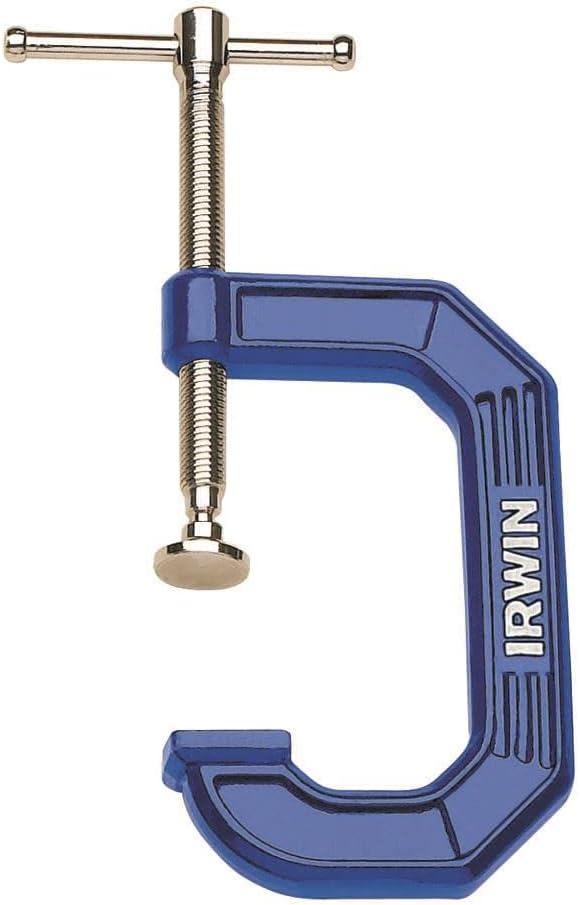
C-clamps are shaped like the letter C and tighten with a screw. They are compact, heavy duty, and capable of applying serious pressure in a small area. You will reach for them when attaching jigs to your workbench, securing thin stock, or holding metal pieces for drilling.
The IRWIN Tools C-Clamp Set is built from drop-forged steel and holds up under years of heavy workshop use. Always place a scrap block between the clamp pad and your wood to prevent denting your workpiece surface.
4. Spring Clamps
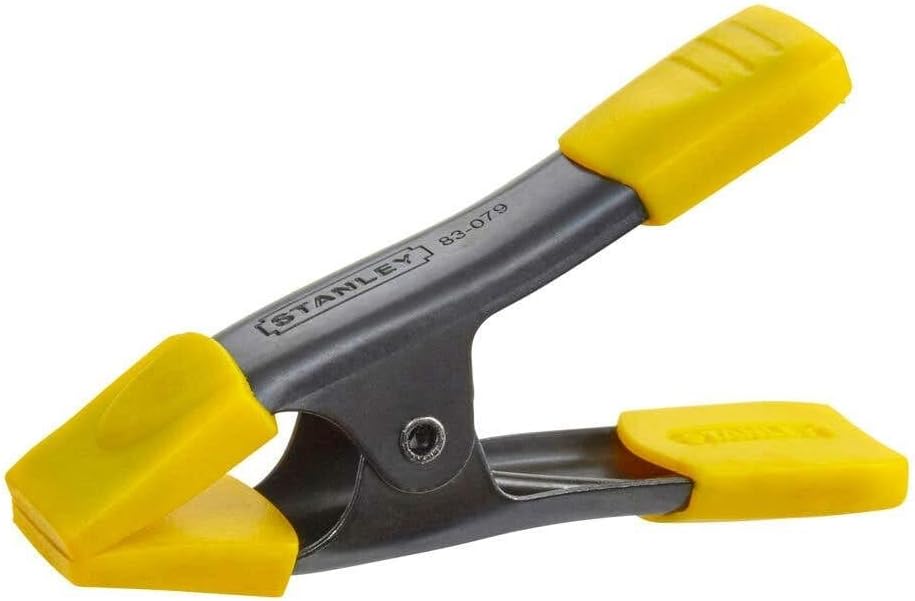
Spring clamps work like oversized clothespins. You squeeze the handles to open the jaws and release them to clamp. They are not meant for heavy clamping pressure, but they excel at holding lightweight pieces temporarily, keeping glued trim in place, or securing thin veneers while adhesive sets.
The Stanley Spring Clamp 10-Pack is a reliable everyday option. Keep a dozen of these near your bench because you will use them constantly for quick holds and assembly work.
5. Corner and Angle Clamps
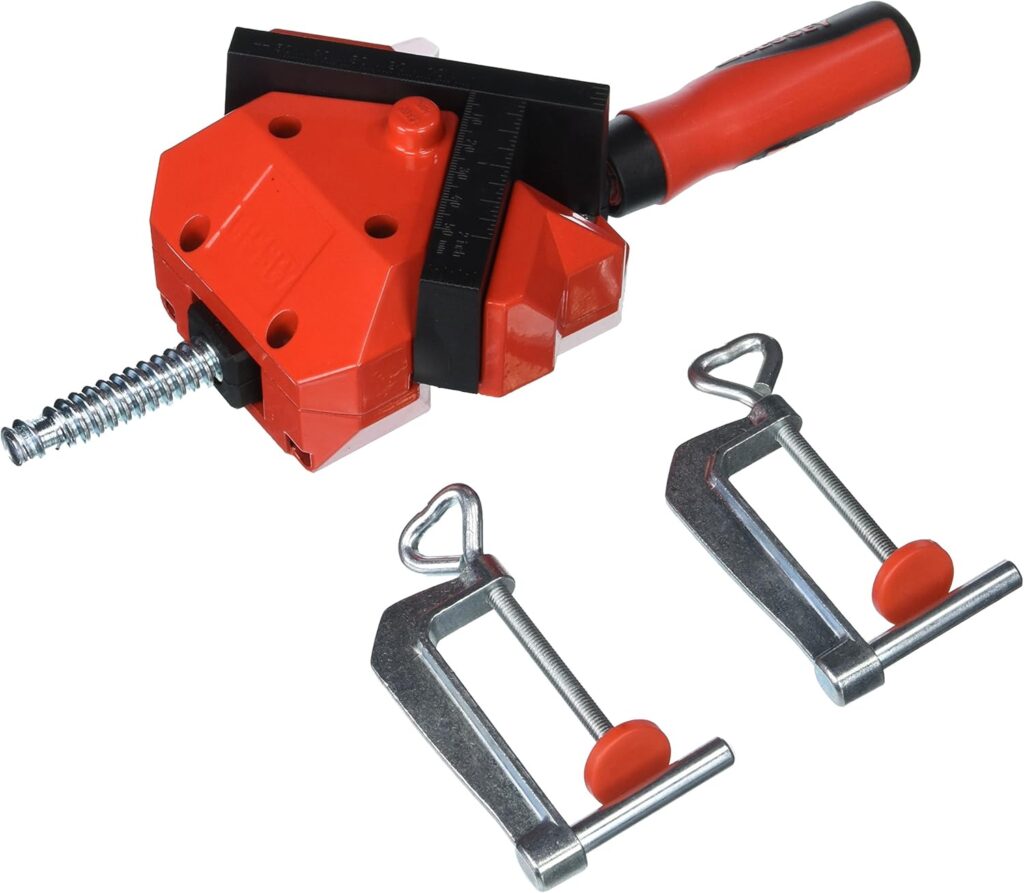
Corner clamps hold two pieces at a precise 90-degree angle, which is essential when assembling frames, boxes, and drawer boxes. They free both your hands while the glue sets and help you maintain square corners without constant checking.
The Bessey WS-3+2K Corner Clamp Set handles most standard frame and cabinet work. If you build picture frames or small furniture boxes regularly, a set of these saves significant time and frustration.
6. Band Clamps
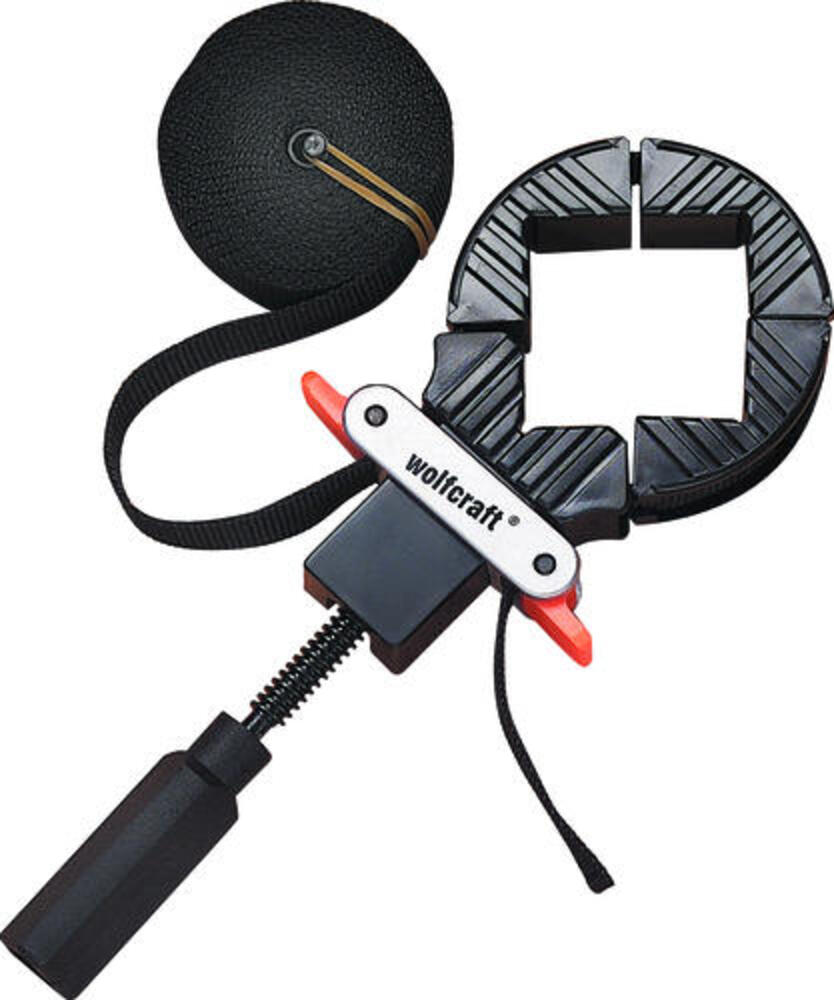
Band clamps wrap a nylon or fabric strap around irregular shapes, making them the right tool for round frames, chair legs, hexagonal boxes, and any assembly where a straight jaw cannot get a grip. You tighten the strap using a ratchet mechanism to pull all sides inward evenly.
The Wolf craft 3017000 Band Clamp handles circumferences up to 118 inches, covers most furniture and cabinetry applications, and includes corner pads to protect finished surfaces.
How to Choose the Right Clamp
Before buying, consider the size and shape of your typical project. A large panel glue-up calls for long bar clamps or pipe clamps. Smaller joinery and jig work suits C-clamps and spring clamps. Frames and boxes need corner clamps. Curved or irregular assemblies require a band clamp. Owning at least one or two of each type covers the full range of woodworking tasks you will encounter.
- Buy longer clamps than you think you need. You can always shorten your reach but you cannot extend it.
- Protect your wood surface with scrap pads under every clamp jaw.
- Test your clamps on a dry assembly before applying glue so you know the setup works under time pressure.
Final Thoughts
The best clamps for woodworking are the ones matched to your specific project. Start with a set of bar clamps in two or three sizes, add C-clamps and spring clamps for smaller work, and fill in with corner and band clamps as your projects grow. Every type reviewed here solves a real problem in the workshop.
Pick the ones that match your current builds, and your joinery will be stronger, cleaner, and far less stressful to assemble.
Also Read On:
Best Digital Calipers Under $50
Best Angle Finders and Protractors for Woodworking in 2026
How to Choose a Circular Saw: Complete Beginner’s Guide 2026