Best Infrared Thermometers for HVAC Work
An infrared thermometer lets you diagnose duct leaks, check coil temperatures, identify overheating components, and verify supply and return air differentials without ever making contact with a surface.
The problem is that not every IR thermometer is built for the demands of real HVAC work. This guide cuts through the noise and gives you the top picks that belong in your tool bag in 2026.
We independently evaluate all of our recommendations. If you click on the links we provide, we may receive compensation.
Table of Contents
What to Look for in an HVAC Infrared Thermometer
Before you buy, make sure the model you choose actually fits how HVAC technicians work in the field. Here are the key specs that matter:
- Distance-to-spot (D:S) ratio: A 12:1 ratio or higher lets you measure a precise spot from a safe distance, which is critical when scanning elevated vents, returns, and rooftop units.
- Temperature range: HVAC applications typically require at least -22F to 750F coverage to handle everything from refrigerant lines to heat exchangers.
- Adjustable emissivity: Different surfaces emit infrared radiation differently. Adjustable emissivity ensures accurate readings on ducts, coils, copper pipes, and insulation.
- IP rating and drop protection: Field tools take a beating. Look for IP54 or better and at least 2-meter drop protection.
- Backlit display: A bright, easy-to-read LCD saves you in dark crawl spaces, attics, and mechanical rooms.
Top 5 Infrared Thermometers for HVAC Work
1. ThermoWorks Industrial IR Gun (Editor’s Choice)
If you want the most accurate non-contact thermometer available to HVAC professionals, this is it. The ThermoWorks Industrial IR Gun delivers readings accurate to within one to two degrees Fahrenheit across a temperature range of -76F to 1,022F.
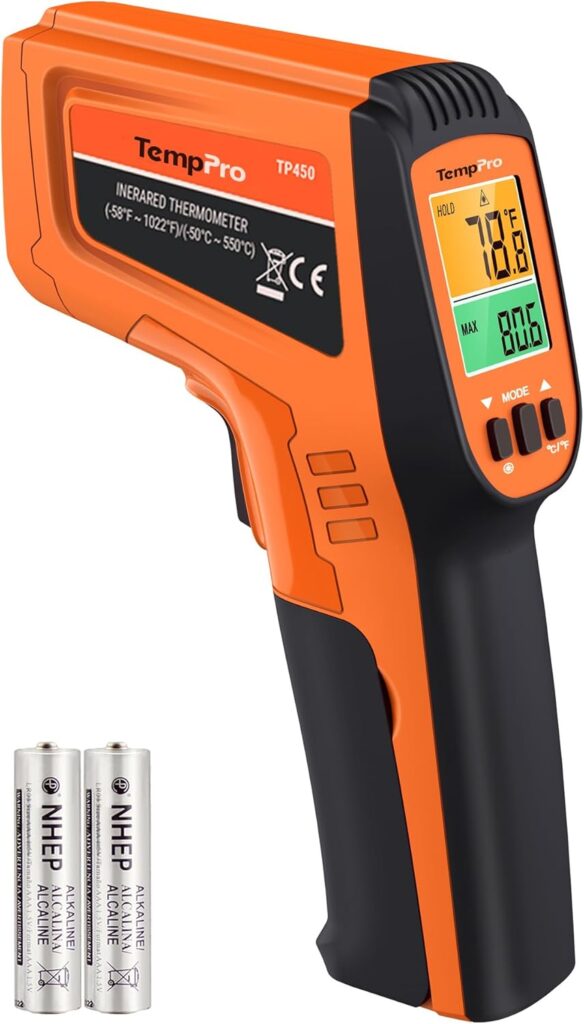
The 12:1 distance-to-spot ratio gives you precise targeting from a comfortable working distance, and the adjustable emissivity setting means you get reliable data off any surface you are measuring. The backlit display is easy to read in tight mechanical spaces, and the build quality is genuinely impressive. This is not a tool you replace every season.
Check it on : ThermoWorks Industrial IR Gun
2. Fluke 62 MAX+ Infrared Thermometer
Fluke has been the standard name in professional measurement tools for decades, and the 62 MAX+ earns every bit of that reputation. It features dual rotating lasers that outline the exact measurement circle rather than just a center dot, so you know precisely what surface area you are reading.
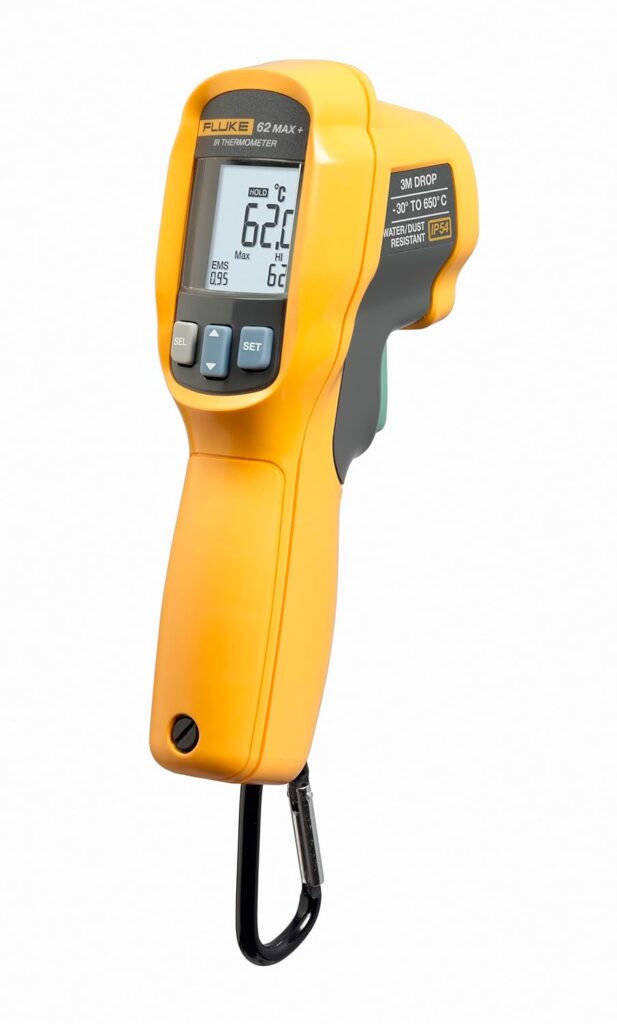
The IP54 dust and water resistance rating and 9-foot drop protection make it one of the most durable options on this list.
The temperature range covers -22F to 932F, and the large backlit display is readable in all lighting conditions. HVAC technicians who want a tool that performs the same way on job 1 as it does on job 500 will appreciate the Fluke build standard.
Check it on : Fluke 62 MAX+ Infrared Thermometer
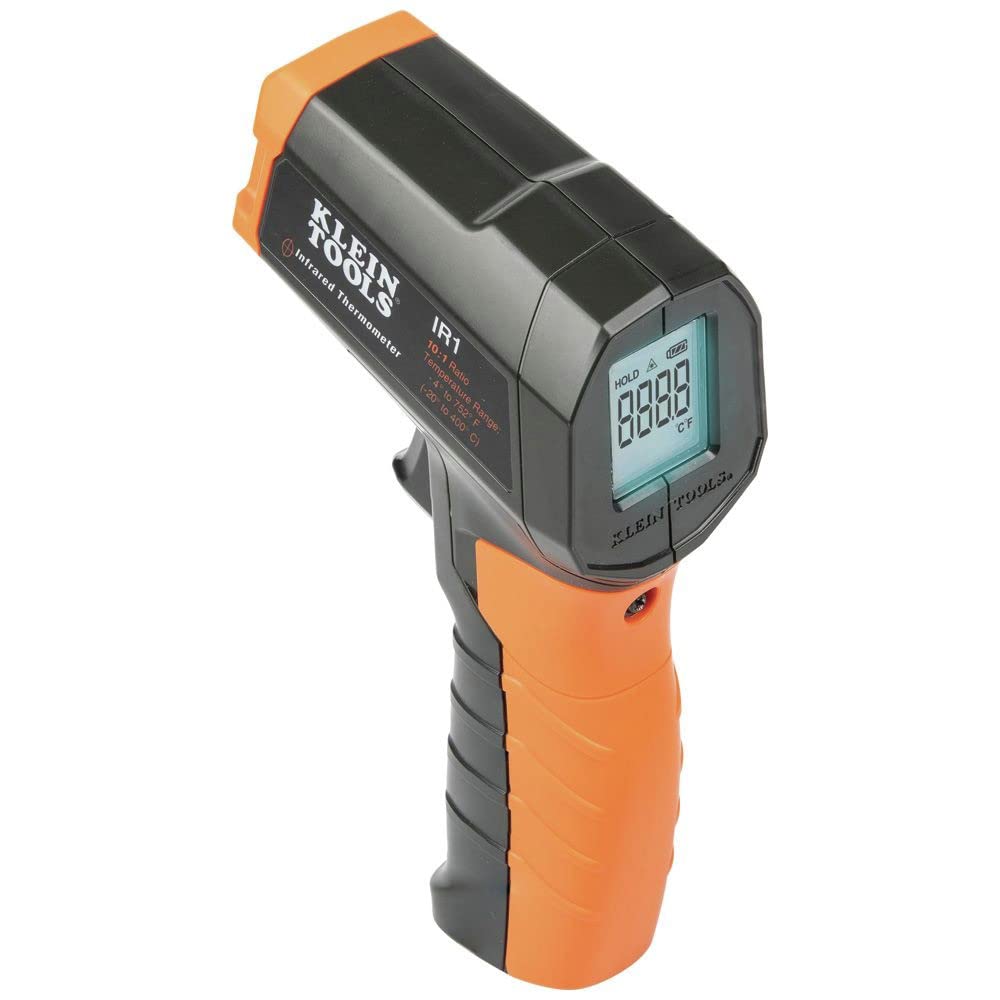
3. Klein Tools IR1 Infrared Thermometer
Klein Tools built the IR1 specifically with electricians and HVAC professionals in mind, and that shows in every design choice. The 6.6-foot drop protection is tested and real, not just a spec sheet claim.
The 10:1 distance-to-spot ratio works well for most HVAC applications, and the fixed emissivity of 0.95 covers the majority of common field surfaces accurately.
It is compact, comfortable in the hand, and built tough enough to ride in a tool bag day after day without issue. If you need a dependable, no-fuss instrument that you can trust on every job, the Klein IR1 earns a permanent spot in your kit.
Check it on : Klein Tools IR1 Infrared Thermometer
4. ennoLogic eT650D Dual Laser Infrared Thermometer
The ennoLogic eT650D brings dual-laser targeting and a wide feature set to a mid-range price point. It covers -58F to 1,202F and gives you max, min, and average temperature readings on a clear, backlit display.
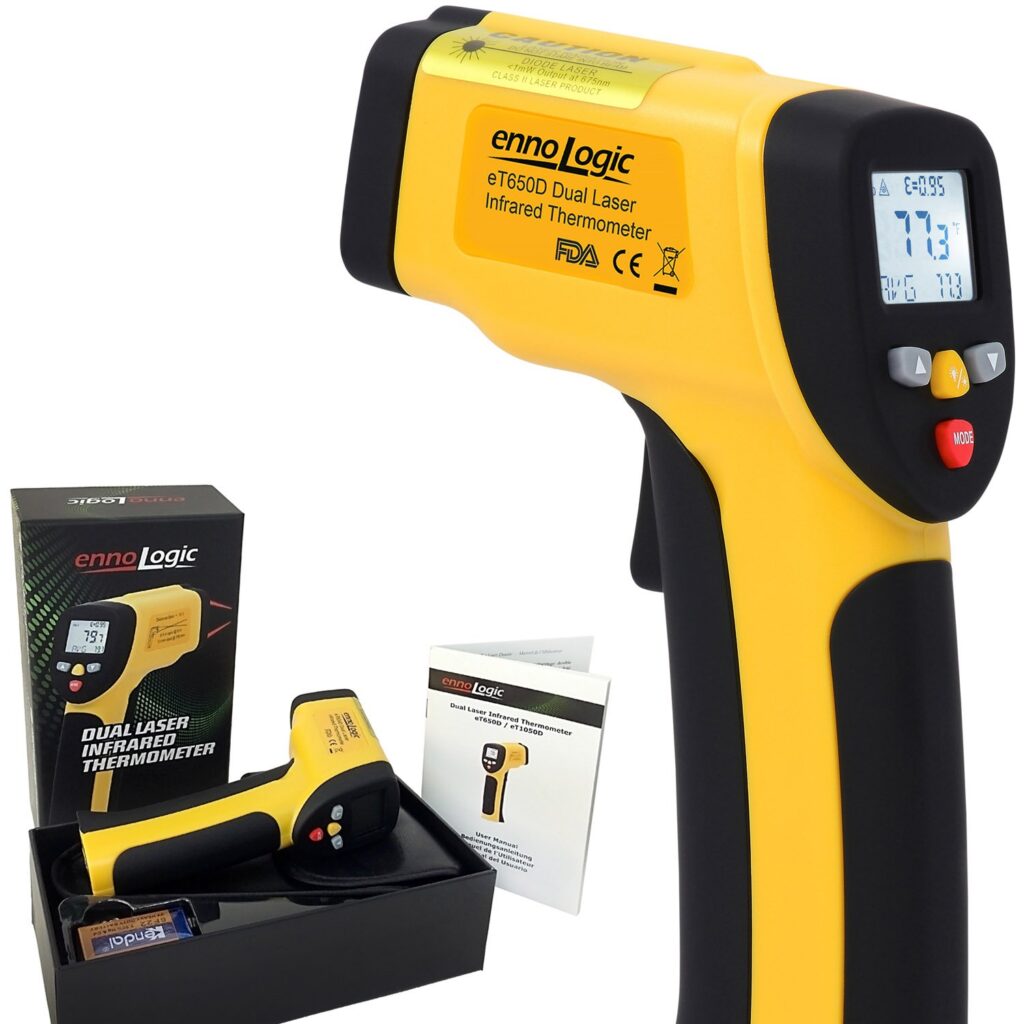
The adjustable emissivity setting goes from 0.1 to 1.0, making it genuinely versatile across the wide variety of surfaces HVAC techs encounter every day.
It is lightweight and easy to carry, which matters when you are moving through multiple units in a building. For technicians who want solid performance and good features without committing to a premium price, the eT650D is a smart pick.
Check it on : ennoLogic eT650D Infrared Thermometer
5. Fluke 568 Advanced Infrared Thermometer
When your HVAC work takes you into demanding industrial environments, the Fluke 568 is the tool that rises to the occasion.
It combines non-contact infrared measurement with a built-in type K thermocouple port, so you can take both surface and contact readings with a single instrument.The infrared range covers -40F to 1,202F, and the 12:1 distance-to-spot ratio delivers precise targeting at distance.
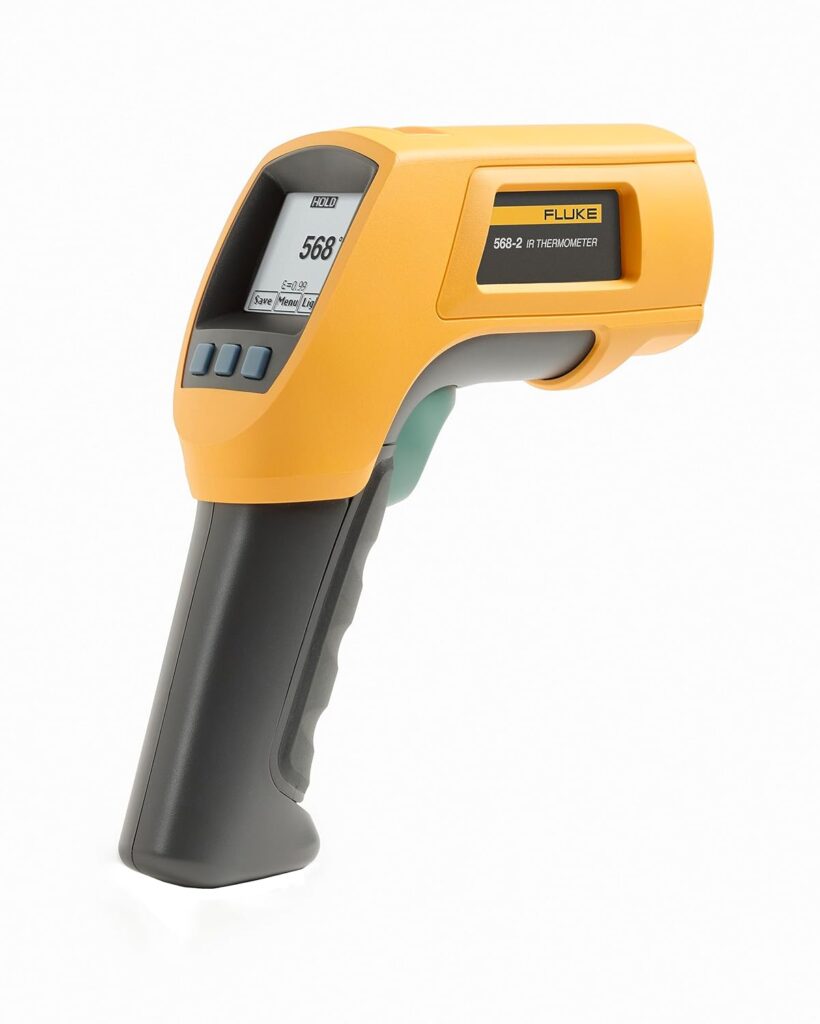
The rotatable display is a standout feature for tight spaces and awkward angles, and the build quality is Fluke-grade throughout. Commercial HVAC contractors who service industrial and institutional facilities will find the 568 justifies every dollar.
Check it on: Fluke 568 Advanced Infrared Thermometer
How to Use an Infrared Thermometer Correctly on HVAC Jobs
An infrared thermometer only measures surface temperature, not the temperature of air inside a duct or pipe.
For supply and return air readings, use the thermometer on the register face or duct surface, not the open air stream. Always check the emissivity setting before you start.
Most painted surfaces and non-metallic materials read accurately at 0.95, but bare copper and shiny metal require a lower emissivity value. Keep the lens clean and dry because contamination on the lens directly affects accuracy.
And always maintain the correct standoff distance for your D: S ratio so your measurement spot covers only the area you actually want to read.
Final Verdict
For most HVAC technicians, the ThermoWorks Industrial IR Gun is the best overall choice in 2026 because of its accuracy, build quality, and wide temperature range.
If durability in harsh field conditions is the top priority, go with the Fluke 62 MAX+. The Klein IR1 is the right answer if you want a tough, proven tool at a more accessible investment level.
Whatever you choose, make sure it fits your actual work conditions, your D: S requirements, and the surface types you encounter most often.
The right infrared thermometer pays for itself the first time it helps you diagnose a problem in minutes instead of hours.
Also Read On:
Best Garden Tillers for Clay Soil: Top 5 Picks That Actually Work